

Summary
24 items · 30-60 minutes per seasonal review
Why a Seasonal Approach to Car Maintenance Works
Waiting until something breaks is the most expensive maintenance strategy there is. A structured, season-by-season approach ties inspection timing to the real demands your vehicle faces - summer heat stresses coolant systems and tires, winter cold thickens fluids and taxes batteries, and spring and fall are natural transition points to reset and prepare.
This checklist is built around those rhythms. It covers the items that matter most at each transition, drawing on the kind of inspection logic a qualified technician uses. It is not a substitute for your vehicle's manufacturer-recommended service schedule - always consult your owner's manual for model-specific intervals. For a deeper look at how those schedules work, see how to read your car's maintenance schedule.
Work through each group at the start of the relevant season. Items marked must are non-negotiable for safety and reliability. Those marked should are strongly recommended. Nice-to-have items improve comfort or longevity but can reasonably be deferred.
Spring - Recovering from Winter
Summer - Managing Heat and Long Drives
Fall - Preparing for Cold and Darkness
Winter - Cold-Weather Reliability
Tools and Resources You'll Need
Most seasonal checks require basic tools and a safe, level surface. Some tasks - brake inspection, suspension work, or anything involving the fuel system - should be handed to a licensed mechanic. If you're unsure where your skill level ends and a professional's begins, this guide on DIY car maintenance limits is a practical starting point.
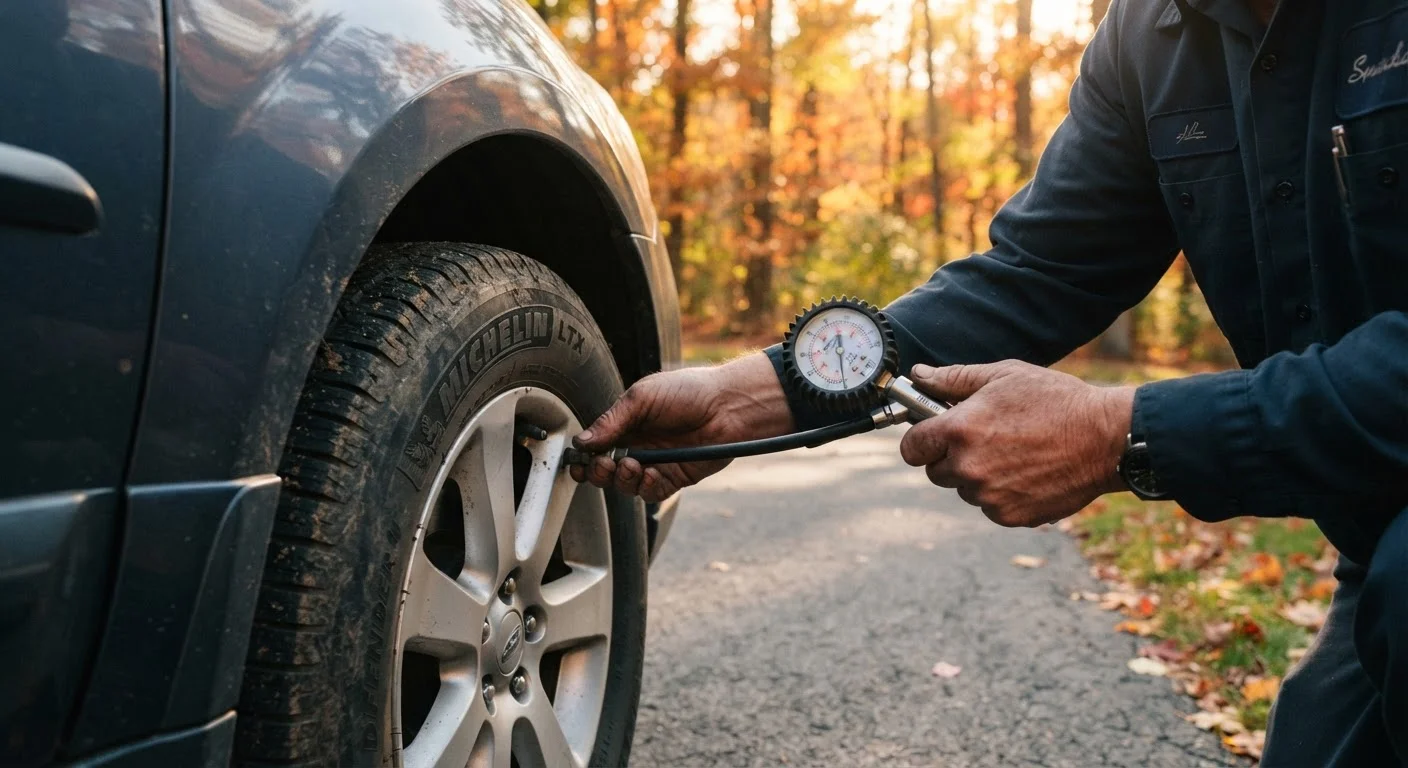
Tire Pressure Gauge
Measures tire inflation to confirm it matches the manufacturer's specified PSI on the door jamb sticker.
Battery Load Tester
Tests battery output under simulated load conditions to reveal weakness before cold weather causes a failure.
Tread Depth Gauge
Measures remaining tire tread depth to determine whether replacement is needed for safe wet or winter driving.
Flashlight or Inspection Light
Illuminates the engine bay, wheel wells, and undercarriage for visual inspection of hoses, belts, and brake components.
Owner's Manual
Provides the manufacturer's authoritative service intervals, fluid specifications, and torque ratings for your specific vehicle.
OBD-II Scanner
Reads diagnostic trouble codes from the check engine light so you know what a warning light means before visiting a shop.
Before heading out after completing your seasonal review, consider pairing this checklist with a quick walk-around using this pre-trip safety check to catch anything a stationary inspection might miss.
Don't Skip Professional Brake Inspections
Brake system inspection involves more than visually checking pad thickness. Brake lines, calipers, rotors, and fluid condition all affect stopping performance and are difficult to assess without lifting the vehicle safely. If you have any doubt about your brakes - or notice changes in pedal feel, noise, or pulling - have a licensed mechanic evaluate the system before driving further.
Making the Checklist a Habit
The most effective maintenance program is one you actually follow. Tie your seasonal checks to something you already do - daylight saving time changes, school year transitions, or the first week of each new quarter. Setting a recurring calendar reminder takes about 30 seconds and can prevent a breakdown that costs hours and hundreds of dollars.
Keep a simple log - even a notes app entry - of what you checked, what you found, and any work performed. This record helps your mechanic diagnose problems faster and can add credibility when selling the vehicle. For a broader look at what a professional service visit actually covers versus what you handle yourself, see what scheduled maintenance actually covers.
Finally, don't overlook fluids beyond oil. Coolant, brake fluid, and transmission fluid are just as critical to reliability. Car fluids most drivers forget to check covers what each one does and how often to inspect it. If you're planning a long drive after completing your seasonal prep, preparing your car for a long road trip adds an extra layer of checks worth running before logging serious highway miles.
The content on this site is provided for informational purposes only and should not be considered a substitute for professional advice. While we strive to provide accurate and up-to-date information, we make no guarantees regarding its completeness or accuracy. Always consult a qualified professional for advice specific to your circumstances before making any decisions.