

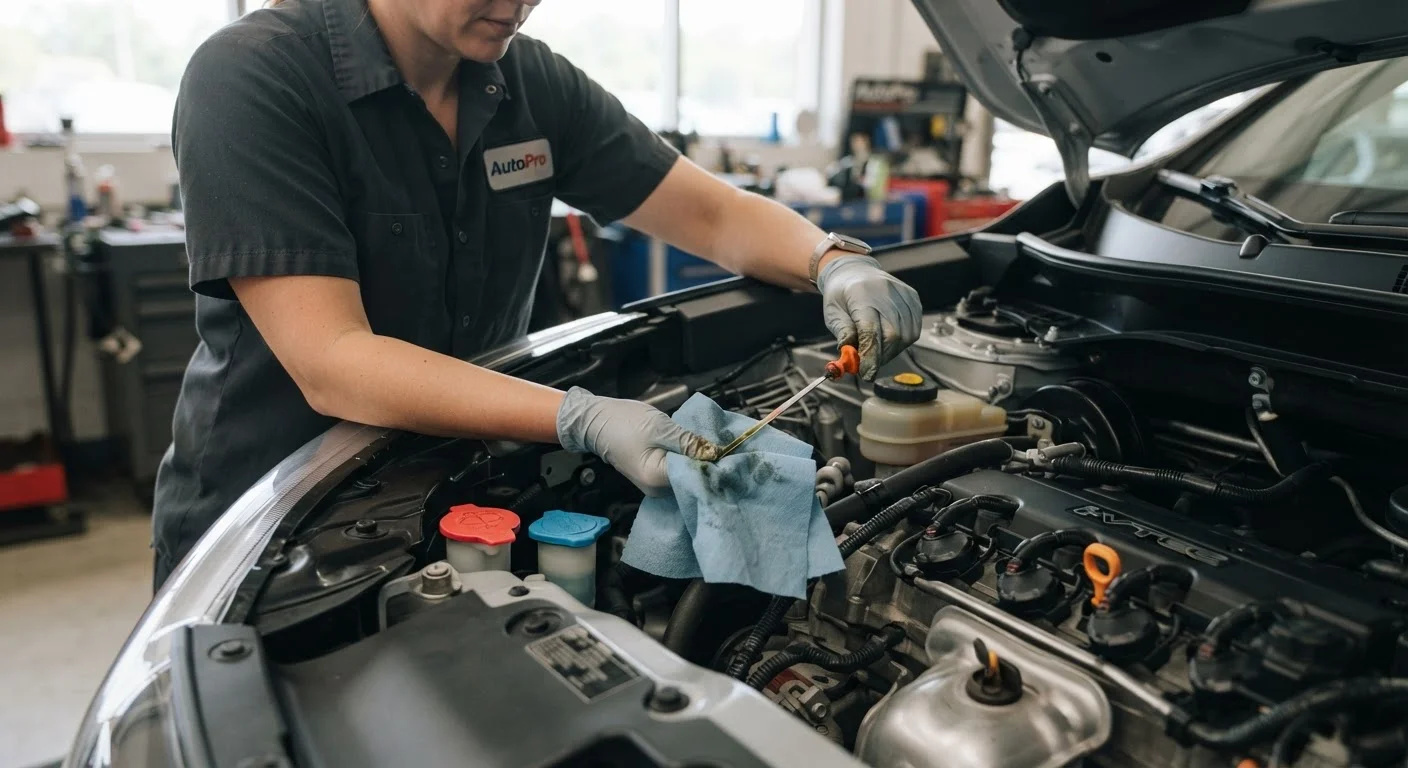
The Fluids Your Car Depends On
Most drivers know to change the oil. It's the maintenance task that gets the most attention - oil change reminders, stickers on windshields, ads at every turn. But your vehicle circulates several other fluids that are just as critical to its performance and safety, and they rarely get the same scrutiny.
Neglecting these fluids doesn't just mean a rougher ride. It can mean a seized transmission, warped brake components, or an overheated engine - repairs that run into hundreds or even thousands of dollars. The good news: checking most of these fluids takes only a few minutes, requires no special tools, and can be done in your own driveway.
Here are the fluids most commonly overlooked by everyday drivers, what each one does, and how often you should be checking it. For a broader look at what to inspect before any trip, see our pre-trip safety checklist.
Coolant (Antifreeze)
Coolant regulates your engine's temperature, preventing it from overheating in summer and freezing in winter. Over time, it degrades chemically and loses its ability to protect internal components, including the water pump and radiator.
Check the coolant level in the translucent overflow reservoir when the engine is completely cold - never open the radiator cap on a hot engine, as pressurized coolant can cause serious burns. The level should sit between the MIN and MAX lines. Color matters too: healthy coolant is typically bright green, orange, or pink. A murky or rusty appearance signals it's time for a flush. Most manufacturers recommend a coolant flush every 30,000 to 50,000 miles, though intervals vary - consult your owner's manual.
Never open the radiator cap on a hot engine - pressurized coolant can cause serious burns.
Brake Fluid
Brake fluid transmits the force from your foot on the pedal to the brake components at each wheel. It's a hydraulic fluid, meaning the entire system depends on it being at the right level and in good condition.
Brake fluid is hygroscopic - it absorbs moisture from the air over time. As water content increases, the fluid's boiling point drops, which can cause brake fade under hard use. Check the brake fluid reservoir (typically a small translucent container near the firewall) against the MIN/MAX markings. Dark or murky fluid indicates moisture contamination. Many mechanics recommend a brake fluid flush every two years regardless of mileage. A low level can also indicate worn brake pads or a leak - both warrant prompt attention.
Brake fluid absorbs moisture over time, lowering its boiling point and risking brake fade.
Transmission Fluid
Transmission fluid lubricates the gears, clutches, and other components inside your transmission. In automatic vehicles, it also acts as a hydraulic fluid. Running low or running on degraded fluid can cause rough shifting, slipping, and eventually transmission failure - one of the most expensive repairs a driver can face.
Many automatic transmissions have a dipstick (check your manual for its location); others are sealed and require a professional inspection. For vehicles with a dipstick, check the fluid with the engine warm and running, and look for a clear reddish color. Dark, burnt-smelling fluid needs changing. Service intervals vary widely - some manufacturers specify 30,000 miles, others 60,000 or more. This is one fluid where following the manufacturer's schedule closely pays off.
Dark or burnt-smelling transmission fluid is a clear sign a service appointment is overdue.
Power Steering Fluid
Power steering fluid keeps your steering responsive and light. A low level or degraded fluid can make the wheel feel stiff or cause a whining noise when turning. Note that many newer vehicles use electric power steering and don't have this fluid at all - check your manual to confirm.
On vehicles that do use hydraulic power steering, the reservoir is usually labeled and located near the front of the engine bay. Check the level against the MIN/MAX markings on the reservoir or dipstick. The fluid should be clear to light amber. Dark or foamy fluid suggests contamination. Most manufacturers recommend checking it at every oil change and replacing it every two years or as specified in your maintenance schedule.
A whining noise when turning is often the first sign of low or degraded power steering fluid.
Windshield Washer Fluid
It's easy to dismiss washer fluid as cosmetic, but a clean windshield is a safety issue - especially in winter when road spray, salt, and grime can reduce visibility in seconds. Plain water isn't an adequate substitute: it can freeze in cold weather and doesn't cut through road film effectively.
Use a washer fluid rated for the temperatures in your region. Reservoirs are typically large and clearly labeled under the hood. Check the level visually every month or so, and top up as needed. This is one of the simplest, cheapest checks on this list, and running empty at highway speed in bad weather makes it immediately apparent why it matters.
Running out of washer fluid at highway speed in a winter storm is a genuine visibility hazard.
Differential Fluid
The differential transfers engine power to the wheels and allows them to rotate at different speeds - essential for turning. Differential fluid lubricates these gears, and it breaks down over time just like engine oil. This fluid is particularly easy to forget because it rarely has a warning light and there's no dipstick in most passenger cars.
Vehicles with rear-wheel drive, all-wheel drive, or four-wheel drive typically have one or more differentials that require periodic fluid changes. Neglecting this fluid can lead to gear wear and eventual failure. Service intervals commonly range from 30,000 to 60,000 miles depending on driving conditions - towing, off-road use, and extreme climates accelerate wear. If you're unsure whether your vehicle has a serviceable differential, a qualified mechanic can advise you at your next oil change.
Differential fluid is easy to overlook because there's rarely a warning light when it degrades.
Making Fluid Checks a Habit
The most effective approach is to tie fluid checks to events you already schedule - oil changes, tire rotations, or the change of seasons. Our seasonal car maintenance checklist lays out which tasks belong at which time of year, so nothing gets forgotten.
Pair Fluid Checks With Oil Changes
Every time you bring your vehicle in for an oil change, ask your mechanic to check all other fluid levels as part of the visit. Many shops do this as standard practice, but it's worth confirming. If you change your own oil, use that moment to work through the other reservoirs as well - everything is already accessible and your attention is already on the engine bay.
Your owner's manual is the authoritative source for check intervals and fluid specifications for your specific vehicle. If you've misplaced it, most manufacturers publish digital versions on their websites. Understanding how to read and use that document is covered in our guide to understanding your car's maintenance schedule.
And if you're curious what chronic neglect actually costs, our article on neglected maintenance items that lead to expensive repairs walks through real failure scenarios. A few minutes of checking fluids today is almost always cheaper than the alternative.
The content on this site is provided for informational purposes only and should not be considered a substitute for professional advice. While we strive to provide accurate and up-to-date information, we make no guarantees regarding its completeness or accuracy. Always consult a qualified professional for advice specific to your circumstances before making any decisions.