

Start here
What Is a Maintenance Schedule and Why It Matters
Next
Where to Find Your Vehicle's Schedule
Then
How to Read the Schedule: Mileage, Time, and Conditions
Going deeper
Key Services and What They Involve
Apply it
Staying on Track: Practical Tips for Real Drivers
What Is a Maintenance Schedule and Why It Matters
A maintenance schedule is a manufacturer-defined plan specifying which services your vehicle needs and when to perform them - measured by mileage, elapsed time, or whichever comes first. It covers everything from oil changes and filter replacements to brake inspections, fluid flushes, and timing belt replacements.
Following the schedule matters for three concrete reasons. First, it keeps mechanically critical systems operating within design tolerances, reducing the risk of unexpected breakdowns. Second, it protects applicable warranty coverage - many automakers require documented, on-schedule maintenance as a condition of honoring powertrain and component warranties. Third, a complete service history tends to support stronger resale value when you eventually sell or trade the vehicle.
Many drivers rely on habit-based rules or shop recommendations instead of their own manual. That's worth reconsidering - as common car maintenance myths shows, many widely held assumptions about service intervals are outdated and don't reflect modern vehicle requirements.
Maintenance schedule
A manufacturer-specified list of services your vehicle needs at defined mileage or time intervals to keep it operating safely and efficiently.
Service interval
The mileage or time gap between required maintenance tasks - for example, an oil change every 7,500 miles or 12 months, whichever occurs first.
Severe operating conditions
Driving patterns - such as frequent short trips, towing, or extreme weather - that cause more wear than typical use and require shorter service intervals.
VIN (Vehicle Identification Number)
A unique 17-character code assigned to every vehicle that identifies its make, model, year, and specifications - useful for looking up exact maintenance requirements.
Powertrain warranty
A manufacturer guarantee covering major engine and transmission components, often conditional on documented, schedule-based maintenance.
Where to Find Your Vehicle's Schedule
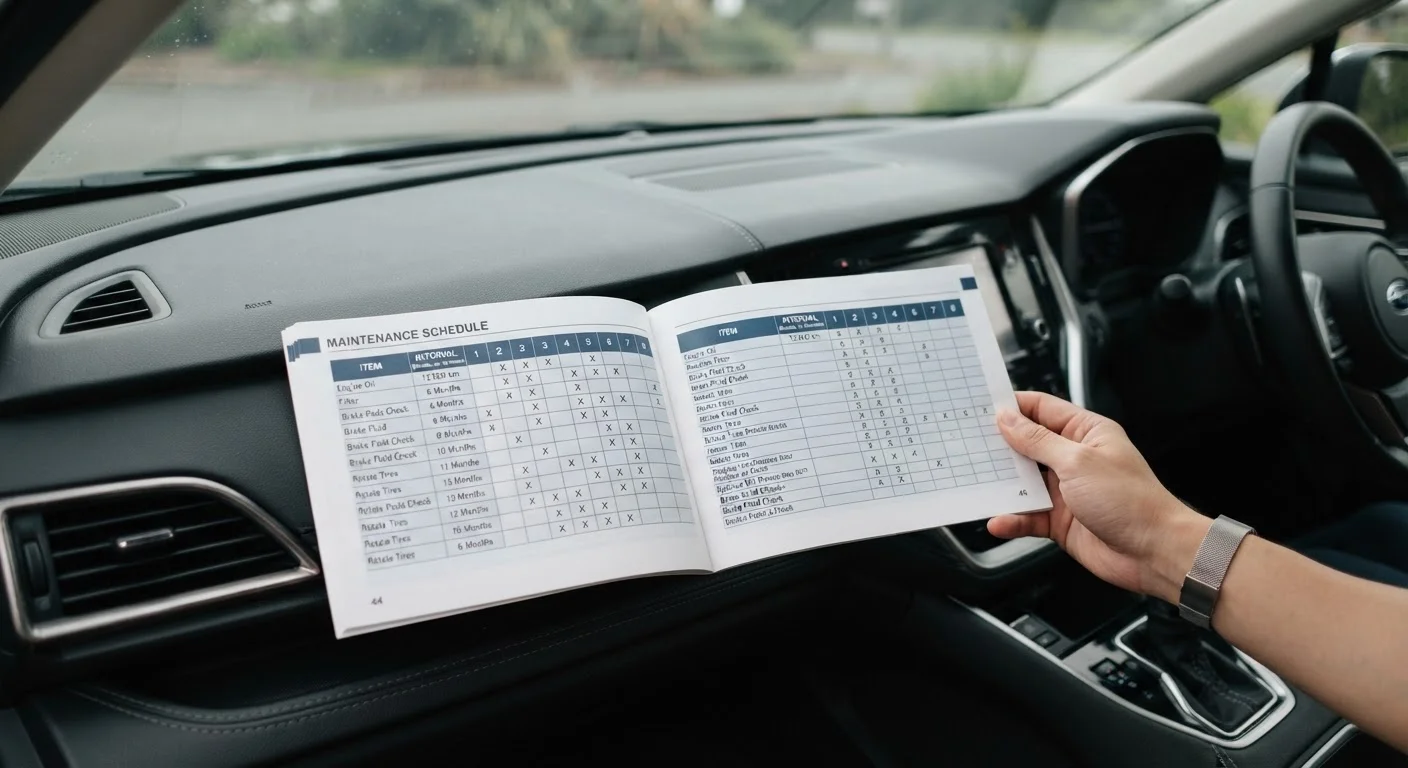
The authoritative source is your vehicle's owner's manual - the booklet that came in your glove compartment. Look in the index under terms like Maintenance Schedule, Service Intervals, or Scheduled Maintenance. The schedule is usually a table listing services at specific mileage milestones.
If your manual is missing, you have reliable alternatives. Most manufacturers publish digital versions of owner's manuals on their official websites, searchable by year, make, and model. Your vehicle's VIN (Vehicle Identification Number) - found on the driver's side dashboard or door jamb - ensures you access information for the exact trim and engine variant you own. Some newer vehicles also display maintenance reminders directly on the instrument cluster or infotainment screen.
Photograph Your Manual's Schedule Pages
Take a quick photo of the maintenance schedule pages in your owner's manual and save them to your phone's photo library. That way, the intervals are always on hand when you're talking to a service advisor - no hunting through the glove box required.
How to Read the Schedule: Mileage, Time, and Conditions
Maintenance schedules use two triggers: mileage and elapsed time. A typical entry might read every 7,500 miles or 12 months, whichever comes first. If you drive fewer miles than the mileage threshold in a given year, the time-based trigger takes over - because fluids, belts, and seals degrade with age even when a vehicle sits.
Most manuals include two tracks: Normal and Severe (sometimes called Special Operating Conditions). Severe isn't reserved for off-road adventurers. It typically applies if you regularly make trips under five miles, frequently drive in stop-and-go city traffic, operate in extreme heat or cold, or tow or haul heavy loads. Under severe conditions, intervals are shorter, so check which category reflects your actual driving.
For tire-specific intervals - rotation, pressure checks, and alignment - see our tire maintenance guide for a detailed breakdown of what the numbers mean and when to act.
Key Services and What They Involve
While every vehicle differs, these are the services most maintenance schedules address:
- Engine oil and filter: Intervals vary widely - from 5,000 to 10,000+ miles depending on engine type and oil specification. Synthetic oil generally supports longer intervals than conventional oil.
- Air filter (engine and cabin): Engine air filters typically need replacement every 15,000-30,000 miles; cabin filters (which clean interior air) often fall in a similar range but are separate items.
- Tire rotation: Usually every 5,000-7,500 miles to equalize tread wear across all four tires.
- Brake inspection: Brake pad and rotor condition should be assessed at regular intervals, even if no symptoms are present.
- Coolant and transmission fluid: These have long service lives but do degrade. Missing them can lead to expensive repairs.
- Spark plugs and timing belt/chain: Higher-mileage services, but skipping them - particularly a timing belt - can cause severe engine damage.
To understand exactly what a service visit typically covers in practice, see what scheduled maintenance actually covers.
Staying on Track: Practical Tips for Real Drivers
Knowing the schedule is only useful if you follow it. A few practical approaches help:
- Keep a simple log. A notes app, a mileage notebook in the glove box, or a dedicated app works fine. Record the date, mileage, and service performed each time.
- Set calendar reminders. If your next oil change is due in six months or 6,000 miles, set a reminder for whichever arrives first.
- Save all receipts. Documented service history matters both for warranty purposes and when selling the vehicle.
- Think seasonally. Just as home maintenance tasks benefit from seasonal planning, vehicle care is easier to manage when you tie certain checks to the calendar - pre-winter fluid checks, spring tire inspections, and so on. Our seasonal car maintenance checklist maps out the key touchpoints throughout the year.
Don't Rely Solely on Dashboard Warning Lights
Dashboard indicators like an oil life monitor or service light are useful reminders, but they don't replace the full maintenance schedule. Some services - coolant flushes, timing belt replacement, and brake fluid changes - may not trigger any dashboard alert at all. Cross-referencing your owner's manual ensures nothing gets overlooked.
Staying current with your schedule pays dividends well beyond avoiding breakdowns - it's a foundational habit for anyone who wants their vehicle to remain safe and reliable for the long haul.
Frequently Asked Questions
Look in the index under 'Maintenance Schedule' or 'Service Intervals.' It typically appears in a dedicated chapter toward the back of the manual. If you don't have a physical manual, most manufacturers offer free digital versions on their official websites.
Missing an interval occasionally is unlikely to cause immediate damage, but consistently skipping services can accelerate wear and potentially void warranty coverage on affected components. Catch up as soon as possible and resume the schedule from there.
Not always. Dealerships and independent shops sometimes recommend services more frequently or earlier than the manufacturer specifies. Your owner's manual is the baseline - compare any shop recommendations against it before approving work.
Generally, yes. Modern engine designs, synthetic oils, and improved materials have extended many service intervals compared to vehicles from earlier decades. Always verify the intervals your specific vehicle and model year require rather than relying on older general rules.
Yes. Manufacturers define 'severe' or 'special operating conditions' as things like frequent short trips, towing, extreme temperatures, or heavy city driving. Under those conditions, shortened intervals are usually specified separately in the manual.
In most cases, yes - provided the work performed meets manufacturer specifications and you keep the service records. Under the Magnuson-Moss Warranty Act, automakers generally cannot require that routine maintenance be performed exclusively at a dealership to keep a warranty valid.
The content on this site is provided for informational purposes only and should not be considered a substitute for professional advice. While we strive to provide accurate and up-to-date information, we make no guarantees regarding its completeness or accuracy. Always consult a qualified professional for advice specific to your circumstances before making any decisions.