

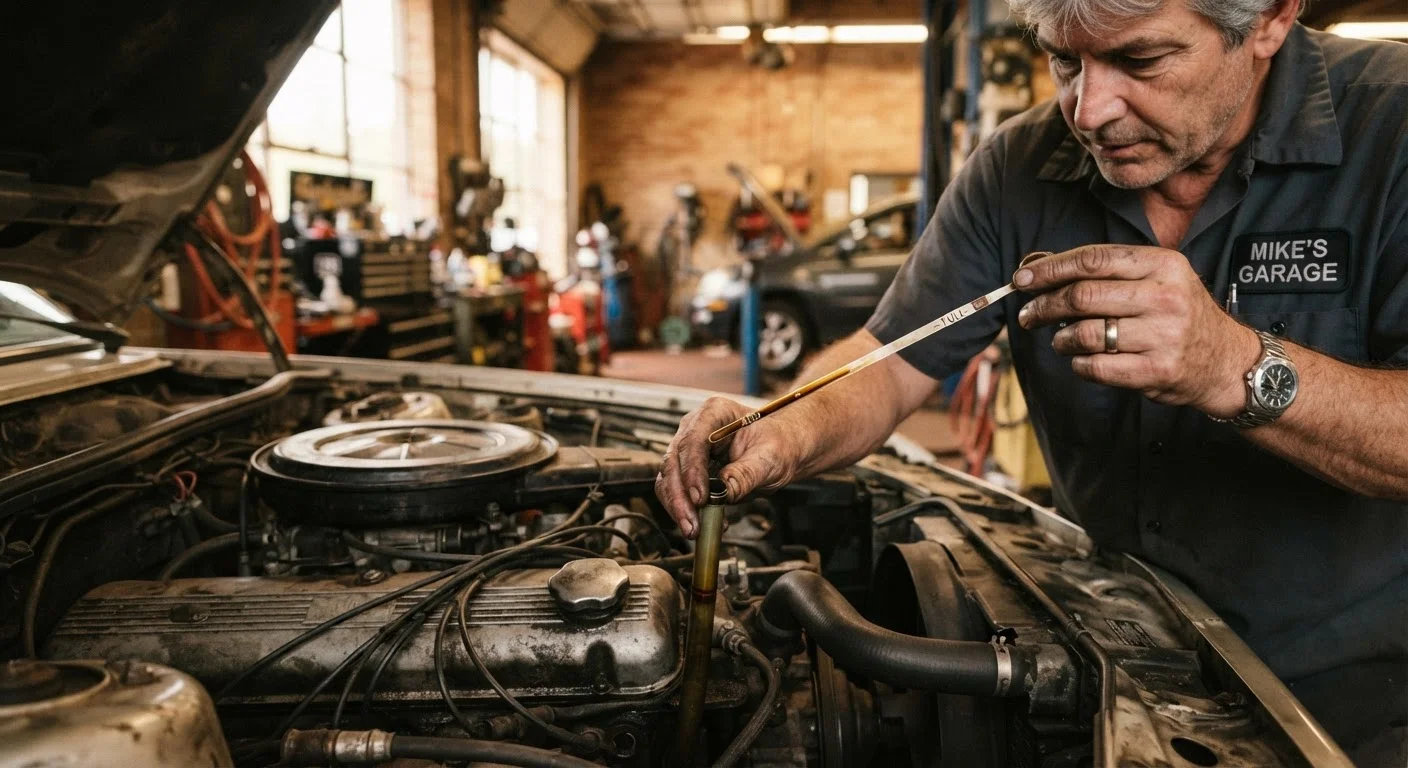
Why Old Car Maintenance Rules Persist
Many car maintenance habits passed down from parents and grandparents were perfectly sound advice - for the vehicles of their era. Carbureted engines, conventional motor oil, bias-ply tires, and rudimentary electronics all had different demands than what sits under the hood of a modern vehicle. Yet the rules outlasted the technology, circulating online and in service center waiting rooms as if nothing had changed.
The result: drivers spend money on unnecessary services, or skip genuinely important ones because they misunderstand what modern vehicles actually need. The manufacturer's maintenance schedule that came with your car is a far more reliable guide than any one-size-fits-all rule of thumb.
Below, we address the most persistent myths - replacing them with what current engineering and research actually support.
Myth
You need to change your oil every 3,000 miles, no exceptions.
Fact
Most modern vehicles with conventional oil can go 5,000-7,500 miles between changes; those using full synthetic oil may safely go 10,000-15,000 miles, depending on the manufacturer's specification.
The 3,000-mile rule traces back to an era of older engine tolerances and lower-quality conventional oils. Engine manufacturing precision and oil chemistry have both improved substantially. Your owner's manual specifies the correct interval for your engine and oil type - that figure, not a generic rule, is what you should follow. Changing oil more frequently than necessary wastes money; changing it less frequently than recommended risks engine wear. For a detailed look at what delayed changes actually do, see what happens when you skip an oil change.
Myth
You must warm up your car for several minutes before driving in cold weather.
Fact
Modern fuel-injected engines reach operating temperature faster by driving gently than by idling, and extended idling can actually leave fuel residue on cylinder walls.
Extended idling as a warm-up ritual made sense for carbureted engines, which needed time to meter fuel correctly in cold conditions. Fuel injection systems - standard on virtually every vehicle sold in the U.S. since the late 1980s - adjust automatically. The U.S. Department of Energy has noted that idling for more than 30 seconds is generally unnecessary for modern vehicles. A gentle, moderate-speed drive warms the engine, transmission, and wheel bearings far more effectively than sitting in a driveway.
Myth
Premium fuel makes any car run better and more efficiently.
Fact
Premium fuel only delivers a performance benefit in engines specifically engineered to require or recommend it. Using it in a standard engine produces no measurable advantage.
Higher-octane fuel is designed to resist engine knock (pre-detonation) in high-compression or turbocharged engines. If your vehicle's manual says "premium recommended" or "premium required," that instruction matters. If it says regular fuel is the specified grade, premium delivers no benefit - the engine's computer isn't calibrated to take advantage of it. You'll spend more without gaining anything. Check the fuel door label or the owner's manual rather than defaulting to the most expensive option at the pump.
Myth
Inflate your tires to the pressure number printed on the tire sidewall.
Fact
The sidewall number is the maximum pressure the tire can safely hold, not the recommended operating pressure. The correct figure is on your vehicle's door jamb sticker or owner's manual.
Inflating to the sidewall maximum overinflates most tires for normal driving, which reduces the contact patch with the road, increases wear in the center of the tread, and makes the ride harsher. The vehicle manufacturer determines the correct cold-inflation pressure based on the car's weight, suspension, and handling characteristics. That figure - typically found on a sticker inside the driver's door frame - is the number to use. Tire pressure should be checked monthly and always when the tires are cold (driven less than a mile).
Myth
If your car isn't showing warning lights, it doesn't need maintenance.
Fact
Warning lights indicate a problem that has already occurred or reached a threshold, not a preventive signal. Many maintenance needs - worn belts, degraded coolant, brake pad wear - will not trigger a dashboard light.
Relying solely on warning lights for maintenance decisions is reactive rather than preventive. Timing belts, for example, typically have no sensor; when they fail, engine damage can be severe and immediate. Brake pads on many vehicles only trigger a warning light when metal-on-metal contact begins - well past the point where replacement was due. Routine inspections and adherence to scheduled intervals catch these issues early, before they become expensive failures. See our guide on commonly neglected maintenance items for a fuller picture.
Myth
Switching to synthetic oil after years of using conventional oil will cause leaks.
Fact
Properly formulated full synthetic oil is compatible with modern engine seals and does not cause or worsen leaks in well-maintained engines.
This myth likely originated from early synthetic formulations in the 1970s, which had compatibility issues with some seal materials of that era. Modern synthetic oils are engineered to be fully compatible with contemporary gasket and seal materials. If an engine develops a leak after switching to synthetic, the leak was almost certainly pre-existing - synthetic oil's lower viscosity at operating temperature can make a marginal seal's weakness more apparent. For more detail on how these two oil types differ, the comparison of synthetic and conventional motor oil explains the practical distinctions.
What Actually Matters for Long-Term Vehicle Health
Separating myth from fact isn't just about saving money on unnecessary services - though that matters. It's also about making sure genuinely critical maintenance doesn't get overlooked because a driver assumes the flashy myths are the whole story. Oil gets most of the public attention, but coolant, brake fluid, and transmission fluid are equally important and far more commonly neglected.
Don't Rely on Warning Lights Alone
Dashboard warning lights are a last resort alert system, not a preventive maintenance tool. Many critical components - including timing belts, coolant condition, and brake pad thickness - have no sensor that triggers a light before serious damage occurs. Skipping scheduled maintenance because the dashboard looks clear is one of the most common and costly mistakes drivers make.
Similarly, tires are where your vehicle meets the road, and correct inflation, tread depth, and rotation intervals directly affect both fuel economy and safety. Our tire maintenance guide covers exactly what to check and how often. And for a structured, seasonal view of what your car needs throughout the year, the seasonal maintenance checklist is a practical starting point.
It's worth noting that car maintenance myths share something in common with misconceptions in other areas of life - from home upkeep to pet care. Outdated rules persist because they feel authoritative, even after the conditions that made them true have changed. The antidote is always the same: check current, source-verified information and consult qualified professionals when the task exceeds your skill or safety comfort level.
The content on this site is provided for informational purposes only and should not be considered a substitute for professional advice. While we strive to provide accurate and up-to-date information, we make no guarantees regarding its completeness or accuracy. Always consult a qualified professional for advice specific to your circumstances before making any decisions.