

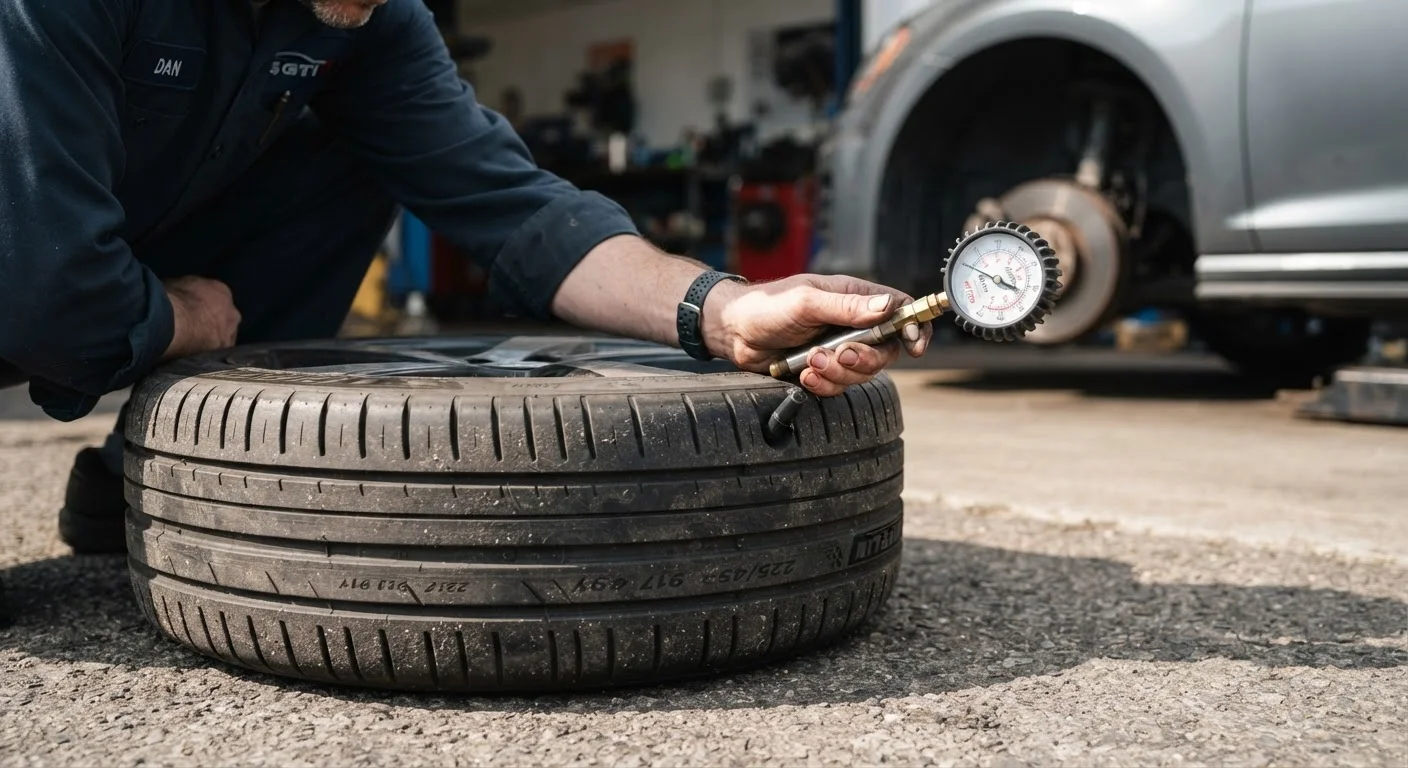
Why Tire Maintenance Matters
Tires are your vehicle's only point of contact with the road. Every braking, steering, and acceleration input passes through roughly a hand-sized patch of rubber per tire. When that rubber is underinflated, worn, or improperly aligned, the consequences range from reduced fuel economy to outright loss of control.
According to the National Highway Traffic Safety Administration (NHTSA), tire-related crashes account for hundreds of fatalities and tens of thousands of injuries annually on U.S. roads. The encouraging news: most tire failures are preventable with routine attention. Tire care fits naturally into a broader vehicle maintenance habit - see the seasonal car maintenance checklist for a full-picture approach to keeping your vehicle safe year-round.
11,000+
Tire-related crashes annually in the U.S.
According to NHTSA data, tire problems contribute to thousands of crashes and hundreds of fatalities each year on American roads.
25%
Vehicles with at least one underinflated tire
NHTSA surveys have found that roughly one in four vehicles on U.S. roads is being driven with at least one significantly underinflated tire.
2/32"
Minimum legal tread depth in most U.S. states
Most states set the replacement threshold at 2/32 of an inch; safety organizations often recommend acting sooner, at 4/32 of an inch.
Tire Pressure: The Basics
Tire pressure is measured in PSI (pounds per square inch). The correct PSI for your vehicle is printed on a sticker inside the driver's door jamb - not on the tire sidewall, which shows the maximum pressure the tire can hold, not the recommended operating pressure.
Most passenger vehicles call for somewhere between 30 and 35 PSI. Underinflation increases rolling resistance, generates heat, and accelerates tread wear on the outer edges. Overinflation causes the center of the tread to wear faster and reduces the tire's ability to absorb road irregularities.
Set a recurring monthly calendar reminder to check all four tires plus the spare. Cold morning checks - before the first drive of the day - give you the most accurate PSI reading.
Tire pressure fluctuates with temperature, dropping roughly 1 PSI for every 10°F decrease in ambient temperature. A consistent schedule catches slow leaks before they become hazardous.
Keep a compact tread-depth gauge in your glove box alongside your owner's manual. Penny and quarter tests are useful but a $5 gauge gives a precise reading in seconds.
Precise tread measurements matter most in wet or winter conditions, where the difference between 4/32 and 2/32 of an inch significantly affects stopping distance.
Check pressure when tires are cold - meaning the car has been parked for at least three hours - because driving raises air temperature and PSI readings. A quality digital gauge costs a few dollars and gives more reliable readings than the gauges on many gas station air pumps.
Tread Depth: How to Measure and When to Replace
Tread depth determines how well your tires channel water away from the contact patch, which is critical for preventing hydroplaning on wet roads. New tires typically start at 10/32 to 11/32 of an inch of tread depth. The legal minimum in most U.S. states is 2/32 of an inch.
The quickest field check: insert a penny into the tread groove with Lincoln's head pointing down. If you can see the top of Lincoln's head, the tread is at or below 2/32 - the tire needs replacement. A quarter gives you an earlier warning: if you see the top of Washington's head, you're at approximately 4/32, which is worth monitoring closely, especially if wet or winter driving is common in your area.
Uneven wear patterns - feathering, cupping, or one-sided wear - often signal a separate problem such as misalignment or suspension issues, not just age. If you spot irregular wear, have a qualified mechanic evaluate the cause before simply replacing the tire.
Tire Rotation and Balancing
Tires wear differently depending on their position. Front tires on a front-wheel-drive vehicle, for example, handle both steering and propulsion, so they wear faster than the rears. Regular rotation - moving tires from one position to another in a defined pattern - equalizes that wear and extends the usable life of the full set.
Most manufacturers recommend rotating tires every 5,000 to 7,500 miles, though your owner's manual is the authoritative source for your specific vehicle. Many drivers align rotation with every other oil change as a convenient reminder.
Balancing is a separate procedure: technicians place small weights on the wheel to compensate for minor weight imbalances in the tire-and-wheel assembly. Signs that balancing is needed include vibration in the steering wheel or seat at highway speeds. Rotation and balancing are often performed together, but they address different problems. For context on which tasks are appropriate for DIY versus a shop visit, the DIY car maintenance guide provides a useful framework.
Wheel Alignment: The Overlooked Factor
Alignment refers to the angles at which your tires contact the road, adjusted through the vehicle's suspension geometry. Three primary angles matter: camber (inward or outward tilt), toe (whether tires point slightly in or out), and caster (the steering axis angle). When these are off, tires scrub against the road surface at a slight angle with every mile driven.
Common signs of misalignment include the vehicle pulling to one side, a steering wheel that sits off-center when driving straight, or tires that show wear only on one edge. Hitting a large pothole, curb, or road debris is a frequent cause of misalignment.
Alignment should generally be checked once a year or after any significant road impact. It is not a task suited to DIY - it requires a calibrated alignment rack. Proper alignment protects tires, improves fuel efficiency, and keeps the vehicle tracking predictably, which has direct road safety implications.
Seasonal Tire Considerations
All-season tires are a reasonable compromise for mild climates, but drivers in regions with significant winter weather should understand their limitations. All-season compounds harden in temperatures below roughly 45°F, reducing grip. Dedicated winter tires use softer rubber compounds and more aggressive tread patterns designed to bite into snow and slush.
Conversely, summer tires - found on performance-oriented vehicles - are not designed for near-freezing temperatures and can crack or lose traction significantly in cold conditions. Knowing which type is on your vehicle and whether it matches your driving environment is a basic but consequential piece of awareness. For a broader view of vehicle care across the calendar, the seasonal maintenance checklist covers the full range of tasks by season.
Putting It All Together
A reliable tire maintenance routine comes down to four recurring actions: check pressure monthly, inspect tread depth every few months or before any long trip, rotate tires on the manufacturer's recommended schedule, and have alignment verified annually. None of these tasks requires advanced mechanical skill - they require consistency.
If you're building or refining a vehicle maintenance habit, understanding your tire care basics pairs well with reading your car's maintenance schedule, which lays out what your manufacturer actually expects and when. Tires are not a set-and-forget component. They are wear items that degrade with every mile, every temperature swing, and every road impact - and keeping track of them is one of the most straightforward ways to protect both your vehicle and everyone in it.
The content on this site is provided for informational purposes only and should not be considered a substitute for professional advice. While we strive to provide accurate and up-to-date information, we make no guarantees regarding its completeness or accuracy. Always consult a qualified professional for advice specific to your circumstances before making any decisions.