

Our Verdict
DIY car maintenance delivers real value - lower costs, faster turnaround, and hands-on familiarity with your vehicle - but only when the tasks are genuinely within a home mechanic's reach. Safety-critical systems, complex diagnostics, and emission or warranty-sensitive work belong with a trained professional. The smartest approach blends both: handle the straightforward stuff yourself, and recognize the jobs where experience and specialized equipment make all the difference.
Best for confident, mechanically curious drivers who want to stay engaged with routine upkeep while understanding where professional help is non-negotiable.
What DIY Car Maintenance Actually Covers
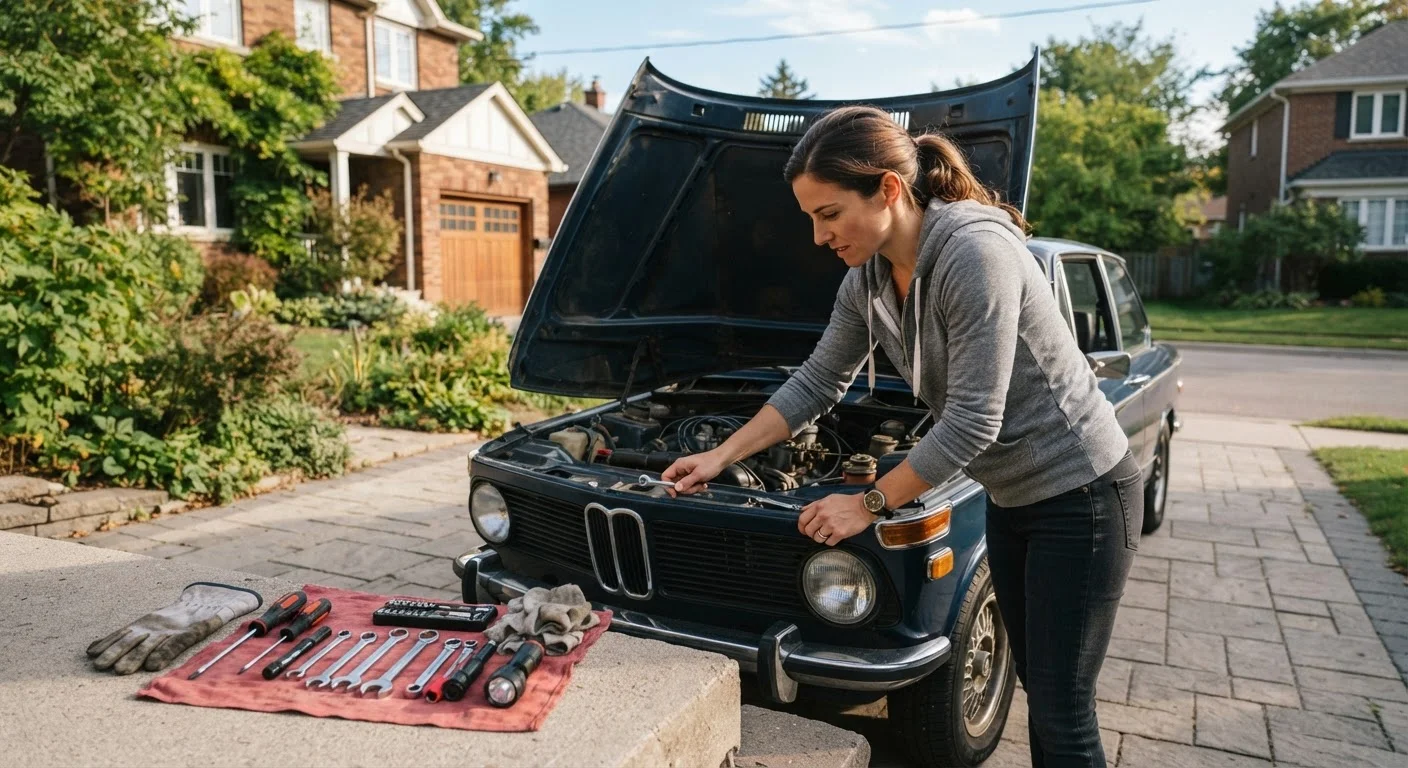
Do-it-yourself car maintenance spans a wide range - from checking tire pressure in your driveway to replacing a serpentine belt in your garage. Most everyday drivers are capable of handling a meaningful tier of routine upkeep without professional help, provided they have the right information and basic tools.
Tasks generally considered accessible to home mechanics include: engine oil and filter changes, cabin and engine air filter replacements, windshield wiper blade swaps, battery terminal cleaning, spark plug replacement on many modern engines, and top-offs of fluids like coolant, washer fluid, and power steering fluid. Checking and adjusting tire pressure is straightforward, and understanding tire basics can help you spot wear patterns that signal bigger issues early.
These tasks require minimal specialized equipment, carry low risk if done correctly, and are well-documented in both factory service manuals and reputable online resources. They're also the types of jobs covered in a good seasonal car maintenance checklist.
Reduces routine maintenance costs significantly
Labor accounts for a large share of most service bills. Handling oil changes, filter swaps, and fluid checks yourself can add up to hundreds of dollars saved per year on a single vehicle.
Builds hands-on knowledge of your vehicle
Regularly working on your car helps you recognize what's normal - how components look, sound, and feel - making it easier to spot developing problems before they become costly failures.
Faster turnaround on routine tasks
An oil change at home takes 30-45 minutes without scheduling or waiting. For straightforward jobs, DIY eliminates shop wait times entirely.
Control over parts quality and sourcing
DIY mechanics can choose which parts go into their vehicle rather than relying solely on whatever a shop stocks, though it's important to use parts that meet the manufacturer's specifications.
Satisfying and educational experience
For many drivers, maintaining their own vehicle builds confidence and a practical understanding of mechanical systems that carries over into better driving and ownership decisions.
The Risks That Come with DIY
DIY maintenance has a real downside when a job is mismatched to the mechanic's skill level. Brake system work is the most consequential example - incorrectly installed brake pads or calipers, or improperly bled brake lines, can cause brake failure. That's not a risk worth taking to save a shop fee.
Other work that regularly trips up home mechanics includes suspension and steering components (incorrect torque specs or alignment can destabilize a vehicle), timing belt or chain replacement (an error here can destroy an engine), and any work touching airbag systems or advanced driver-assistance sensors. Modern vehicles increasingly integrate electronics into mechanical systems, meaning a physical repair can create software or sensor faults that require dealer-level diagnostic tools to resolve.
There's also the warranty question. Certain repairs performed outside a licensed shop - or with non-OEM parts on newer vehicles - can affect powertrain or emissions warranty coverage, depending on the manufacturer's terms. Check your owner's manual and warranty documentation before starting any substantive repair. If a job is beyond your current abilities, understanding a mechanic's estimate helps you engage with a professional confidently rather than blindly.
Mistakes on safety systems can be dangerous
Errors in brake, steering, or suspension work can compromise vehicle control. Unlike a cosmetic mistake, a mechanical error in these systems puts lives at risk.
Modern vehicles require expensive diagnostic tools
Many repairs on current vehicles need OBD-II scanners or dealer-level software to complete or verify correctly. Without these tools, a DIY repair may leave hidden faults unresolved.
Risk of voiding warranty coverage
Certain repairs or non-approved parts can affect warranty terms on newer vehicles. It's essential to review your warranty documentation before performing substantive work.
Incomplete repairs can worsen the original problem
A partially completed job - such as a brake bleed done incorrectly or a stripped drain plug - can turn a routine task into a more expensive professional repair.
Upfront tool investment can offset savings
A quality torque wrench, jack stands, and specialty sockets cost money. For infrequent repairs, renting tools or paying a shop may be more economical overall.
Drawing the Line: A Practical Framework
A useful mental framework: ask three questions before starting any repair.
- Is this safety-critical? Brakes, steering, suspension, tires, and lighting all fall into this category. If a mistake could cause loss of vehicle control or harm to another road user, the margin for error is zero.
- Do I have the right tools? Some jobs require torque wrenches, spring compressors, OBD-II scanners, or specialty sockets. Improvising with the wrong tool often causes more damage than the original problem.
- Is there a clear, vehicle-specific procedure I can follow? Generic how-to videos don't account for your specific make, model, and model year. A factory service manual or a verified model-specific guide matters.
If any answer raises doubt, the task belongs with a qualified technician. The same logic applies to home repair decisions - knowing your limits is the foundation of smart DIY in any context, as explored in frameworks like when to call a pro vs. handle it yourself.
Also keep in mind that deferred maintenance - avoiding both DIY and professional service - is always the worst outcome. Small items left unaddressed tend to escalate into expensive failures, a dynamic covered in detail in neglected maintenance items that lead to expensive repairs.
When in Doubt, Get a Pre-Repair Inspection
If you're unsure whether a job is within your abilities, many independent shops will inspect a specific component for a modest diagnostic fee before you commit to DIY or a full repair quote. This gives you an honest baseline without obligating you to a particular course of action. It's especially worthwhile before attempting any brake, suspension, or electrical work for the first time.
The content on this site is provided for informational purposes only and should not be considered a substitute for professional advice. While we strive to provide accurate and up-to-date information, we make no guarantees regarding its completeness or accuracy. Always consult a qualified professional for advice specific to your circumstances before making any decisions.