

Our Verdict
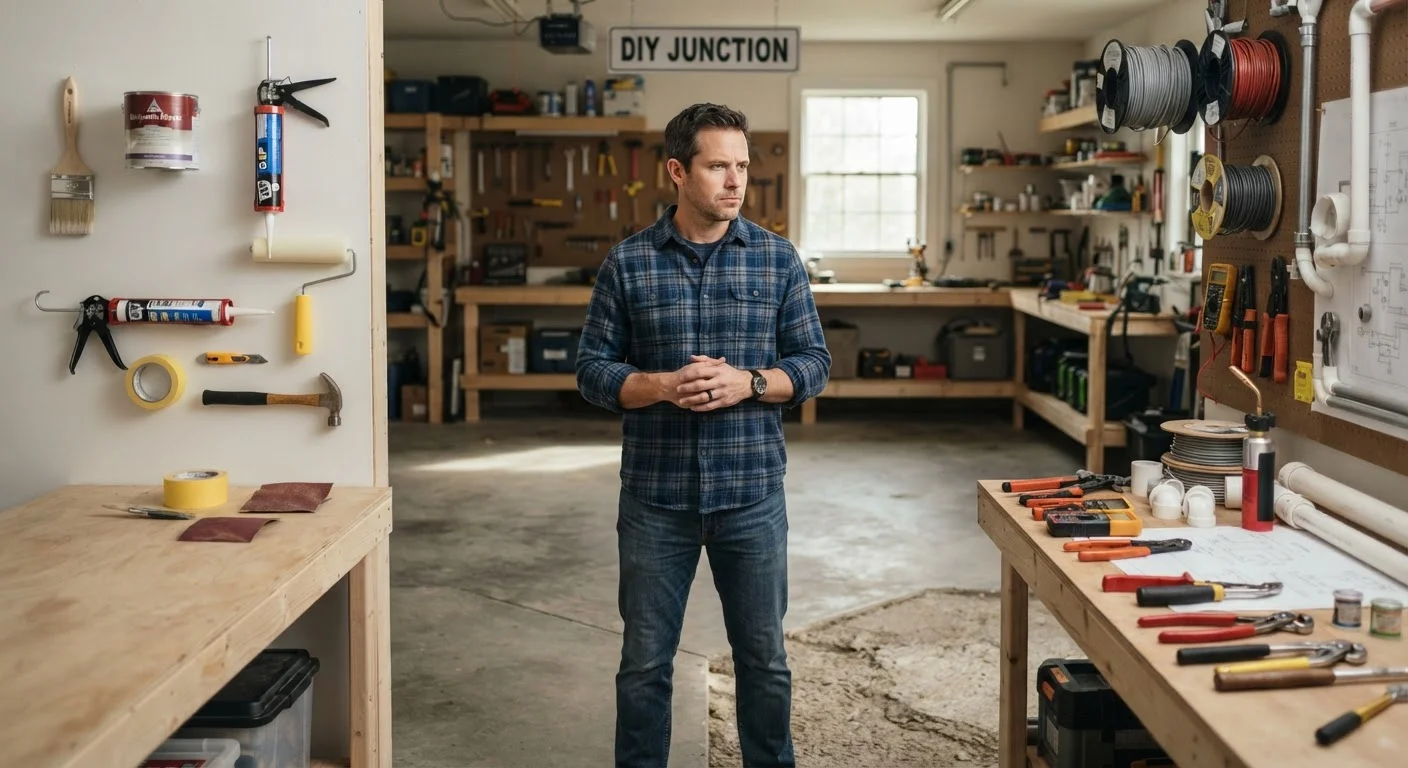
Neither DIY nor hiring a professional is universally right - the best approach depends on the specific task, the risks involved, local code requirements, and your own verified skill level. Low-stakes cosmetic work is well within most homeowners' reach, while anything touching utilities, structure, or permitted systems almost always warrants professional involvement. Making this judgment call carefully protects both your household and your home's long-term value.
| Best for | Recommended |
|---|---|
| Confident, experienced homeowners with basic tool knowledge | DIY for low-risk maintenance tasks |
| Any homeowner dealing with electrical, gas, or structural systems | Licensed professional every time |
| Homeowners preparing to sell or refinance | Licensed professional to ensure permitted, code-compliant work |
| New homeowners building familiarity with their property | DIY for inspections and cosmetic upkeep, pro for repairs |
The Core Decision Framework
Every repair decision starts with three filters: safety risk, permit requirements, and your realistic skill level. Run any task through all three before picking up a tool or calling a contractor.
Safety risk is the non-negotiable first gate. Work involving electricity, natural gas, load-bearing structures, or roofing systems carries the potential for serious injury, fire, or catastrophic home damage if done incorrectly. These categories warrant professional involvement almost without exception - not because homeowners lack intelligence, but because the failure modes are severe and sometimes invisible until it's too late.
Permit requirements are the second filter most homeowners underestimate. Many jurisdictions require permits for electrical panel work, HVAC replacement, additions, window replacements, and significant plumbing changes. Unpermitted work can complicate home sales, void insurance claims, and create liability. Check with your local building department before starting any project of meaningful scope. See our guide to common maintenance terms for definitions of permit-related language you'll encounter.
Skill level is the honest self-assessment piece. Watch a tutorial, read the manufacturer instructions, and ask: if this goes wrong, what's the consequence? A misapplied coat of paint is recoverable. A misconnected junction box is not.
What's Generally Safe to DIY
A wide range of maintenance tasks are well within the reach of a careful, prepared homeowner. These typically share a few traits: low failure consequence, no permit requirement, and clear manufacturer guidance.
- Cosmetic repairs: Interior painting, patching drywall nail holes, replacing cabinet hardware, caulking around tubs and windows
- Appliance maintenance: Cleaning dryer vents, replacing refrigerator water filters, swapping HVAC filters monthly or as recommended
- Minor plumbing: Replacing a toilet flapper, swapping a showerhead, unclogging drains with a plunger or hand snake
- Landscaping and exterior care: Gutter cleaning (single-story, with proper ladder safety), reseeding lawn patches, touch-up exterior paint
- Weatherization: Adding door sweeps, replacing worn weatherstripping, applying window insulation film
These tasks, done consistently and seasonally, prevent the kind of neglect that escalates into expensive repairs. Our seasonal maintenance guide outlines which jobs to schedule and when.
Document Your DIY Work
Keep a simple log of every repair you complete - date, materials used, and photos before and after. This record helps future contractors understand the home's history and can demonstrate due diligence if questions arise during a home sale or insurance claim. A home binder or digital folder works equally well.
When to Call a Licensed Professional
Certain systems in your home carry stakes high enough that DIY attempts - even well-intentioned ones - can result in injury, code violations, or damage that costs far more to remediate than the original repair would have.
| Task Category | DIY-Friendly | Hire a Pro | |
|---|---|---|---|
| Interior painting | Yes - low risk, no permit needed | Not typically necessary | |
| Electrical panel / new circuits | No - shock and fire risk | Yes - licensed electrician required | |
| Toilet flapper / showerhead swap | Yes - simple, low consequence | Optional for comfort | |
| Gas line or appliance connection | No - serious leak and fire risk | Yes - licensed plumber or gas fitter | |
| Drywall patching (cosmetic) | Yes - recoverable if imperfect | Not typically necessary | |
| Load-bearing wall removal | No - structural failure risk | Yes - contractor and permit required | |
| HVAC filter replacement | Yes - manufacturer-guided task | Not typically necessary | |
| Full roof replacement | No - fall risk and permit required | Yes - licensed roofer |
Electrical work beyond replacing a standard outlet or light switch - panel upgrades, new circuits, AFCI or GFCI installation, wiring behind walls - requires a licensed electrician in most states. The risk of fire or electrocution from improper connections is real and often delayed, appearing months after the work is done.
Gas lines and appliances should never be modified or connected by an unlicensed homeowner. Gas leaks are odorless at trace levels and can accumulate silently. Any work on gas lines, water heaters, or gas appliances requires a licensed plumber or gas fitter.
Structural modifications - removing walls (especially load-bearing ones), adding or enlarging openings, foundation repair - require engineering knowledge and typically a permit and inspection. Guessing wrong on a load-bearing wall has profound consequences.
Roofing carries both fall risk and a high potential for improper installation that leads to water intrusion. Most jurisdictions also require licensed contractors for full roof replacements.
Skipping professional help to save money upfront often reverses that savings many times over. Deferred maintenance compounds costs in exactly this way - the "savings" of avoiding a proper repair become the seed of a much larger expense.
Planning Ahead for Repair Costs
One reason homeowners attempt risky DIY repairs is financial pressure in the moment. Building a dedicated repair reserve changes that calculus. When funds are available, calling a professional feels less like an obstacle and more like a reasonable tool in your homeownership strategy.
Financial guidance generally suggests homeowners set aside between 1% and 2% of their home's value annually for maintenance and repairs - though actual costs vary significantly by home age, condition, and region. Our companion piece on building a home repair emergency fund walks through how homeowners typically approach this planning.
The framework isn't about distrust of your own capabilities - it's about matching the tool to the task. Knowing when to call a pro is itself a skilled homeowner decision.
This article is for general informational and educational purposes only. It does not constitute legal, financial, or professional contracting advice. Always verify permit requirements with your local building authority and consult licensed professionals for work involving electrical, gas, structural, or roofing systems.
The content on this site is provided for informational purposes only and should not be considered a substitute for professional advice. While we strive to provide accurate and up-to-date information, we make no guarantees regarding its completeness or accuracy. Always consult a qualified professional for advice specific to your circumstances before making any decisions.