

Why Small Oversights Become Big Bills
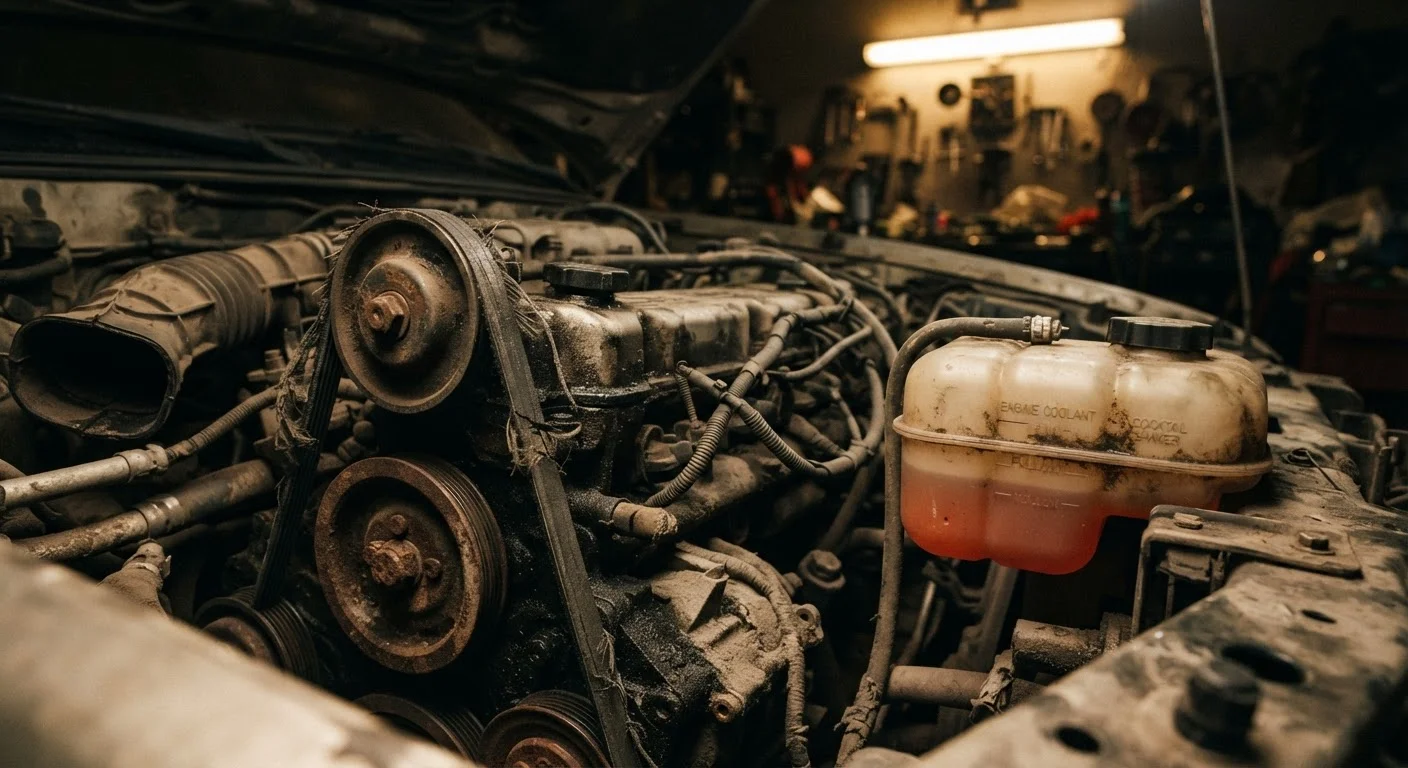
Most major automotive repair bills don't arrive without warning - they're the end result of smaller items quietly ignored over thousands of miles. The challenge is that neglected maintenance rarely announces itself with an immediate symptom. A coolant system that hasn't been serviced, a belt that's cracking at the edges, or transmission fluid that's long overdue for a change can all appear fine to the eye while degrading steadily underneath.
Understanding which maintenance items carry the heaviest consequences when skipped - and why drivers so often skip them - is the first step toward avoiding expensive surprises. If you're ever uncertain about what a repair estimate actually covers, our guide on how to read a mechanic's estimate can help you ask the right questions.
Skipping coolant flushes because the reservoir looks full.
Why it happens: Drivers equate fluid level with fluid condition. A reservoir at the correct level gives no visual indication that the coolant is acidic or degraded.
Ignoring the timing belt replacement interval until the belt fails.
Why it happens: Timing belt replacement is expensive upfront and the belt often shows no obvious external symptoms before snapping. Drivers delay it hoping to avoid the cost.
Never changing transmission fluid because shifting still feels normal.
Why it happens: Transmission wear accumulates gradually, and symptoms like rough shifting or slipping often don't appear until significant internal damage has already occurred.
Treating brake fluid as a set-and-forget item.
Why it happens: Because brake pedal feel typically doesn't degrade noticeably as fluid ages, many drivers assume it doesn't need attention between pad or rotor replacements.
Delaying air filter replacement until engine performance drops noticeably.
Why it happens: Engine air filters are out of sight under the hood, and a clogged filter causes gradual rather than sudden performance loss, making the decline easy to miss.
The Maintenance Items Most Likely to Be Overlooked
While oil changes get plenty of attention, several other service items are routinely deferred until damage is already done. Here's a closer look at what mechanics most commonly see neglected - and what the stakes are.
$1,500-$4,000+
Typical transmission rebuild or replacement cost
Industry repair data consistently shows transmission failure is among the most expensive single repairs a driver can face, much of it attributable to neglected fluid changes.
60,000-100,000 mi
Common timing belt replacement window
Manufacturer-specified intervals vary widely by engine design; consulting the owner's manual is the only reliable way to know the correct interval for a specific vehicle.
Coolant System
Engine coolant (also called antifreeze) breaks down over time, becoming acidic and corroding internal components. Most manufacturers recommend a coolant flush every 30,000 to 50,000 miles, but many drivers skip it entirely. A degraded cooling system can lead to overheating, blown head gaskets, or a warped engine block - repairs that can easily run into the thousands.
Timing Belt or Timing Chain
The timing belt synchronizes the rotation of the engine's crankshaft and camshaft. If it snaps without warning - which it can - the result is often catastrophic internal engine damage. Replacement is typically recommended between 60,000 and 100,000 miles depending on the vehicle; check your owner's manual for the specific interval.
Transmission Fluid
Automatic and manual transmissions rely on fluid to lubricate and cool their moving parts. Old, degraded fluid causes excessive wear that accumulates silently. Transmission replacement or rebuild is one of the most expensive repairs a driver can face, often ranging from $1,500 to well over $4,000.
Brake Fluid
Brake fluid is hygroscopic - meaning it absorbs moisture from the air over time. As water content rises, the fluid's boiling point drops, increasing the risk of brake fade under heavy use. Many drivers never think to change it, yet most manufacturers recommend doing so every two years regardless of mileage.
It's worth noting that many of the same compounding-cost dynamics apply beyond vehicles. The cost of deferred home maintenance follows an almost identical pattern.
Timing Belt Failure Can Total an Engine
Unlike most worn components, a timing belt that snaps does not simply cause a breakdown - it can cause the engine's pistons and valves to collide, resulting in catastrophic internal damage. In many cases, the repair cost exceeds the vehicle's value. If your vehicle is approaching its manufacturer-specified timing belt interval, do not delay the replacement.
Building a Maintenance Habit That Actually Sticks
The most reliable approach is simple: use your vehicle's owner's manual as the primary reference for service intervals, not mileage stickers or generalized internet rules. Manufacturer intervals are specific to your engine design, fluid capacities, and operating conditions. Our article on common car maintenance myths addresses several outdated rules that lead drivers astray.
Setting calendar reminders tied to your odometer readings takes less than five minutes and can prevent you from unknowingly sailing past a critical service window. If you prefer hands-on involvement, understanding which tasks are appropriate for a home driveway versus a professional shop is equally important - see our guide on knowing where the DIY line is before picking up a wrench.
Finally, a routine inspection by a qualified mechanic - even when nothing seems wrong - can surface wear patterns that aren't visible or audible yet. Proactive maintenance consistently costs less than reactive repair.
The content on this site is provided for informational purposes only and should not be considered a substitute for professional advice. While we strive to provide accurate and up-to-date information, we make no guarantees regarding its completeness or accuracy. Always consult a qualified professional for advice specific to your circumstances before making any decisions.