

Why the Term 'Scheduled Maintenance' Is Vague by Default
Walk into almost any dealership or independent shop and mention scheduled maintenance, and you'll likely get a confident nod-but what actually lands on your invoice can vary widely. The phrase itself isn't regulated or standardized. A "scheduled maintenance service" at one shop might mean an oil change and a visual inspection; at another, it could include a dozen additional fluid checks, filter swaps, and component adjustments.
The real authority on what your vehicle needs-and when-is your owner's manual. Manufacturers engineer specific service intervals based on how components wear under normal operating conditions. Following those intervals, rather than a shop's generic service menu, is the most reliable approach. See how to read your car's maintenance schedule for a practical guide to finding and interpreting that information.
Severe vs. Normal Driving Conditions
Many owner's manuals list two maintenance schedules: one for 'normal' driving and one for 'severe' conditions-frequent short trips, towing, dusty environments, or extreme temperatures. Most everyday drivers fall into the normal category, but it's worth checking since severe-condition intervals are shorter and may apply to your situation.
What Most Service Visits Actually Include
While the specifics depend on mileage milestone and vehicle type, most standard scheduled maintenance visits cover a core set of tasks:
- Oil and filter change: Replaces degraded engine oil and the filter that catches contaminants. The interval depends on whether your vehicle uses conventional or synthetic oil-check your manual, not the old "every 3,000 miles" rule of thumb, which is outdated for most modern engines.
- Tire rotation: Moves tires between positions to promote even tread wear, extending tire life and maintaining handling balance.
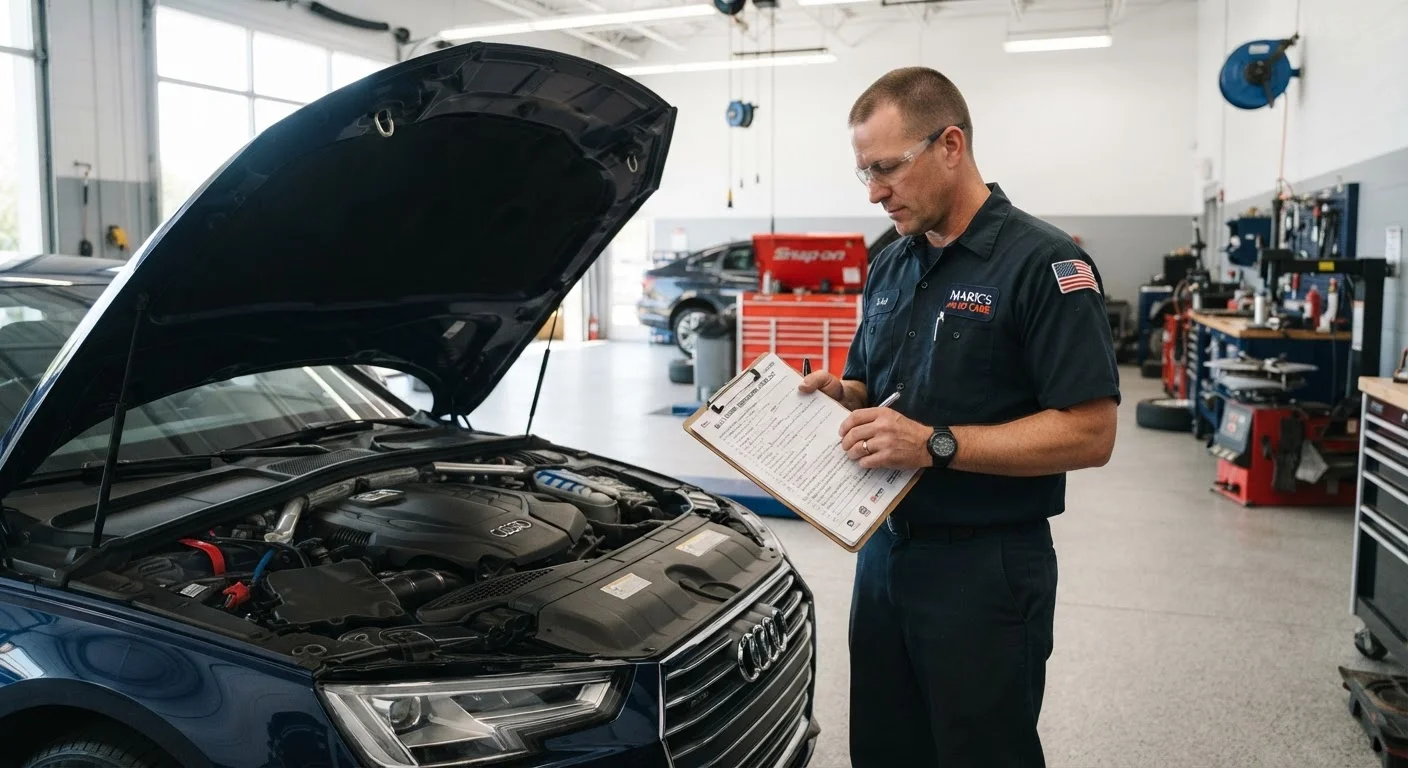
- Multi-point inspection: A technician visually checks key systems-brakes, belts, hoses, battery, lights, and fluid levels-and flags anything that appears worn or low. This is an inspection, not a repair; items flagged may require a separate service appointment.
- Fluid top-offs: Some shops top off washer fluid, coolant, and brake fluid as part of a standard visit. Others charge separately. Ask upfront.
At higher mileage milestones (typically around 30,000, 60,000, and 90,000 miles), additional services are commonly added: air filter replacement, cabin air filter replacement, spark plug replacement, brake fluid flush, transmission fluid service, and coolant flush. Not all of these are needed at every interval-your manual specifies which apply and when.
80%
Of vehicles on the road are overdue for some maintenance
According to the Car Care Council, approximately 80% of vehicles inspected at care events show at least one needed maintenance item.
5,000-10,000 mi
Typical synthetic oil change interval for modern engines
Most major automakers recommend synthetic oil changes every 5,000 to 10,000 miles, making the old 3,000-mile guideline outdated for the majority of current vehicles.
30K / 60K / 90K
Common major service mileage milestones
These mileage points are where manufacturers typically introduce additional services beyond an oil change, such as spark plugs, transmission fluid, and belt inspections.
What Scheduled Maintenance Typically Does Not Cover
Understanding what's excluded is just as important as knowing what's included. A scheduled maintenance visit is not a comprehensive repair or diagnostic session. It generally does not include:
- Diagnosing a specific complaint or warning light (that typically requires a separate diagnostic fee)
- Replacing worn brake pads or rotors (flagged during inspection, quoted separately)
- Repairing leaks, electrical faults, or damaged components
- Wheel alignment (often recommended alongside tire rotation but priced separately)
Shops sometimes bundle extra services into maintenance packages-fuel system cleaning, engine flush treatments, or injector cleaners-and present them as standard. Some of these may have legitimate use cases; others are not required by your manufacturer. Always compare any recommendation against your owner's manual before agreeing. For a look at which neglected items tend to cause the most damage over time, see maintenance items most commonly overlooked.
How to Approach Your Next Service Visit
A few straightforward habits make scheduled maintenance more useful and less opaque:
- Know your mileage milestone. Check your owner's manual before you book. Know whether you're due for a basic interval or a more comprehensive one that adds filter or fluid services.
- Ask for an itemized estimate. Request a written list of exactly what the visit includes and what each item costs before authorizing any work.
- Keep your records. A service log-whether paper or digital-documents what was done and when. This protects your warranty, helps you avoid duplicate services, and is valuable if you sell the vehicle.
- Don't skip seasonal considerations. Your regular service intervals work alongside seasonal checks. The seasonal car maintenance checklist covers what to watch for at different times of year.
Always Ask for an Itemized List
Before authorizing any service, request a written breakdown of every task included and its individual cost. This makes it easy to cross-reference against your owner's manual and decline anything not yet due. A reputable shop will have no hesitation providing this.
Staying on schedule is less about rigidly following calendar dates and more about understanding what your specific vehicle needs at each mileage point. That knowledge puts you in a much stronger position when talking to any service advisor.
Frequently Asked Questions
Most standard scheduled maintenance visits include an oil and filter change, tire rotation, and a multi-point inspection of key systems like brakes, fluids, belts, and lights. Additional services-such as air filter replacement or cabin filter swap-are added depending on the mileage milestone.
Your vehicle's owner's manual lists the manufacturer-recommended service intervals by mileage and time. Many modern vehicles also have a dashboard maintenance reminder light or display that alerts you when service is due.
No. The term 'scheduled maintenance' is not standardized across dealerships and independent shops. What's bundled into a service package can vary significantly, so it's worth asking for an itemized list of what any given visit includes.
No. As long as service is performed to manufacturer specifications and documented properly, using a qualified independent shop does not void your warranty under the Magnuson-Moss Warranty Act. Keep all receipts and records.
Skipping maintenance can allow minor wear to compound into major failures-for example, low coolant or a worn timing belt can lead to engine damage. It may also affect your warranty coverage if a failure is traced to neglected service.
The content on this site is provided for informational purposes only and should not be considered a substitute for professional advice. While we strive to provide accurate and up-to-date information, we make no guarantees regarding its completeness or accuracy. Always consult a qualified professional for advice specific to your circumstances before making any decisions.