

Summary
22 items · 45-90 minutes
Why Pre-Trip Preparation Pays Off
Long highway drives expose every weakness in a vehicle. Sustained speeds put sustained load on tires, the cooling system, belts, and the battery - components that might limp along fine during short commutes but fail decisively on an interstate far from help. The good news is that most roadside breakdowns are preventable with basic preparation done ahead of time.
This checklist is designed for everyday drivers, not mechanics. Some items you can handle yourself in a driveway; others are better handed to a professional. Either way, working through each category before departure is far less disruptive - and less expensive - than dealing with a failure mid-trip. For a quick habit to build into every drive, not just long ones, see our pre-trip safety walk-around guide.
Schedule Checks at Least One Week Out
Booking a pre-trip inspection the day before you leave eliminates your options if a mechanic finds something that needs attention. Give yourself at least a week so that parts can be ordered, repairs can be completed, and you're not starting a long drive on a rushed fix.
What You'll Need
Most pre-trip checks require only a few basic tools you likely already have or can pick up inexpensively. Having them on hand before you start working through the checklist keeps the process efficient.
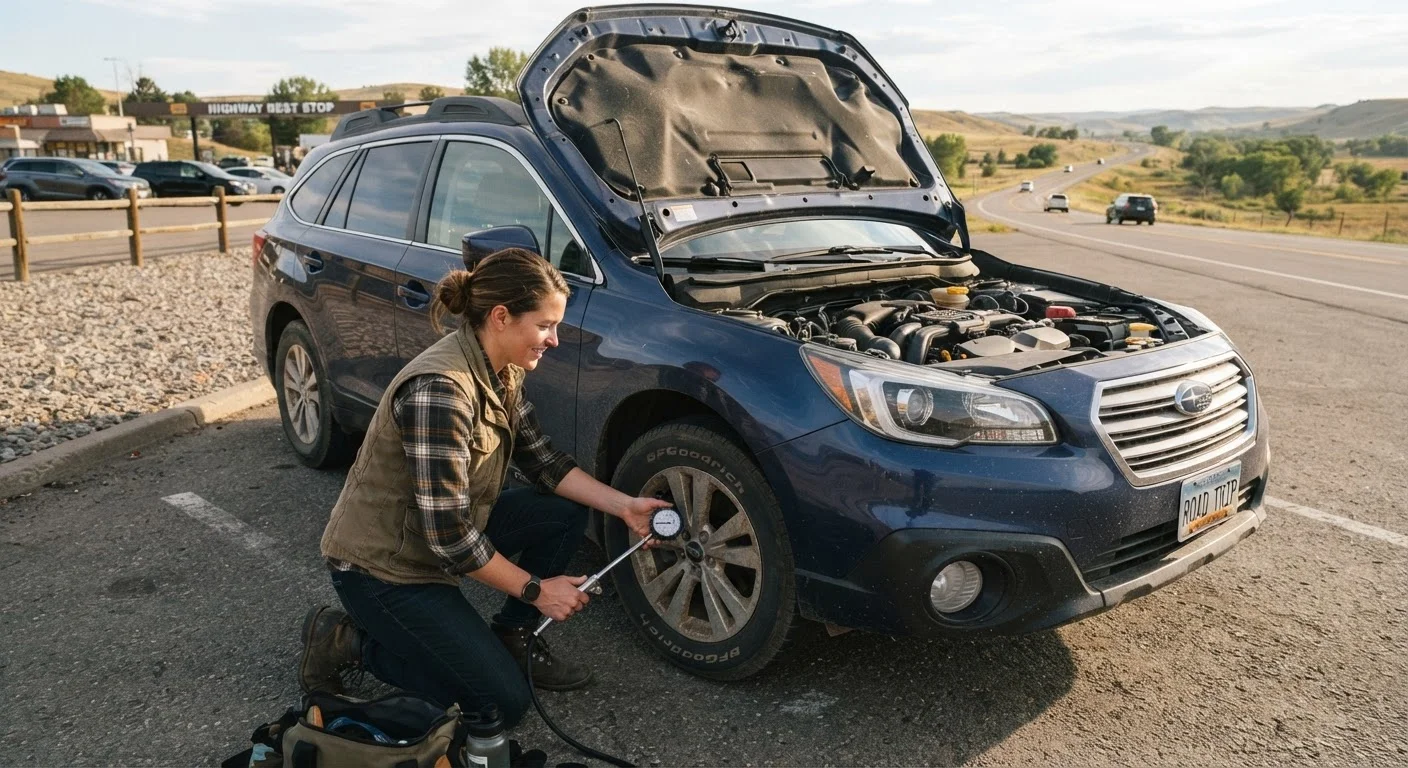
Tire Pressure Gauge
Accurately measure PSI in all tires, including the spare, before departure.
Owner's Manual
Look up correct tire pressure, fluid specifications, and service intervals specific to your vehicle.
OBD-II Scanner (code reader)
Read diagnostic trouble codes if a Check Engine light is on, helping you understand the issue before seeing a mechanic.
Jumper Cables or Portable Jump-Start Pack
Restart a dead battery on the road without needing another vehicle nearby.
Flashlight or Headlamp
Inspect engine components and perform roadside tasks safely in low-light conditions.
Roadside Emergency Kit
Supply reflective triangles, basic tools, and a first-aid kit for handling unexpected stops safely.
If you want to understand which maintenance rules are outdated - for example, whether you really need an oil change every 3,000 miles - our car maintenance myth guide separates fact from habit.
The Road Trip Preparation Checklist
Work through each group methodically. If an item is outside your comfort level, flag it for a mechanic rather than skipping it. Many independent shops offer a multi-point pre-trip inspection for a nominal fee that covers most of these categories at once.
Tires & Wheels
Fluids
Battery & Electrical
Brakes & Steering
Belts, Hoses & Engine Components
Emergency Preparedness
Don't Ignore Dashboard Warning Lights
A Check Engine light, oil pressure warning, or temperature gauge in the red are not issues to defer until after your trip. Some indicate conditions - such as low oil pressure or engine overheating - that can cause severe, costly engine damage within minutes of driving. Have any active warning lights diagnosed by a qualified mechanic before you depart.
Brake Work Belongs With a Professional
Brake inspection and repair are safety-critical tasks. Unless you have confirmed mechanical training and proper equipment, brake pad replacement, rotor resurfacing, and caliper inspection should be performed by a licensed mechanic. Improperly serviced brakes pose a serious risk to you, your passengers, and other drivers.
Small oversights compound into large failures. For a deeper look at which neglected items most commonly lead to expensive repairs, visit our guide to neglected maintenance.
Battery and Electrical: A Commonly Overlooked Risk
A battery that starts the car reliably in your driveway may still be near the end of its service life. Heat cycling during long drives, combined with the electrical load of air conditioning, navigation, and phone charging, can push a marginal battery over the edge. Most batteries carry a service life of three to five years, though this varies significantly by climate and usage patterns.
For a complete picture of what shortens a battery's life and what warning signs to watch for, our battery care guide covers the topic in detail. Many auto parts retailers will test your battery at no charge - it's worth taking five minutes to confirm yours is in good shape before you leave.
The content on this site is provided for informational purposes only and should not be considered a substitute for professional advice. While we strive to provide accurate and up-to-date information, we make no guarantees regarding its completeness or accuracy. Always consult a qualified professional for advice specific to your circumstances before making any decisions.