

Start here
Why a Simple Routine Beats a Complex One
Build your foundation
The Four Essentials Every Beginner Needs
Apply correctly
How to Layer Products in the Right Order
Know your skin
Knowing Your Skin Type
Add safely
Introducing New Products Safely
Level up
When to Expand Your Routine
Why a Simple Routine Beats a Complex One
The skincare industry can make it feel like you need a shelf of serums, acids, and specialty treatments before your skin stands a chance. The reality, supported by dermatological science, is quite different: a small number of consistently applied, well-chosen products outperforms an elaborate routine used haphazardly.
More products also mean more variables. When your skin reacts - whether positively or negatively - a five-step routine makes it nearly impossible to know what caused the change. Starting simple gives your skin time to adjust and gives you the information you need to make smart additions later.
If you're curious about how skincare compares to other foundational wellness habits, our guide to preventive care from the ground up offers a useful parallel perspective.
The Four Essentials Every Beginner Needs
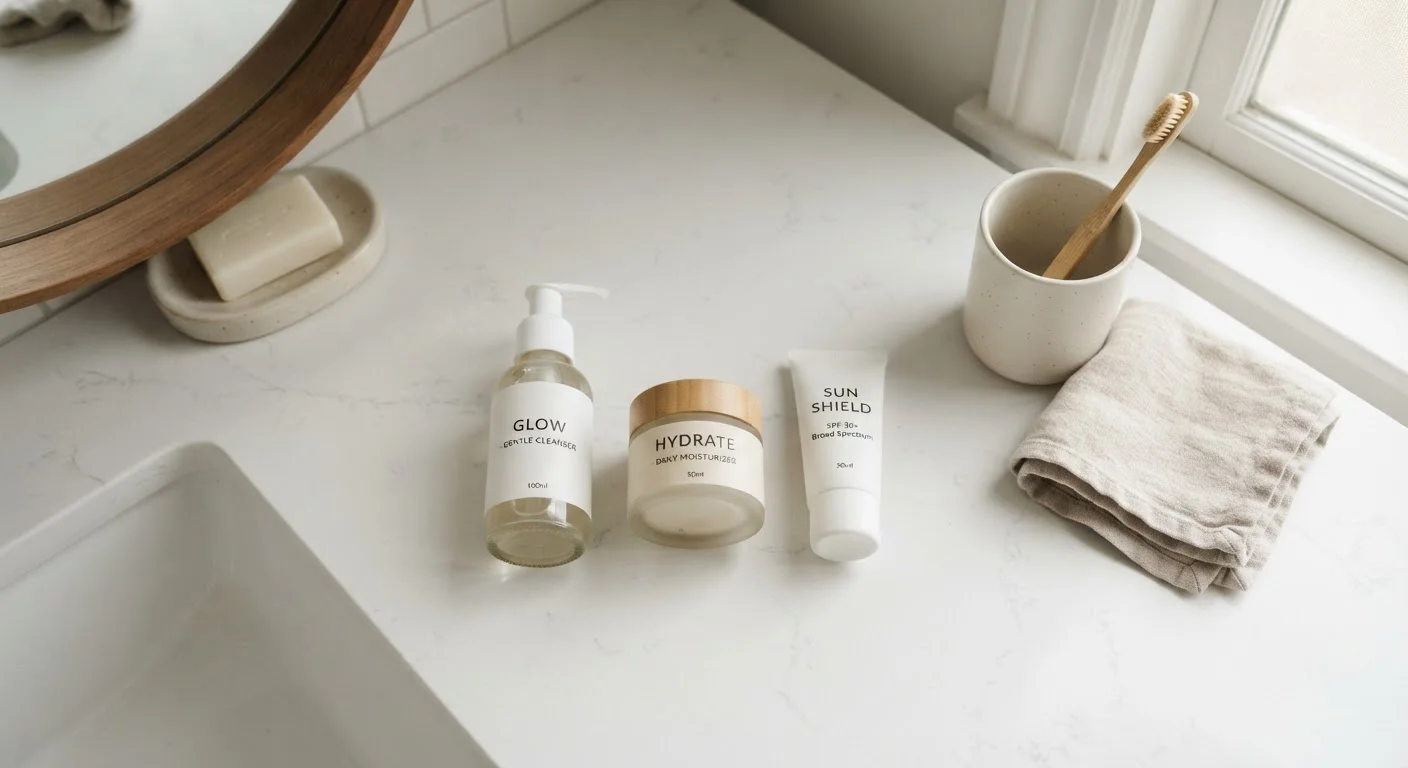
A functional starter routine has four components - and each earns its place based on evidence, not trend.
Skin barrier
The outermost layer of skin that acts as a protective shield, keeping moisture in and irritants and bacteria out. A compromised barrier leads to dryness, sensitivity, and inflammation.
Broad-spectrum SPF
Sunscreen labeled 'broad-spectrum' protects against both UVA rays (which cause aging and DNA damage) and UVB rays (which cause sunburn). SPF 30 blocks about 97% of UVB rays.
Non-comedogenic
A term used on product labels to indicate the formula is designed not to clog pores - particularly relevant for oily or acne-prone skin types.
Sebum
The natural oil produced by glands in the skin. Sebum helps keep skin hydrated and protected, but overproduction can contribute to shine and clogged pores.
Occlusive
A category of moisturizing ingredient that forms a protective film on the skin's surface to physically prevent water from evaporating. Examples include petrolatum and certain plant-based waxes.
Active ingredient
An ingredient in a skincare product that is intended to produce a specific, measurable change in the skin - such as exfoliating, brightening, or reducing oil production.
- Cleanser: Removes dirt, excess oil, and environmental pollutants that accumulate on skin throughout the day and night. A gentle, non-stripping formula is appropriate for nearly all skin types.
- Moisturizer: Supports the skin's moisture barrier - a critical defense layer that keeps irritants out and hydration in. Even oily skin types benefit from a lightweight moisturizer.
- Sunscreen (SPF 30+): The most evidence-backed anti-aging and skin-health tool available. Broad-spectrum sunscreen protects against both UVA and UVB rays, which contribute to premature aging and increase skin cancer risk.
- Nighttime moisturizer or repair step (optional): At night, the same moisturizer used in the morning often works fine. Some people choose a slightly richer formula for overnight recovery.
For a detailed breakdown of what each step actually does at a biological level, see our article on what each step in a basic skincare routine is for.
How to Layer Products in the Right Order
The order you apply skincare products in matters because each layer affects how the next one absorbs. The general principle: apply from thinnest consistency to thickest.
- Cleanse - Always the first step, morning and night.
- Any treatment serums - These come after cleansing but before moisturizer. Beginners can skip this until the core routine is established.
- Moisturize - Seals in the previous layers and supports the skin barrier.
- Sunscreen (AM only) - Applied last in the morning as a physical barrier. Sunscreen should never be layered under moisturizer; it needs to sit on top to work as intended.
Consistency Is the Most Powerful Variable
Research consistently shows that the habit of daily application matters more than which specific products you use. Committing to your routine every morning and night - even when you're tired - delivers more cumulative benefit than any individual ingredient. Think of your routine as a daily deposit, not a quick fix.
Your AM and PM routines will differ slightly by design. To understand why certain ingredients belong only in nighttime use, the article on morning vs. night routine differences explains the reasoning clearly.
Knowing Your Skin Type
Choosing products that suit your skin type prevents the most common beginner frustration: buying something widely recommended that just doesn't work for you. There are five generally recognized skin types:
- Normal
- Balanced - not noticeably oily or dry, minimal sensitivity.
- Oily
- Excess sebum production; enlarged pores; prone to shine and breakouts.
- Dry
- Feels tight or rough; may flake; needs richer, more occlusive moisturizers.
- Combination
- Oily in the T-zone (forehead, nose, chin), drier on cheeks.
- Sensitive
- Reacts easily to new products, fragrances, or environmental changes; prone to redness or stinging.
A simple way to assess your type at home: wash your face with a gentle cleanser, pat dry, and observe after 30 minutes without applying anything. Where your skin looks shiny, you likely produce more oil; where it feels tight or looks flaky, you tend toward dryness.
Introducing New Products Safely
Adding a new product without a plan is one of the most common mistakes beginners make. If a reaction occurs - redness, breakouts, or irritation - you won't know which product caused it.
The rule is straightforward: introduce one new product at a time, and wait at least one to two weeks before adding another. This window lets your skin adjust and gives you clear attribution if something doesn't agree with you.
Before using any new product on your face, a patch test is worthwhile. Our patch test and product introduction checklist walks through the process methodically.
This article is for general informational purposes only and does not constitute medical or dermatological advice. If you experience persistent skin reactions, irritation, or concerns about a skin condition, consult a qualified healthcare professional or board-certified dermatologist.
When to Expand Your Routine
Once your core three- to four-step routine feels comfortable and your skin is stable - typically after four to six weeks - you can consider adding targeted treatments. Common additions include:
- Exfoliants: Chemical exfoliants (AHAs and BHAs) remove dead skin cells and can improve texture and tone. They're generally more precise and less abrasive than physical scrubs. See our comparison of chemical exfoliants vs. physical scrubs for guidance on which approach suits your skin.
- Active ingredient serums: Ingredients like hyaluronic acid and niacinamide address specific concerns - hydration and barrier support, respectively. Our plain-language glossary of common skincare ingredients decodes the label terminology.
If budget is a consideration, not every step requires a premium product. Our article on building a skincare routine on a tight budget explains where to prioritize spending and where you can reasonably economize.
Frequently Asked Questions
Three products cover the essentials: a gentle cleanser, a moisturizer suited to your skin type, and a broad-spectrum SPF 30 or higher sunscreen for daytime. That's a complete, functional routine. You can add products gradually once your skin has adjusted.
Most dermatologists suggest allowing at least four to six weeks of consistent use before evaluating whether a routine is working. Skin cell turnover takes roughly that long, so real changes need time to become visible. Patience and consistency are the most underrated skincare tools.
Yes - daytime routines should always include sunscreen, while nighttime is when you can use ingredients like retinoids or richer moisturizers that work best without UV exposure. The core steps overlap, but the specific products and ingredients used often differ by timing.
Dermatological guidance consistently recommends daily sunscreen use because UVA rays - which contribute to skin aging and can damage DNA - penetrate glass and are present even on overcast days. Daily SPF is considered the single most evidence-backed step for long-term skin health.
A patch test means applying a small amount of a new product to a discreet area of skin - often the inner forearm or behind the ear - and waiting 24 to 48 hours to check for irritation before using it on your face. It's a simple way to catch reactions early.
Skipping moisturizer when skin is oily is a common misconception. Oily skin can still be dehydrated, and skipping hydration may prompt more oil production. A lightweight, non-comedogenic (won't clog pores) moisturizer is generally appropriate for most skin types, including oily skin.
The content on this site is provided for informational purposes only and should not be considered a substitute for professional advice. While we strive to provide accurate and up-to-date information, we make no guarantees regarding its completeness or accuracy. Always consult a qualified professional for advice specific to your circumstances before making any decisions.