

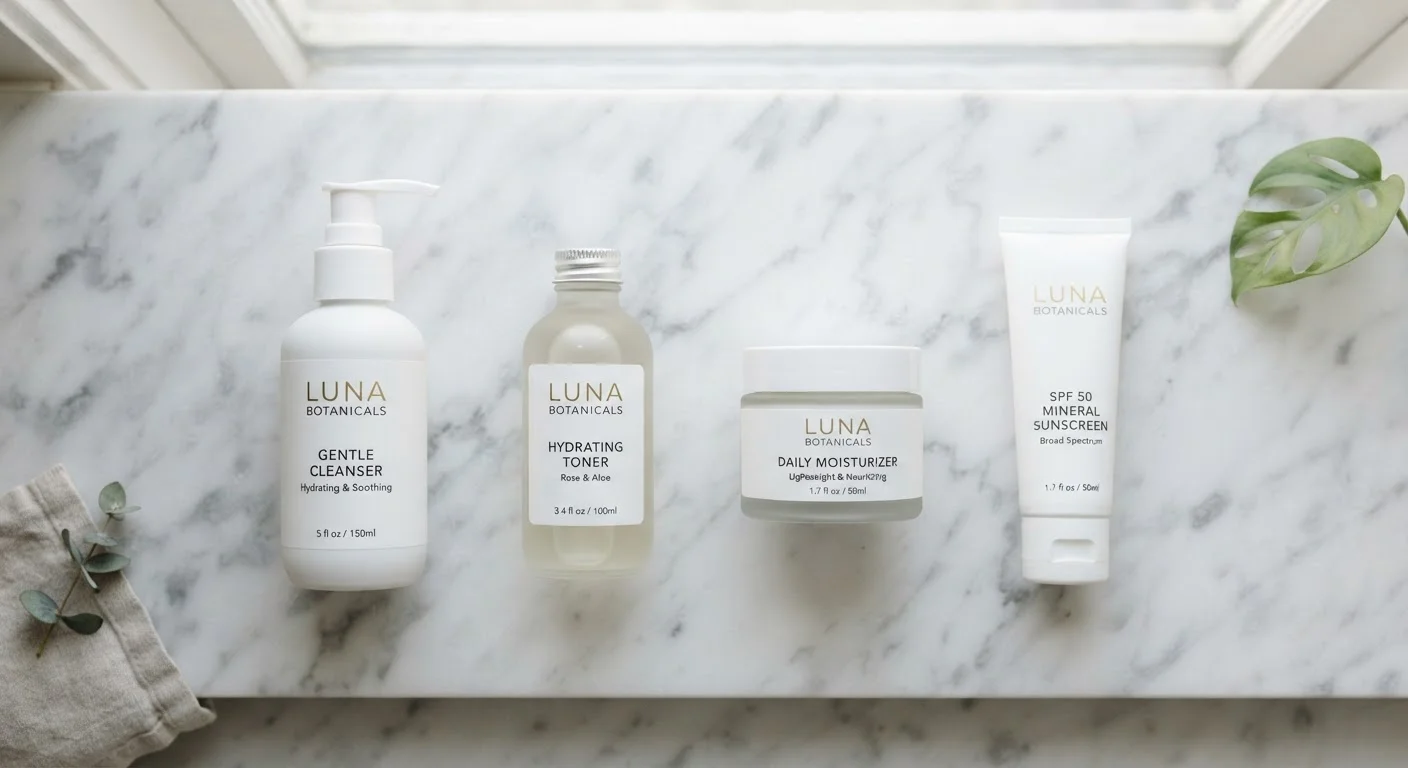
Why the Four-Step Framework Exists
Walk into any pharmacy or scroll any beauty feed and you'll find dozens of products, each claiming to be essential. In reality, dermatologists consistently point to four core steps as the foundation of a functional skincare routine: cleansing, toning, moisturizing, and applying SPF. Each step has a distinct, evidence-supported job. Understanding what that job is - and why the order matters - lets you make smarter decisions about what belongs on your shelf.
The sequencing isn't arbitrary. Products generally move from lightest to heaviest in texture, and from most active to most protective. Disrupting that order can reduce how well individual products penetrate or shield the skin. If you're building a routine from scratch, getting these fundamentals right first saves time and money down the road.
| Number of core steps | 4 (cleanser, toner, moisturizer, SPF) |
| Recommended SPF level | Broad-spectrum SPF 30 or higher (American Academy of Dermatology guidelines) |
| Typical cleansing frequency | Once or twice daily |
| Is toner required? | No - optional but beneficial for many skin types |
| When to apply SPF | Morning only, as the final step |
| Moisturizer application tip | Apply to slightly damp skin to improve moisture retention |
Step 1: Cleanser - Clearing the Surface
A cleanser's job is to remove what has accumulated on the skin's surface: sebum (the skin's natural oil), environmental pollutants, sweat, sunscreen, and makeup residue. Without this step, subsequent products sit on top of debris rather than making contact with actual skin.
Cleansers work by using surfactant molecules that bind to both oil and water, allowing rinsing to carry away impurities. The goal is effective cleansing without stripping the skin's natural moisture barrier. Harsh, high-pH formulas can disrupt that barrier, leaving skin feeling tight or reactive. A gentle, pH-appropriate cleanser - roughly pH 4.5-6.5, mirroring the skin's naturally acidic surface - is generally recommended by dermatologists for daily use.
Most people need to cleanse once or twice a day: once in the morning to clear overnight sebum and once in the evening to remove the day's buildup. Over-cleansing is a real concern - it can compromise the skin barrier just as effectively as skipping the step entirely.
Skin barrier
The outermost layer of the skin (stratum corneum) that prevents water loss and blocks environmental irritants. A healthy skin barrier is essential for comfortable, resilient skin.
Humectant
An ingredient that attracts water molecules from the surrounding environment or deeper skin layers to the skin's surface. Common examples include glycerin and hyaluronic acid.
Emollient
An ingredient that fills spaces between skin cells to smooth texture and improve softness. Ceramides, fatty acids, and squalane are widely used emollients.
Occlusive
An ingredient that forms a physical film on the skin's surface to slow transepidermal water loss (TEWL). Petrolatum and dimethicone are common examples.
Broad-spectrum SPF
A sunscreen that protects against both UVA rays (linked to aging and DNA damage) and UVB rays (linked to sunburn). The SPF number reflects UVB protection level.
pH balance
A measure of acidity or alkalinity on a scale of 0-14. Healthy skin has a slightly acidic pH (around 4.5-5.5), and products that disrupt this can compromise the skin barrier.
Step 2: Toner - More Than Just Refreshing
Toners have a complicated reputation. Older alcohol-heavy formulas were genuinely harsh, stripping moisture and irritating skin. Modern toners are a different category: they're typically water-based liquids applied after cleansing to address a specific concern - hydration, mild exfoliation, or balancing the skin's surface environment.
A hydrating toner (sometimes called a hydrating essence) primarily delivers humectants like glycerin or hyaluronic acid to damp skin, priming it to absorb the moisturizer that follows. Exfoliating toners containing AHAs (like glycolic acid) or BHAs (like salicylic acid) work differently - they accelerate the shedding of dead surface cells. These are actives that require careful use and are not appropriate for every skin type or every routine. For a deeper look at how those ingredients work, see our plain-language glossary of common skincare ingredients.
Toner is technically optional in a minimal routine, but a simple hydrating formula can meaningfully improve how the next steps absorb and perform.
Step 3: Moisturizer - Supporting the Skin Barrier
Moisturizers do not simply add water to the skin. They work through three mechanisms - and the most effective formulas typically combine all three. Humectants (glycerin, hyaluronic acid) draw water toward the skin. Emollients (fatty acids, ceramides, squalane) fill gaps between skin cells to smooth and soften. Occlusives (petrolatum, dimethicone, shea butter) form a physical barrier that slows water loss.
Understanding how these three components work together explains why a single lightweight lotion sometimes isn't enough - especially in dry climates or for compromised skin barriers. A well-formulated moisturizer is one of the most consistently recommended products in dermatology because hydration supports nearly every other aspect of skin health: resilience, appearance, and tolerance of active ingredients.
Apply moisturizer while skin is still slightly damp from toner - this helps trap moisture before it evaporates.
Step 4: SPF - The Step That Protects Everything Else
Sunscreen is the final morning step and, from a skin health standpoint, arguably the most important. Ultraviolet radiation - both UVA and UVB - is the leading environmental cause of premature skin aging, hyperpigmentation, and skin cancer. No amount of serums, antioxidants, or moisturizers undoes the cumulative damage UV exposure causes.
SPF goes on last in the morning routine because it needs to sit on top of the skin, forming a protective layer. Applying anything on top of sunscreen dilutes or disrupts that layer. It's also worth noting that SPF is a morning-only step - applying it at night serves no purpose and does not belong in an evening routine. For the evidence behind daily use and guidance on making the habit stick, see Sunscreen Every Day: The Case for SPF as a Non-Negotiable Skincare Step.
Dermatologists broadly recommend a broad-spectrum SPF 30 or higher for daily use, including on overcast days, because UVA rays penetrate clouds and glass. Reapplication every two hours matters most during extended outdoor exposure.
Your morning and evening routines won't be identical - SPF is the clearest example of why. For a full breakdown of what changes between AM and PM, see our guide on morning vs. night routines.
This article is for general informational purposes only and does not constitute medical or dermatological advice. Consult a qualified dermatologist or healthcare professional for guidance specific to your skin's needs or concerns.
The content on this site is provided for informational purposes only and should not be considered a substitute for professional advice. While we strive to provide accurate and up-to-date information, we make no guarantees regarding its completeness or accuracy. Always consult a qualified professional for advice specific to your circumstances before making any decisions.