

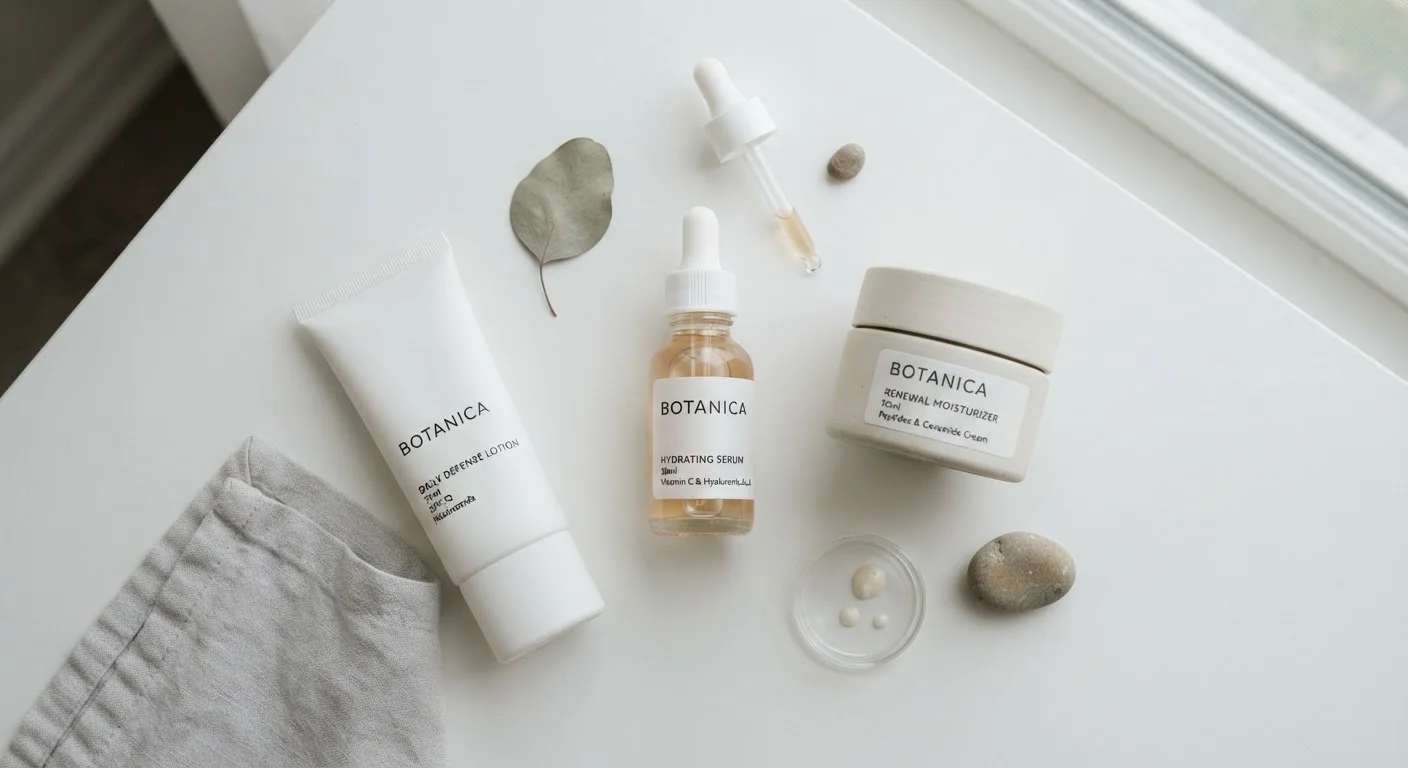
Three Ingredients Your Skin Actually Needs
Walk down any drugstore skincare aisle and you'll find dozens of products promising "deep hydration" or "24-hour moisture." But most of them are built around a single mechanism - and skin hydration requires three. Understanding the difference between humectants, emollients, and occlusives is the single most useful thing you can learn about moisturizing. These categories appear across our skincare basics hub, and for good reason - they're foundational.
Humectants are water-attracting molecules. Ingredients like glycerin, hyaluronic acid, and urea pull water from the environment and from deeper skin layers toward the surface. They temporarily increase skin's water content, which is why skin can feel immediately plumper after applying a humectant serum. The limitation: without something to seal that moisture in, it evaporates.
Emollients fill the gaps between skin cells with lipid-like substances, smoothing rough texture and restoring flexibility. Ingredients such as ceramides, fatty acids, shea butter, and squalane fall into this category. They make skin feel soft and support the lipid matrix that holds the skin barrier together.
Occlusives form a physical film on the skin's surface to slow transepidermal water loss (TEWL) - the passive evaporation of water through skin. Petrolatum, beeswax, dimethicone, and lanolin are classic examples. These are the ingredients that keep moisture from escaping, which makes them particularly valuable in dry or cold climates.
~30%
Water content of a healthy stratum corneum
Dermatological literature generally cites this range as the threshold for maintaining soft, flexible skin; below it, dryness and flaking typically become apparent.
98%
Effectiveness of petrolatum as an occlusive
Research published in dermatology references frequently identifies petrolatum as reducing transepidermal water loss by up to 98%, making it one of the most effective barrier agents available.
2-3 min
Optimal window to apply moisturizer post-wash
Dermatologists commonly recommend applying moisturizer within 2-3 minutes of bathing, while skin is still slightly damp, to maximize humectant uptake and barrier support.
Why Most Lotions Only Do Part of the Job
Standard body and facial lotions are typically water-in-oil or oil-in-water emulsions designed for light, spreadable texture. Manufacturers often prioritize a pleasant feel and fast absorption - which means they usually lean heavily on humectants and light emollients, with minimal occlusive content. This is fine for mildly dehydrated skin in a humid environment, but it's inadequate for compromised or chronically dry skin.
The result is predictable: you apply lotion, feel immediate relief, and 30-60 minutes later your skin feels tight and dry again. The humectants did their job - but with no seal in place, that attracted water simply left through the skin's surface. This is especially pronounced in low-humidity conditions, such as heated indoor air in winter, where humectants can even draw water out of the skin rather than from the air.
For more on how cleansing affects your barrier before you even reach for a moisturizer, see our piece on shower habits that quietly damage skin.
Apply Moisturizer on Damp Skin
One of the most effective and zero-cost changes you can make is timing. Apply your humectant or moisturizer within two to three minutes of washing your face or stepping out of the shower, while skin still retains some surface moisture. This gives humectant ingredients actual water molecules to attract and hold, rather than drawing from the deeper layers of your skin.
How to Layer Effectively - and When to Apply
Effective moisturizing is less about finding a single miracle product and more about layering the right ingredients in the right order. The general principle is straightforward: apply thinner, water-based products first, then seal with progressively richer layers.
- Start with damp skin. Applying a humectant serum or essence within two to three minutes of washing - while skin is still slightly damp - gives it water to draw in, amplifying its effect.
- Follow with an emollient moisturizer. A cream or lotion containing ceramides and fatty acids restores the lipid structure of the barrier and softens texture.
- Add an occlusive if needed. In dry climates, during winter, or for significantly compromised skin, finishing with a thin layer of a balm, facial oil, or ointment locks everything underneath in place.
This layered approach mirrors how dermatologists typically recommend managing conditions like eczema or severely dry skin. It also explains why a single midrange lotion - however well marketed - is structurally limited in what it can accomplish.
For a full picture of where moisturizer fits within a broader routine, see what each step in a basic skincare routine is actually for.
A person applies a glycerin-heavy body lotion after their morning shower, but by mid-morning their skin feels tight and dry again - especially during winter.
Someone with eczema-prone skin uses a fragrance-free emollient cream and finds some improvement, but still experiences overnight flare-ups on particularly dry patches.
An individual with oily skin skips moisturizer entirely, assuming their skin doesn't need it.
A person applies a rich night cream to completely dry skin and finds it sits on the surface and feels greasy rather than absorbing.
Matching Your Moisturizer to Your Skin's Real Needs
Skin type, age, climate, and barrier condition all shape which combination of ingredients will work best. There's no universal formula - but knowing the categories helps you read any ingredient list and make a more informed choice rather than relying on marketing language.
Oily or acne-prone skin typically benefits from lightweight humectants like hyaluronic acid with minimal occlusive content. Normal-to-combination skin usually does well with a balanced emollient moisturizer. Dry, mature, or barrier-compromised skin often needs all three categories working together - a humectant, a ceramide-rich emollient, and a sealing occlusive layer, especially at night.
Climate matters too. In humid conditions, humectants alone can be sufficient for daily maintenance. In dry, cold, or windy environments, occlusives become more important to prevent TEWL from accelerating.
If you're curious how ingredient marketing compares to what the research actually supports, our article on skincare myths dermatologists hear every day is a useful companion read.
This article is for general informational purposes only and does not constitute medical or dermatological advice. If you have a skin condition or persistent concerns about your skin health, consult a qualified dermatologist or healthcare provider.
Frequently Asked Questions
Most lotions are primarily humectants, which attract water but don't lock it in. Without an occlusive ingredient to form a seal, that moisture evaporates from the skin surface - sometimes faster than before application. Pairing a humectant-based lotion with a heavier cream or balm can help address this.
Apply products from thinnest to thickest consistency. Start with a humectant serum or essence, follow with an emollient moisturizer, and finish with an occlusive if needed - such as a balm or oil. This sequence ensures each layer can absorb properly and perform its function.
Some plant-based oils - such as jojoba and squalane - function as light emollients and mild occlusives, but they vary considerably in their sealing ability. Petrolatum (petroleum jelly) remains one of the most effective occlusive agents known in dermatology. Choosing an oil depends on your skin type and how much barrier support you need.
Adequate hydration supports overall body function, but clinical evidence does not strongly support the idea that drinking extra water directly plumps or hydrates the skin's surface layers. Topical moisturization targets the stratum corneum more directly and reliably than internal water intake alone.
Yes - oily skin can still be dehydrated, meaning it lacks water even while producing excess oil. Lightweight humectant-based formulas, such as water-gel moisturizers containing hyaluronic acid, provide hydration without adding heaviness or contributing to congestion.
Some dermatologists suggest that habitually applying heavy occlusives to skin that doesn't need them may reduce the skin's own production of natural moisturizing factors over time. Matching moisturizer intensity to your actual skin condition - rather than always using the heaviest option - is generally the more balanced approach.
The content on this site is provided for informational purposes only and should not be considered a substitute for professional advice. While we strive to provide accurate and up-to-date information, we make no guarantees regarding its completeness or accuracy. Always consult a qualified professional for advice specific to your circumstances before making any decisions.