

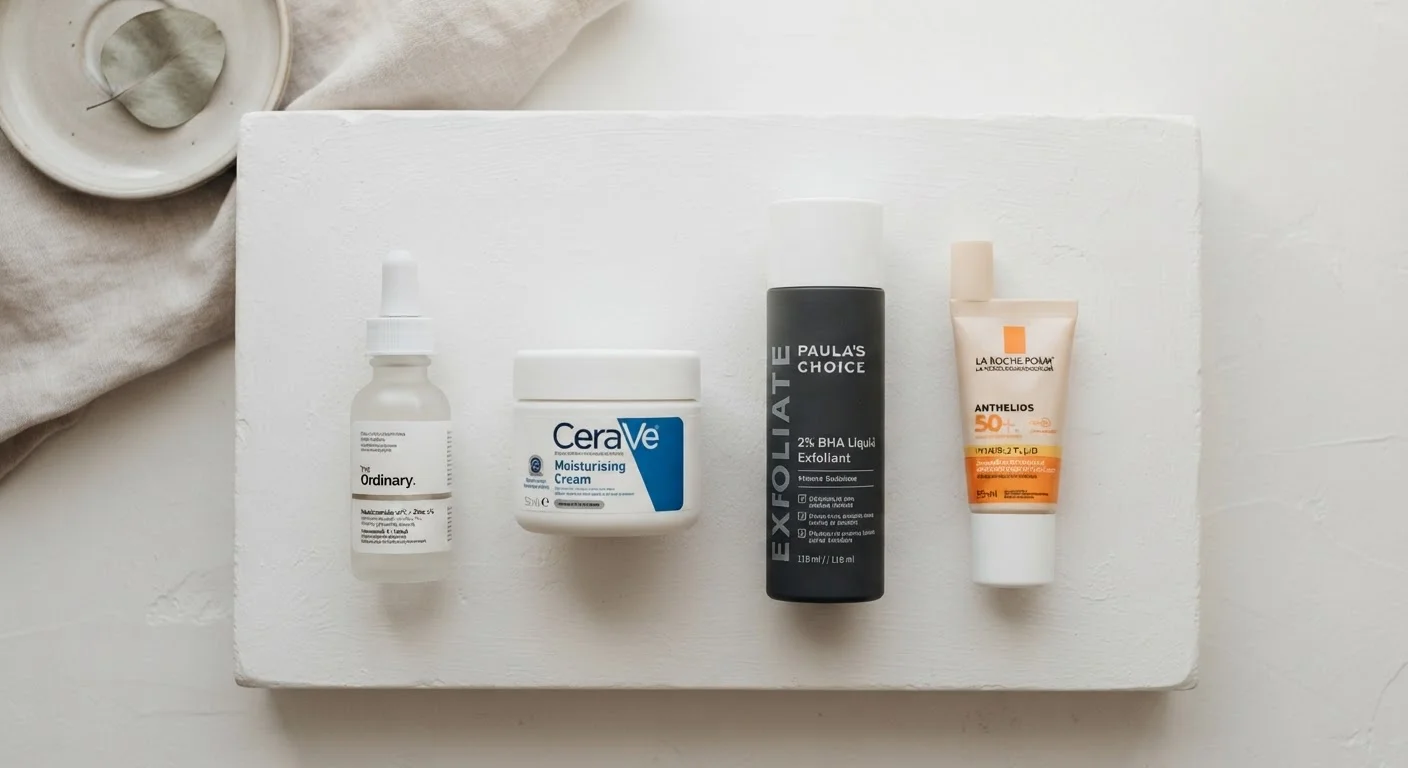
The Case for Simplicity
Skincare marketing thrives on the idea that more products equal better skin. The science, however, tells a different story. A well-chosen routine of three to four products, used consistently, can outperform a cluttered shelf of serums and treatments that rotate in and out unpredictably.
When you're working with a limited budget, the stakes of a misspent purchase are higher. That makes it worth thinking clearly about which product categories pull the most weight - and which are largely optional extras.
If you're just getting started, our guide to starting a skincare routine from scratch covers the fundamentals before you spend a single dollar.
Where to Spend: The Non-Negotiables
Three product categories have the strongest evidence base and the clearest return on investment for skin health:
Allocate the largest share of your skincare budget to a broad-spectrum SPF 30 or higher sunscreen.
UV exposure is the leading environmental driver of premature skin aging, hyperpigmentation, and skin cancer risk. No other product category has a comparable evidence base. Consistent daily use of sunscreen - including on cloudy days - is widely considered the highest-return single habit in dermatology.
Choose a gentle, non-stripping cleanser appropriate for your skin type.
Cleansing removes dirt, oil, and environmental debris without disrupting the skin barrier. An overly harsh cleanser can compromise barrier function, leading to dryness, sensitivity, and rebound oiliness - problems that then require additional products to address. A well-tolerated cleanser requires very little spending to be effective.
Invest in a basic moisturizer that contains humectants, emollients, or occlusives - ideally all three.
Moisturizers support the skin barrier, reduce transepidermal water loss, and help skin tolerate active ingredients better. Humectants like glycerin attract water; emollients like fatty acids smooth texture; occlusives like petrolatum or dimethicone seal in moisture. A formula combining these categories doesn't need to be expensive to work.
Prioritize ingredient efficacy over brand reputation when comparing products at different price points.
In skincare, the active ingredients and their concentrations drive results - not the brand name or jar design. Two moisturizers at very different prices may contain nearly identical formulations. Understanding how to evaluate ingredients allows you to make better choices regardless of budget.
Beyond these three, most other products are optional enhancements. A targeted treatment - such as a retinoid for anti-aging or a niacinamide serum for uneven tone - can be added once the core routine is established, but it's rarely where limited funds should go first.
What You Can Safely Skip (For Now)
Eye creams, facial mists, toners, and multi-step exfoliation systems are not necessarily bad products. But for someone working with a tight budget, they represent optional spending that rarely makes or breaks a routine. Many of the benefits attributed to these products can be delivered by a well-chosen moisturizer or a gentle exfoliating cleanser used a few times per week.
Similarly, premium packaging and fragrance-forward formulas often cost more without adding therapeutic value. Learning how to read a skincare ingredient label will help you compare formulations across price points with much more confidence.
Fragrance-Free Is Usually the Safer Default
Fragrance - whether synthetic or natural - is one of the most common causes of contact dermatitis and skin sensitivity. When budget is limited, choosing fragrance-free formulas across all three core product categories reduces the risk of reactions that would require you to replace a product entirely. This is especially relevant for those with reactive or sensitive skin, but it's a reasonable default for most people.
Your daily habits also matter: water temperature, cleansing pressure, and product layering order all affect skin outcomes independently of product cost. See the shower habits that quietly damage skin over time for a closer look at those invisible variables.
How to Add Products Strategically
Once your core routine is stable, adding a single targeted active is a reasonable next step. Common evidence-backed actives include retinoids (for cell turnover and signs of aging), vitamin C (for brightening and antioxidant protection), and niacinamide (for barrier support and tone evening). Each comes in a wide price range - the key is finding a stable formulation at a concentration shown to be effective.
Introduce any new product slowly and methodically. Trying two new products simultaneously makes it nearly impossible to identify which one caused a reaction or improvement. Use our patch-test and introduction checklist before adding anything new to your routine.
For anyone extending their routine beyond the face, the same prioritization logic applies. A basic body care routine built around cleanse, moisturize, and protect is far more impactful than specialty treatments. And don't overlook SPF below the chin - sun protection on the body is one of the most skipped steps in most people's routines.
This article is for general informational purposes only and does not constitute medical or dermatological advice. If you have specific skin concerns or conditions, consult a licensed dermatologist or qualified healthcare provider.
The content on this site is provided for informational purposes only and should not be considered a substitute for professional advice. While we strive to provide accurate and up-to-date information, we make no guarantees regarding its completeness or accuracy. Always consult a qualified professional for advice specific to your circumstances before making any decisions.