

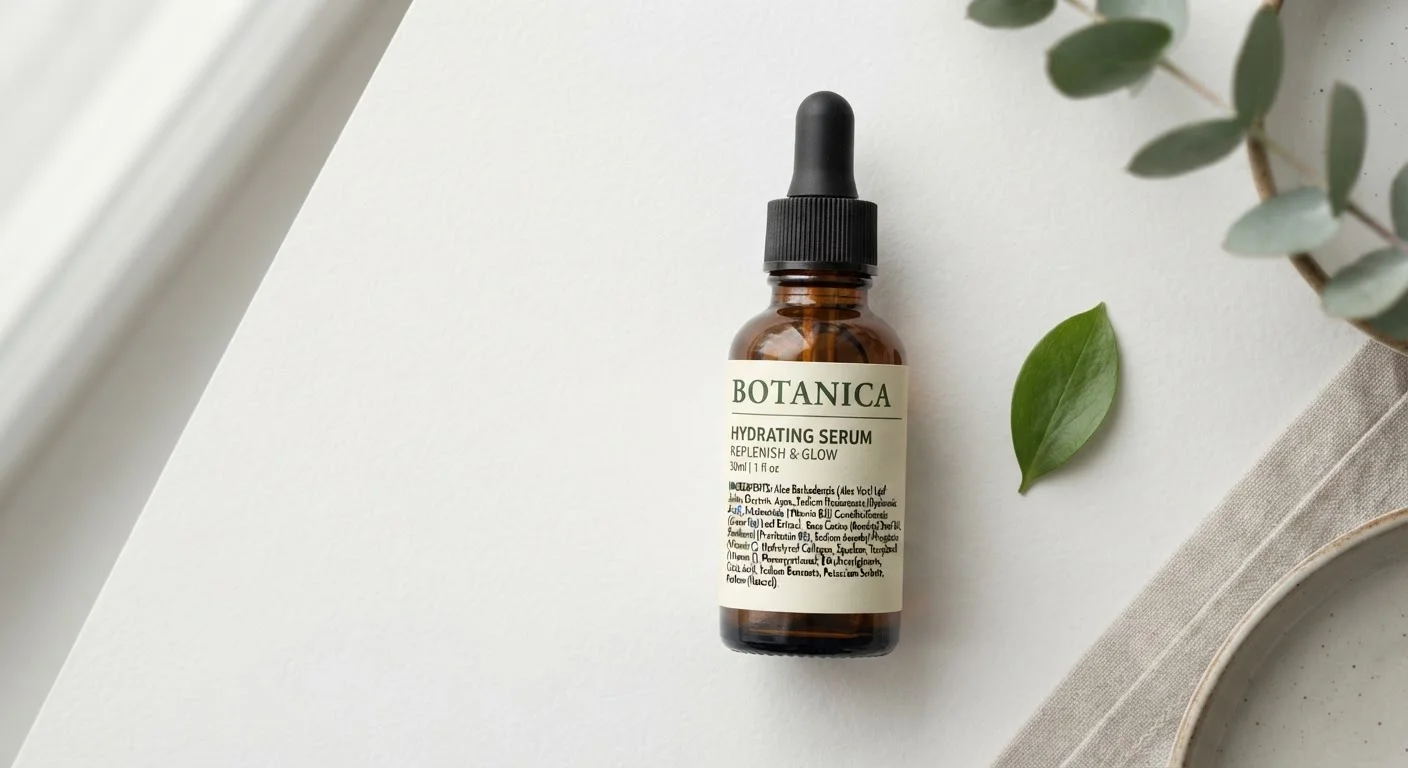
Why the ingredient list is your most reliable tool
Front-of-pack claims - "brightening," "anti-aging," "dermatologist-tested" - are subject to very little regulatory scrutiny in the U.S. cosmetic market. The ingredient list, by contrast, follows specific federal rules. It's the one place on a product where you can find objective, structured information about what you're actually applying to your skin.
Understanding how that list is organized gives you a genuine advantage: you can compare formulations, spot potential irritants, and evaluate whether a product's price reflects its ingredient quality - or just its packaging. This skill applies to any cosmetic product, whether you're reading a moisturizer, a serum, or a cleanser. For context on how your skin type should factor into those decisions, see our guide on how skin types are defined and what they tell you.
What you will need
How to read a skincare label, step by step
INCI ingredient database (e.g., CosIng or similar public reference)
Look up the standardized international name of any ingredient you don't recognize.
Magnifying glass or phone camera zoom
Ingredient text is often very small - this helps you read every entry accurately.
Locate the full ingredient list
In the U.S., the FDA requires cosmetic products to display a complete ingredient list on the outer packaging, typically on the back or bottom panel. The list must use INCI names - International Nomenclature of Cosmetic Ingredients - which are standardized, often Latin-derived names (for example, Aloe barbadensis leaf juice rather than just "aloe"). If a product only lists common names or vague descriptors, that's a transparency gap worth noting.
Understand the concentration rule
Ingredients are listed from highest to lowest concentration by weight. The first five or six ingredients typically make up the bulk of the formula - often 80-90% of the product. Water (Aqua) is the most common first ingredient in water-based products. If an ingredient you're paying for (say, a plant extract) appears near the bottom of a long list, it's likely present in a very small amount - potentially under 0.5%.
There is an important exception: once you cross the 1% threshold, manufacturers may list remaining ingredients in any order they choose. This means two ingredients both below 1% could appear in any sequence, regardless of which one is more concentrated.
Identify active ingredients separately
For products classified as over-the-counter (OTC) drugs - such as sunscreens, acne treatments, and anti-dandruff shampoos - the FDA requires active ingredients to be listed in a separate "Drug Facts" panel, complete with their concentration percentage and declared purpose. These are the ingredients that have been evaluated for a specific drug action. Inactive ingredients follow in a separate section.
This distinction matters: a sunscreen label lists its UV filters (e.g., Zinc Oxide 18%) separately from its moisturizing base ingredients. Knowing which category an ingredient falls into helps you assess both efficacy and safety context.
Decode "fragrance" and other umbrella terms
The word Fragrance (or Parfum) is a legally permitted umbrella term that can represent a blend of dozens - sometimes hundreds - of individual compounds, none of which need to be disclosed individually due to trade secret protections. This is relevant for anyone with sensitive skin or known allergies, since fragrance is one of the most common triggers of contact dermatitis. Our article on fragrance sensitivity in skin and hair products explains what reactions actually look like and how to identify the term across different label formats.
Similarly, "flavor" on lip products works the same way. Some brands voluntarily disclose individual fragrance components - this is a meaningful transparency signal.
Evaluate marketing language critically
Terms like "natural," "clean," "non-toxic," and "chemical-free" have no standardized legal definition under U.S. cosmetic regulations. They are marketing descriptors, not regulatory categories. This means a product labeled "natural" may contain synthetic preservatives, and a product without that label may be formulated with well-researched, safe synthetic ingredients. Our article on skincare myths dermatologists hear every day addresses the "natural is always safer" assumption directly.
Focus instead on the actual ingredient list and, where available, the concentration context it provides.
This article is for general informational and educational purposes only. It does not constitute medical or dermatological advice. If you have a skin condition, known allergies, or concerns about a specific ingredient, consult a qualified dermatologist or healthcare professional.
The content on this site is provided for informational purposes only and should not be considered a substitute for professional advice. While we strive to provide accurate and up-to-date information, we make no guarantees regarding its completeness or accuracy. Always consult a qualified professional for advice specific to your circumstances before making any decisions.