

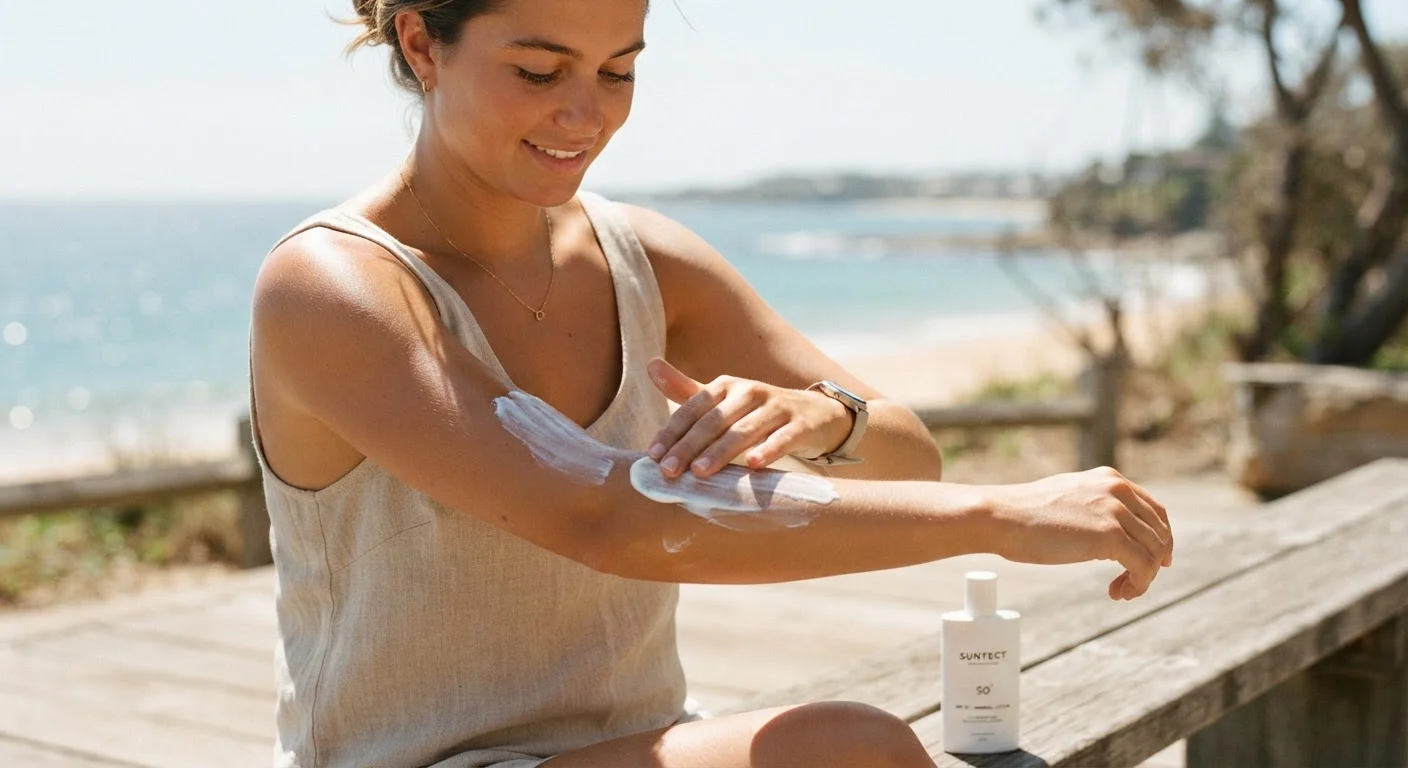
Why Body SPF Gets Skipped - and Why That's a Problem
Most sun protection conversations center on the face. The products are face-focused, the marketing is face-focused, and the daily habit most people build - if they build one - stops at the jawline. The rest of the body's skin, which makes up the vast majority of your surface area, often goes unprotected.
This gap matters. Skin cancer can develop anywhere on the body, not just areas that are obviously sun-exposed. The American Academy of Dermatology notes that skin cancer is among the most common cancers in the United States, and cumulative UV exposure - the kind that accumulates over years of daily activity, not just beach days - plays a significant role in risk. Forearms, the back of the hands, the tops of the feet, the décolletage, and the back of the neck are all areas that receive consistent sun exposure but rarely see sunscreen.
Ultraviolet radiation also drives photoaging - the visible skin changes associated with sun damage rather than intrinsic aging. This includes uneven pigmentation, texture changes, and loss of firmness. For a broader look at how UV rays affect skin differently, see the real difference between UVA and UVB rays.
Best Practices for Protecting Body Skin from Sun Damage
Building an effective body SPF habit doesn't require a complicated routine. It requires consistency, the right product choices, and an honest look at the moments where protection typically breaks down.
If you're building broader skin health habits from scratch, a simple body care routine offers a useful foundation to build on.
Making Body SPF a Realistic Daily Habit
The biggest barrier to consistent body sunscreen use isn't knowledge - it's friction. Thick, greasy formulas are easy to skip. Products that leave white cast on deeper skin tones can feel discouraging. Finding formats that fit your routine removes the mental resistance.
Consider keeping a body sunscreen somewhere visible in your getting-ready space - next to your moisturizer or by the bathroom door. Habit pairing, attaching a new behavior to something you already do reliably, is one of the more effective behavioral strategies for building consistency. If you already apply a daily moisturizer to your body, choosing one with SPF built in (broad-spectrum SPF 30 or higher) lowers the barrier further.
For those who exercise outdoors, reapplication timing becomes especially important. Sweat accelerates sunscreen breakdown, and water-resistant formulas - which are labeled with a specific water-resistance time of either 40 or 80 minutes - offer more durability during activity. This connects to a broader principle worth internalizing: daily sunscreen use is one of the most evidence-supported skincare habits regardless of the season or weather forecast.
This article is for general informational and educational purposes only. It is not a substitute for professional medical or dermatological advice. If you have concerns about your skin health or skin cancer risk, consult a qualified healthcare provider or board-certified dermatologist.
The content on this site is provided for informational purposes only and should not be considered a substitute for professional advice. While we strive to provide accurate and up-to-date information, we make no guarantees regarding its completeness or accuracy. Always consult a qualified professional for advice specific to your circumstances before making any decisions.