

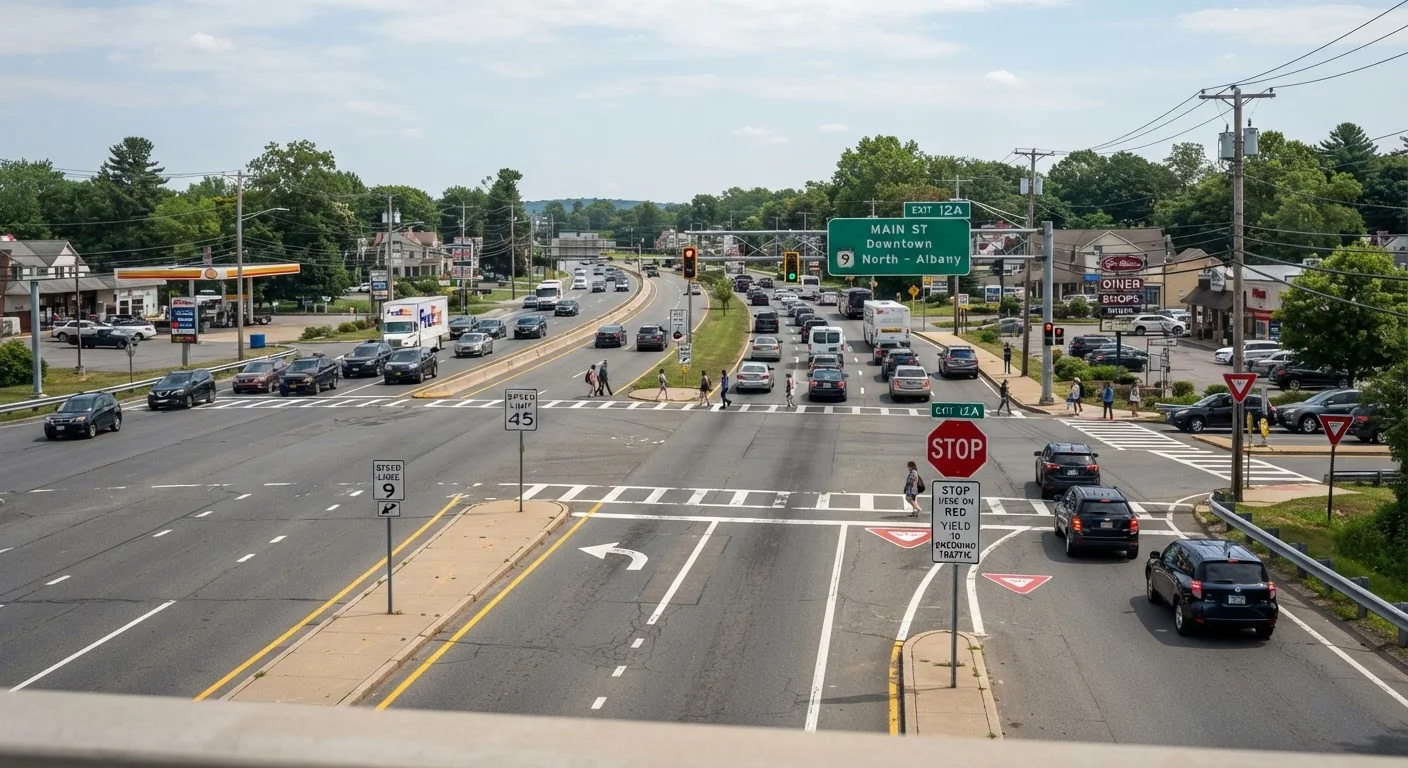
The Three Categories of U.S. Traffic Signs
The Federal Highway Administration (FHWA) classifies traffic signs into three functional categories: regulatory, warning, and guide signs. Each category uses a standardized color and shape system - not by coincidence, but by federal mandate under the Manual on Uniform Traffic Control Devices (MUTCD), which governs sign design nationwide.
Regulatory signs (typically white with black or red text) communicate laws that must be obeyed. The octagonal red Stop sign and the inverted-triangle Yield sign are the most universally recognized. Speed limit signs, no-turn signs, and lane-use control signs also fall here. Ignoring a regulatory sign is a traffic violation in every U.S. jurisdiction.
Warning signs are diamond-shaped and yellow (or orange in construction zones). They alert drivers to upcoming road conditions - curves, intersections, pedestrian crossings, merge points - giving time to adjust speed or position. They are advisories, not commands, but treating them as optional is a proven crash risk.
Guide signs - green for highways and routes, brown for recreational areas - provide directional and distance information. Blue signs indicate services (fuel, lodging, food, hospitals). See our guide to merging and lane changes for how guide signs factor into highway decision-making.
| Governing Standard | Manual on Uniform Traffic Control Devices (MUTCD) (Federal Highway Administration (FHWA)) |
| Regulatory Sign Shape | Varies: octagon (Stop), inverted triangle (Yield), rectangle (most others) (MUTCD, 11th Edition) |
| Warning Sign Color | Yellow (standard); Orange (construction/work zones) (MUTCD, 11th Edition) |
| Guide Sign Colors | Green (highways/routes), Brown (recreation), Blue (services) (MUTCD, 11th Edition) |
| Yellow Centerline Meaning | Separates opposing traffic directions (MUTCD pavement markings chapter) |
| White Lane Line Meaning | Separates same-direction traffic lanes (MUTCD pavement markings chapter) |
Pavement Markings: What the Lines Mean
Road markings work alongside signs to regulate traffic flow. The MUTCD defines their colors and patterns precisely.
- White lines separate traffic moving in the same direction. A dashed white line means lane changes are permitted when safe. A solid white line discourages crossing - commonly seen approaching intersections, crosswalks, or merge zones.
- Yellow lines separate opposing traffic. A solid double-yellow line prohibits passing in either direction. A single dashed yellow line permits passing when clear. A combination of one solid and one dashed yellow line means only the driver beside the dashed side may pass.
- White stop bars and crosswalk lines mark where vehicles must stop for signs, signals, or pedestrians - stopping beyond the bar is a violation in most states.
- Arrows and lane-use markings painted directly on the roadway indicate required travel directions, turn-only lanes, and HOV (High-Occupancy Vehicle) designations.
Raised pavement markers - including reflective Botts' dots - reinforce line markings under low-visibility conditions. Understanding these details directly complements the habits covered in our article on intersection hazards and how to reduce them.
Regulatory Sign
A traffic sign that communicates a legal requirement drivers must obey. Examples include Stop, Yield, and speed limit signs. Violations may result in traffic citations.
Warning Sign
A diamond-shaped, typically yellow sign alerting drivers to road conditions or hazards ahead, such as curves, merges, or pedestrian crossings. These are advisories requiring driver judgment.
MUTCD
The Manual on Uniform Traffic Control Devices, published by the FHWA. It establishes national standards for all traffic signs, signals, and pavement markings used on U.S. public roads.
Pavement Marking
Lines, arrows, words, or symbols painted on or embedded in the road surface to guide, warn, or regulate traffic. Colors and patterns have federally standardized meanings.
Protected Turn Phase
A dedicated traffic signal phase - indicated by a green arrow - during which turning vehicles have the right of way and oncoming traffic is held by a red signal.
HOV Lane
A High-Occupancy Vehicle lane reserved for vehicles carrying a minimum number of occupants (typically two or more). HOV designations are marked by pavement symbols and signs.
Traffic Signals: Beyond Red, Yellow, and Green
Standard traffic signals are well understood, but several signal variants cause consistent driver confusion.
Flashing red functions as a stop sign: come to a complete stop, then proceed when safe. Flashing yellow means proceed with caution - no full stop required. These appear at intersections where full signals are temporarily inactive or where conditions warrant reduced control.
Dedicated turn signals use arrows. A green arrow grants a protected turn - oncoming traffic is stopped. A yellow arrow warns the protected phase is ending. A red arrow prohibits turning in that direction until it clears, even if the main signal is green.
Pedestrian signals now frequently include countdown timers and accessible audible tones. The flashing orange hand indicates pedestrians should not begin crossing but those already in the crosswalk may complete their crossing.
Weather significantly affects signal visibility and driver reaction time. Our piece on driving in rain, ice, and fog explains how to adjust your approach in low-visibility conditions. For drivers still building their foundational knowledge, what new drivers are taught in driver education provides helpful context on why these controls exist.
The content on this site is provided for informational purposes only and should not be considered a substitute for professional advice. While we strive to provide accurate and up-to-date information, we make no guarantees regarding its completeness or accuracy. Always consult a qualified professional for advice specific to your circumstances before making any decisions.