

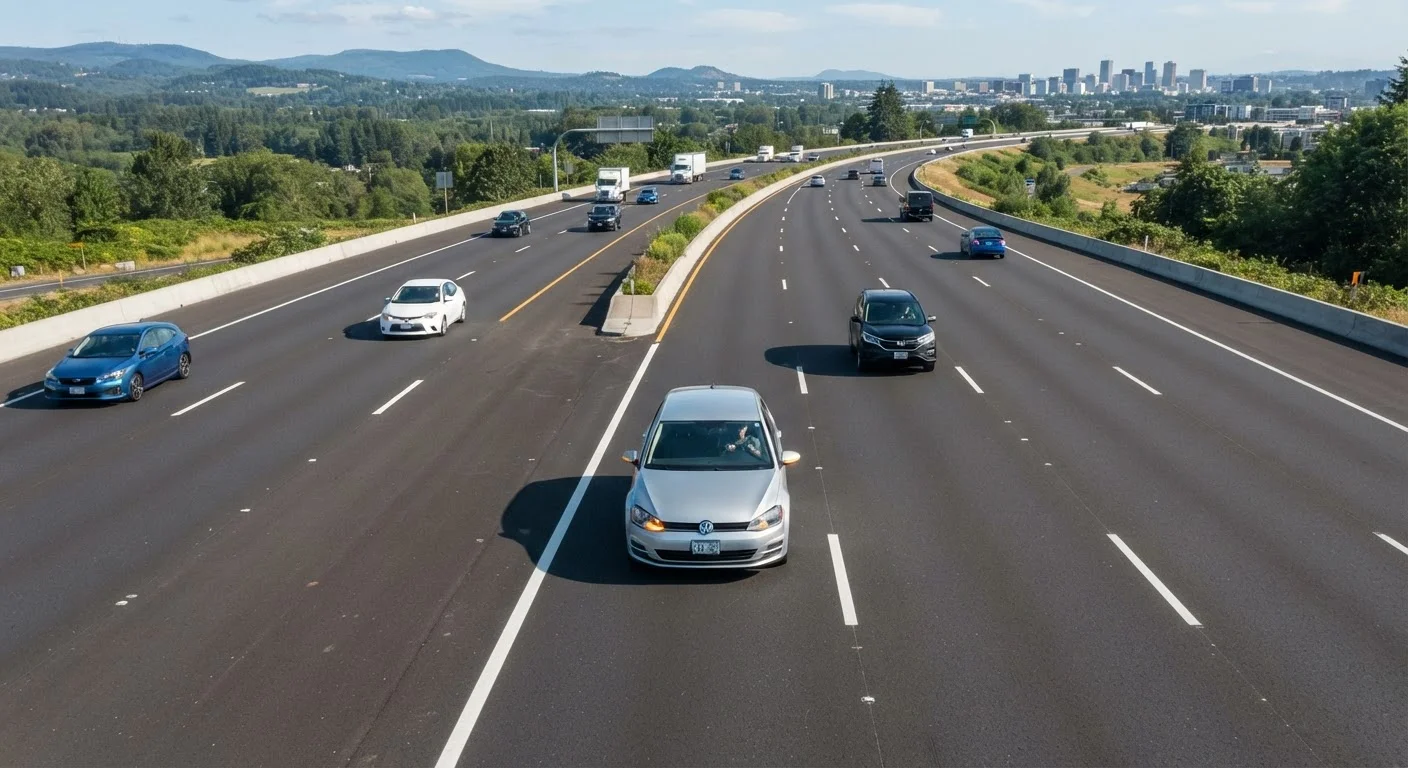
Why Merging and Lane Changes Cause So Many Crashes
Lane-change and merging errors are among the most frequently cited contributing factors in highway crashes. According to the National Highway Traffic Safety Administration (NHTSA), improper lane changes are consistently flagged in crash reports involving sideswiping and rear-end collisions on multi-lane roads. The core problem is usually not recklessness - it is a gap in fundamental technique that many drivers were never explicitly taught or have allowed to erode over years behind the wheel.
Three failure points account for the majority of errors: skipping the blind-spot check, signaling too late (or not at all), and misjudging the speed of surrounding traffic. Each of these is correctable with deliberate practice. Understanding why these steps matter - not just memorizing a checklist - is what makes the habit stick.
See our overview of foundational driver education concepts for broader context on how these skills fit into overall road safety training.
The Correct Mirror-Check Sequence
A safe lane change follows a specific sequence - and the order matters. Many drivers check mirrors and move simultaneously, which eliminates the reaction buffer you need if something has changed in the fraction of a second since your last glance.
Signal before you begin any mirror or head check - not after.
Signaling first builds a brief processing pause into the maneuver and warns other drivers of your intent before you move. Checking first and signaling simultaneously removes this safety buffer.
Always perform a physical head turn to check your blind spot before moving into any adjacent lane.
Mirrors cannot cover all angles around a vehicle. A full-size car or motorcycle can be completely invisible in your mirrors but fully visible with a quick head turn. This single step prevents the majority of sideswipe collisions.
Match the speed of your target lane before completing the merge, not after.
Entering a lane significantly slower than surrounding traffic creates a sudden speed differential that other drivers must react to quickly. At highway speeds, even a few seconds of reaction time can be the difference between a near-miss and a collision.
Identify your target gap early and commit to a clear decision - accelerate past one car or ease behind another.
Hesitation at the merge point creates unpredictable movement that confuses other drivers. A deliberate early decision gives you ramp space to adjust speed and eliminates the last-second scramble.
Avoid extended travel in another vehicle's blind spot - pass through quickly or drop back to a visible position.
Staying alongside another vehicle for an extended period means neither driver has full visibility of the other. If that driver begins a lane change, both are at risk with minimal time to react.
The correct sequence is: Signal → Check center mirror → Check side mirror on the target side → Turn your head to check the blind spot → Move if clear → Cancel signal. This order ensures you have a full picture before committing to the maneuver. Signaling first is not just a legal requirement - it communicates your intent to other drivers, giving them a chance to adjust before you move.
Blind Spot Management: What Mirrors Miss
Even properly adjusted mirrors leave blind spots - areas on both sides and slightly behind your vehicle that are simply not visible in any mirror. A mid-size sedan can disappear almost entirely in another driver's blind spot at highway speeds. This is not a mirror-adjustment problem; it is a physics problem, and the only reliable solution is the physical head check.
Blind Spot Monitoring Systems Are a Supplement, Not a Substitute
Many newer vehicles include blind spot monitoring (BSM) systems that alert drivers when a vehicle is detected in an adjacent lane. These systems are useful, but they have documented limitations - they can miss motorcycles, cyclists, and fast-approaching vehicles in certain conditions. Federal safety guidance treats BSM as a driver aid, not a replacement for the physical head check. Always verify with your eyes before moving.
Adjusting your mirrors outward (further than most drivers position them) can reduce - but not eliminate - blind spot coverage. The Society of Automotive Engineers has published guidelines on optimal mirror positioning, but even with ideal adjustment, a quick head turn over the appropriate shoulder remains essential before every lane change.
Drivers should also be aware that other vehicles have blind spots too. Spending extended time alongside a large truck or SUV puts you in their blind zone. Move through quickly or fall back to a position where you can be seen in their mirrors.
Merging onto Highways: Speed and Gap Selection
Highway on-ramps exist specifically to give drivers space to accelerate to traffic speed before merging - yet a significant number of drivers arrive at the merge point either too slowly or without identifying a gap early enough. Both errors force abrupt, last-second maneuvers that catch highway traffic off guard.
The principle is straightforward: use the full length of the acceleration lane. Begin scanning for a gap in the travel lane as soon as you enter the ramp, not at its end. Communicate your intent with your turn signal early. Match the speed of the lane you are entering, then merge smoothly into the gap. If no gap exists, adjust your speed on the ramp to create one - either by accelerating past one vehicle or easing off to drop behind another.
Aggressive or erratic merging is a documented trigger for road rage incidents. See our guide to road rage and how to manage it for more on how these situations escalate and what to do.
Signaling Habits That Actually Protect You
Signaling is legally required in every U.S. state for lane changes and turns, yet observed compliance rates on highways remain well below 100 percent. A signal does more than satisfy the law - it primes other drivers to expect your movement and gives them time to create space or hold position.
~630,000
Annual U.S. lane-change crashes reported
NHTSA crash data has consistently identified improper lane changes as a factor in hundreds of thousands of reported crashes annually on U.S. roads.
~25%
Drivers who regularly fail to signal lane changes
A Society of Automotive Engineers study estimated that a significant proportion of drivers skip turn signals during lane changes, increasing crash risk for surrounding traffic.
Signal before you check mirrors, not after. This sequencing builds a brief pause into the process, reducing the chance of an impulsive, unchecked move. Leave the signal on until the lane change is complete, then cancel it intentionally. Failing to cancel a signal after a merge creates confusion for following drivers who may anticipate a second move.
For more on building consistent pre-drive and in-drive habits, see our pre-trip safety check guide. Maintaining adequate following distance also creates the space needed to execute a clean lane change - a concept explored in our article on why tailgating is more dangerous than most drivers realize.
The content on this site is provided for informational purposes only and should not be considered a substitute for professional advice. While we strive to provide accurate and up-to-date information, we make no guarantees regarding its completeness or accuracy. Always consult a qualified professional for advice specific to your circumstances before making any decisions.