

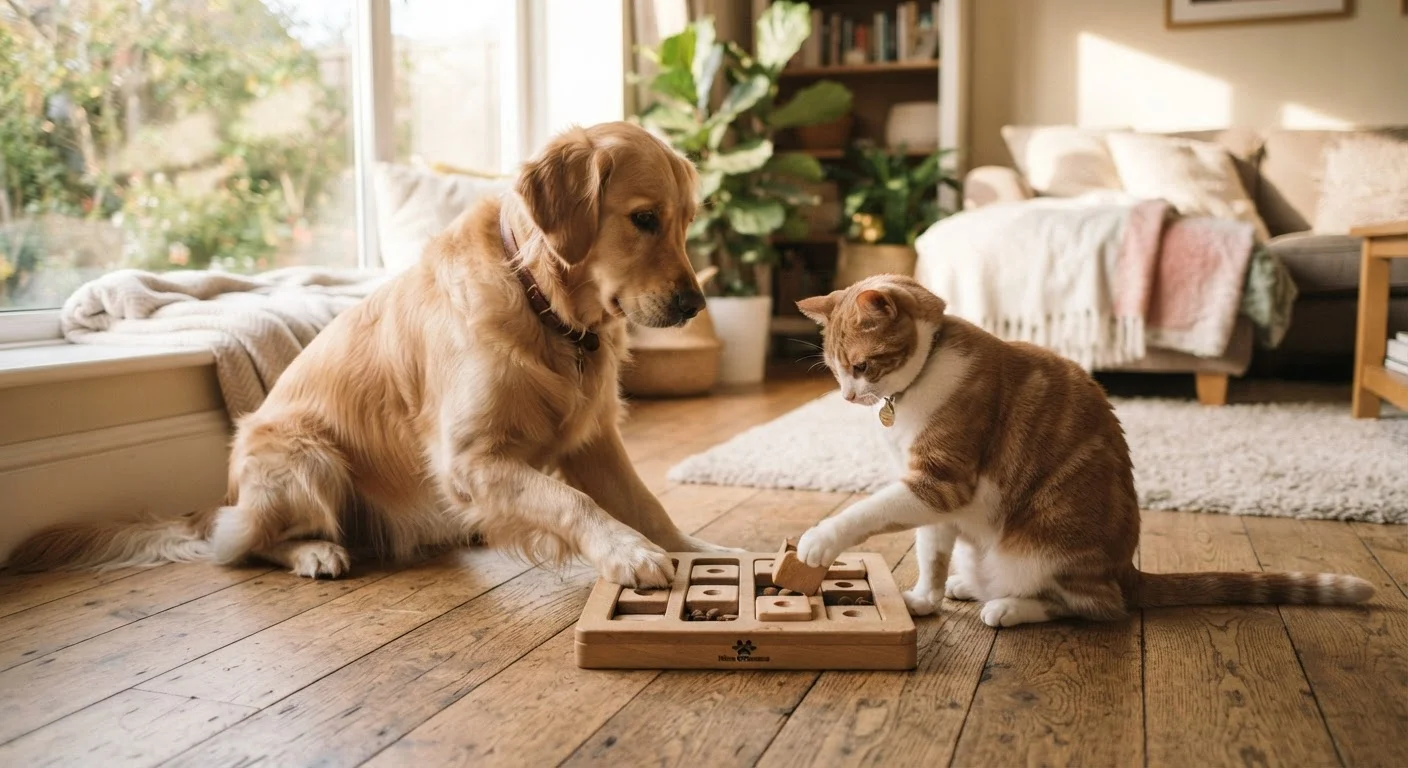
What Boredom Actually Does to a Pet's Body
Most owners understand that a bored pet is an inconvenient pet. Chewed furniture, indoor accidents, or incessant barking are frustrating. What is less widely appreciated is that chronic understimulation produces measurable physiological stress responses - not just behavioral ones.
When animals cannot express natural behaviors, their nervous systems register a form of chronic stress. Over time, sustained stress hormones suppress immune function, disrupt sleep, and can contribute to gastrointestinal upset and skin conditions. Research in veterinary behavioral medicine has documented links between low-enrichment environments and increased cortisol levels in companion animals.
This is not a fringe concern. The American Veterinary Medical Association and animal welfare organizations treat enrichment as a welfare necessity, not an optional bonus. Recognizing stress signals in dogs and cats is a foundational skill for any owner who wants to catch these problems early.
85%
Dogs showing stress signs linked to boredom
A survey by the PDSA Animal Wellbeing Report found the vast majority of behavioral problems in dogs are associated with unmet mental and physical needs.
40%
Indoor cats with stress-related behavior issues
Veterinary behaviorists estimate a substantial proportion of indoor cats develop anxiety-driven behaviors, many attributable to insufficient environmental enrichment.
3-5x
More behavior cases from low-enrichment homes
Clinical assessments in veterinary behavioral medicine consistently show pets from unstimulating environments present with behavioral complaints at significantly higher rates.
Species Differences Matter More Than Most Owners Know
There is no universal enrichment prescription. Dogs, cats, rabbits, birds, and other companion animals evolved under very different ecological pressures, which shapes what kinds of stimulation actually satisfy them.
Dogs are social, cooperative hunters. They crave problem-solving tasks, nose work, and interaction with people and other animals. Breed influences this heavily - herding breeds need cognitive challenges; scenthounds are driven by olfactory exploration. A dog left alone with no task to perform for long stretches is at real risk of anxiety-driven behaviors.
Cats are solitary ambush predators. They need opportunities to stalk, pounce, and investigate territory. An exclusively indoor cat without environmental complexity - vertical space, hiding spots, rotating novel objects - can become chronically frustrated. Our guide on indoor vs. outdoor cats explores how this tradeoff affects long-term wellbeing.
Small animals such as rabbits, guinea pigs, and parrots have significant cognitive and social needs that are often underestimated. Parrots in particular are highly intelligent and can develop stress-related feather-destructive behaviors when chronically understimulated. See our overview of exercise and enrichment needs across common household pets for species-specific guidance.
“Enrichment is not a luxury - it is a biological necessity. Animals have evolved behavioral repertoires that need expression, and when we prevent that, we create suffering even in the absence of any physical disease.”
— Dr. Karen Overall, Board-Certified Veterinary Behaviorist and author on applied animal behavior
Practical Enrichment Strategies That Actually Work
Effective enrichment does not require expensive gear. It requires matching the activity to the animal's natural drives.
- Puzzle feeders and food-dispensing toys: Slowing down mealtime and requiring problem-solving mimics foraging. This works well for dogs, cats, and many small animals.
- Scent work: Hiding treats or rotating novel scents (such as herbs or safe essential oils approved by your vet) engages the olfactory system powerfully in dogs especially.
- Environmental rotation: Moving furniture, introducing new textures, or rearranging a cat's vertical space creates novelty without cost.
- Training sessions: Short, positive reinforcement training sessions - even for cats and rabbits - provide cognitive engagement and strengthen the human-animal bond.
- Social enrichment: Supervised playdates for sociable species, or simply quality uninterrupted time with the owner, address social needs.
First-time owners in particular often focus heavily on food and physical care while underestimating enrichment. Our article on what new pet owners wish they'd known sooner covers this gap in depth.
Start Small and Build a Daily Habit
Even five to ten minutes of structured enrichment activity per day - a puzzle feeder at mealtime, a brief training session, or a foraging scatter in the yard - can make a measurable difference in a pet's stress levels. Consistency matters more than duration. Build enrichment into existing routines rather than treating it as a separate task.
When to Bring Enrichment Into the Veterinary Conversation
Behavioral signs of understimulation are sometimes mistaken for stubbornness, aging, or even primary medical conditions. A pet that has begun over-grooming, pacing, or showing reduced appetite may be experiencing chronic stress rather than - or alongside - a physical illness. Veterinarians are increasingly trained to assess enrichment history as part of a behavioral workup.
If your pet shows sudden behavioral changes, the right first step is always a veterinary visit to rule out pain or illness. Once physical causes are excluded, a discussion about environmental enrichment becomes a productive next step. Some practices now refer owners to board-certified veterinary behaviorists for complex behavioral cases.
Building enrichment into daily routines from the start - rather than as a reactive fix - is part of responsible, preventive pet ownership. If you are bringing a new pet home, establishing enrichment habits early sets a strong foundation for long-term wellbeing.
This article is for general informational purposes only and does not constitute veterinary medical advice. Always consult a licensed veterinarian for concerns about your pet's health or behavior.
Frequently Asked Questions
Common signs include repetitive behaviors like pacing or excessive grooming, destructive activity, increased vocalization, lethargy, and overeating. These signals vary by species - dogs may become destructive, while cats may over-groom. If you notice sudden behavioral changes, consult your veterinarian to rule out underlying medical causes.
No - mental and physical stimulation serve different but complementary functions. Most pets need both. Physical exercise supports cardiovascular health and healthy weight, while mental enrichment addresses cognitive and emotional needs. Providing only one without the other leaves important health gaps.
Yes. Small animals have active, curious minds and suffer from understimulation just as dogs and cats do. Rabbits, guinea pigs, and birds all benefit from foraging opportunities, environmental novelty, and social interaction. Solitary housing without stimulation is a recognized welfare concern for many small species.
There is no single universal answer - needs vary by species, age, breed, and individual temperament. Most veterinary behaviorists recommend building enrichment into daily routines rather than treating it as an occasional activity. Even short, consistent sessions tend to yield better results than infrequent long ones.
Absolutely. Cognitive engagement is especially important for older animals, as mental stimulation may help slow cognitive decline. Activities should be adapted to match reduced physical ability - gentler puzzle feeders, scent work, and calm social interaction are all appropriate for aging pets.
The content on this site is provided for informational purposes only and should not be considered a substitute for professional advice. While we strive to provide accurate and up-to-date information, we make no guarantees regarding its completeness or accuracy. Always consult a qualified professional for advice specific to your circumstances before making any decisions.