

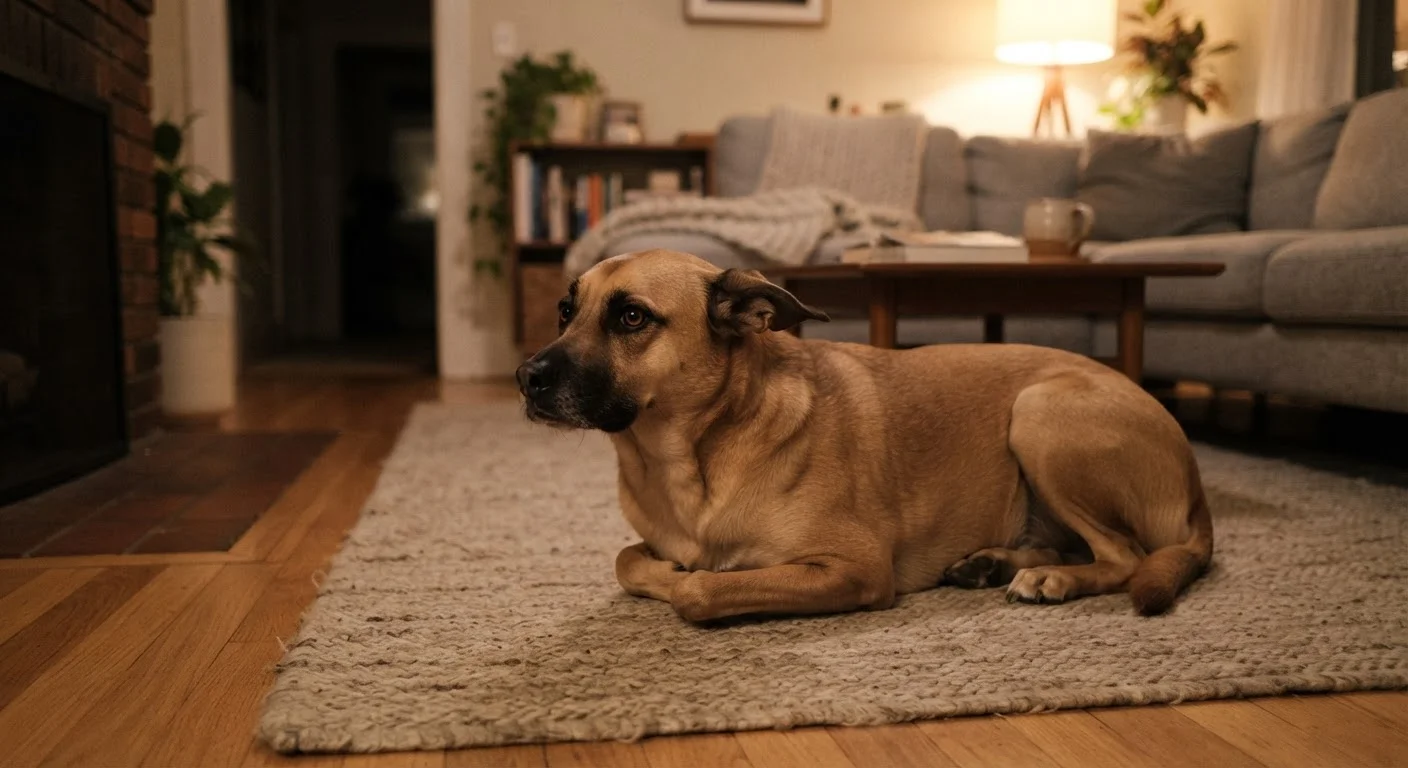
Why Pet Stress Is Easy to Miss
Animals don't communicate distress the way people do. A stressed cat might simply retreat. A stressed dog might start licking their paws more than usual. Because these behaviors can seem minor or unrelated, many pet owners don't connect them to an underlying emotional state until the pattern becomes obvious - or until it escalates.
Understanding what stress looks like in common household pets is a core part of responsible ownership. It also helps you catch problems earlier, before mild anxiety becomes chronic. The signs below apply most directly to dogs and cats, though many behavioral cues carry over to other species - for a broader look, see our guide on stress across different species.
Keep in mind that stress and pain can present similarly. If you're unsure which you're seeing, the signs your pet may be in pain is worth reviewing alongside this one.
Changes in body posture and facial expression
In dogs, stress often shows up physically before behaviorally. A tucked tail, flattened ears, a lowered head, or a crouched stance are all classic posture cues. You may also notice whale eye - when a dog shows the whites of their eyes by turning their head away while keeping their gaze fixed - or tight, closed lips instead of a relaxed open mouth.
Cats under stress tend to crouch, tuck their paws tightly beneath them, flatten their ears sideways or backward, and hold their tail low or wrap it tightly around their body. Dilated pupils in a setting that isn't dark can also indicate heightened arousal or fear.
Tucked tails, flattened ears, and whale eye are early physical stress signals in dogs.
Hiding, withdrawal, or avoidance
A pet that suddenly spends more time under furniture, in closets, or behind appliances may be self-regulating in response to a stressor. This is especially common in cats, who instinctively seek enclosed, elevated, or concealed spaces when they feel unsafe.
Dogs may show avoidance differently - moving away from people or situations they once engaged with, refusing to enter certain rooms, or staying near exits. If a previously social dog or cat starts isolating regularly, that shift in behavior is worth noting and discussing with a vet, as it can also signal illness.
Regular hiding or withdrawal from familiar people often signals that something has changed for your pet.
Excessive grooming, scratching, or licking
Repetitive self-directed behaviors - particularly licking paws, flanks, or the base of the tail - can be a sign of stress-related compulsion. In cats, over-grooming sometimes results in visible hair thinning or bald patches along the belly or inner legs. In dogs, lick granulomas (thick, irritated skin lesions from constant licking) are a recognized consequence of prolonged anxious licking.
Note that excessive scratching can also point to allergies rather than stress. Our plain-language guide to allergies in animals explains how to start distinguishing the two.
Compulsive licking or grooming that leaves skin irritated or fur thinned warrants a vet visit.
Changes in appetite or digestion
Stress can suppress appetite in both dogs and cats, or - in some dogs - trigger stress eating or food guarding. Loose stools, vomiting, or excessive flatulence during or after a stressful event (a vet visit, travel, a new household member) are also common short-term reactions. The gut-brain connection in mammals is well established, and pets' digestive systems are not immune to emotional states.
When appetite changes persist for more than a day or two, or when digestive upset is frequent rather than situational, veterinary input is appropriate rather than a wait-and-see approach.
Persistent appetite loss or recurring digestive upset after stressful events deserves veterinary attention.
Increased vocalization or destructive behavior
Dogs that bark, whine, or howl more than usual - particularly when left alone - may be expressing separation-related distress. Cats may yowl, especially at night. Destructive behaviors like chewing furniture, scratching door frames, or knocking objects over can also reflect underlying stress rather than misbehavior.
Separation anxiety is one of the most common specific stress conditions in dogs. For a more detailed look at how anxiety presents differently across species and circumstances, the anxiety in dogs and cats guide covers the key distinctions and when professional help is warranted.
Destructive behavior and increased vocalization when alone are hallmark signs of separation-related stress.
Routine, safe spaces, and environmental enrichment
Vets and certified animal behaviorists consistently point to three environmental factors as foundational for reducing chronic stress: predictable daily routine, a designated safe retreat space, and adequate mental stimulation.
Routine matters because pets - particularly cats - are sensitive to schedule disruptions. Feeding, play, and sleep times that stay consistent reduce ambient anxiety. Safe spaces (a crate for a crate-trained dog, an elevated perch or covered bed for a cat) give animals a place to decompress on their own terms. And mental enrichment - puzzle feeders, scent work, interactive play - addresses the stress that builds from boredom. The relationship between mental stimulation and stress is explored in depth in our piece on mental enrichment for pets.
Predictable routine, a safe retreat space, and mental enrichment form the core of stress reduction for most pets.
General Approaches That Tend to Help
No single strategy eliminates stress in every pet. What works depends on the animal's temperament, the stress trigger, and whether there's an underlying medical or behavioral condition involved. That said, veterinarians and animal behaviorists tend to recommend a consistent core of approaches.
Keep a simple behavior log
If you suspect your pet is stressed, jot down when the behavior occurs, what was happening in the environment beforehand, and how long it lasts. Even a week of informal notes can help your veterinarian or a certified animal behaviorist identify patterns and rule out medical causes. This is especially useful if the behavior is intermittent and hard to reproduce during an appointment.
If your pet's stress signals are frequent, worsening, or accompanied by physical symptoms - such as vomiting, hair loss, or refusing food for more than a day - schedule a veterinary appointment. Some of what looks like anxiety can have a medical root, and a vet can help rule that out before you focus solely on behavioral strategies. For a broader framework on monitoring your pet's wellbeing, the Pet Health & Wellness hub is a useful ongoing reference.
This article is for general informational purposes only and is not a substitute for professional veterinary advice. Always consult a licensed veterinarian for concerns about your pet's health or behavior.
The content on this site is provided for informational purposes only and should not be considered a substitute for professional advice. While we strive to provide accurate and up-to-date information, we make no guarantees regarding its completeness or accuracy. Always consult a qualified professional for advice specific to your circumstances before making any decisions.