

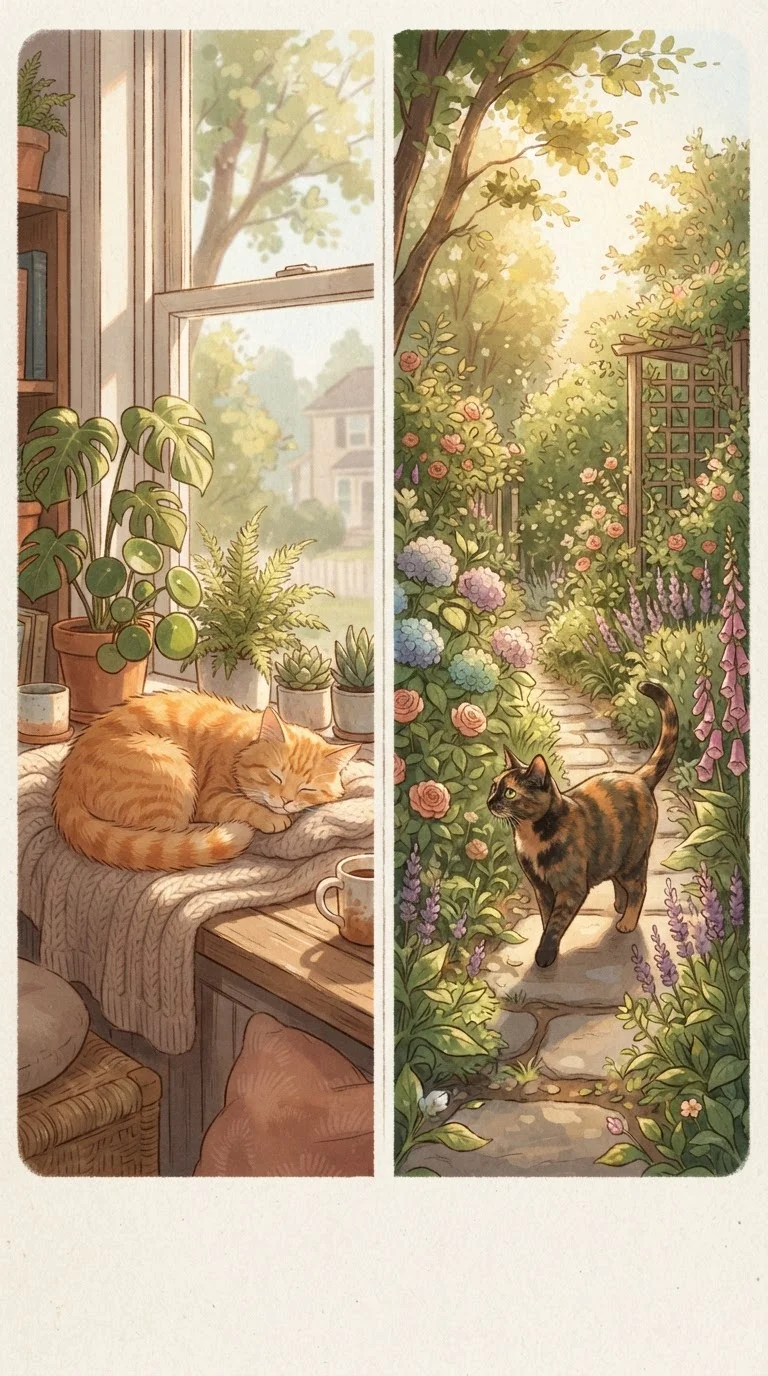
Option A
Indoor Cats
The protected, controlled-environment choice.
Best for: Owners who want to minimize injury and disease risk and can commit to active enrichment at home.
Option B
Outdoor Cats
The stimulation-rich, higher-risk lifestyle.
Best for: Cats with strong roaming instincts in lower-traffic, lower-predator environments where owners accept greater unpredictability.
Lifespan: The Numbers Tell a Clear Story
One of the most consistent findings in feline veterinary literature is the lifespan gap between indoor and outdoor cats. Indoor cats commonly live into their mid-to-late teens, while outdoor cats have an estimated median lifespan considerably shorter - some veterinary sources suggest outdoor-only cats may average as few as 5 to 7 years, though estimates vary depending on environment and methodology.
The causes behind this gap are well understood. Outdoor cats face vehicle strikes, attacks from dogs and wildlife, exposure to toxins, and fights with other cats that can transmit serious infections. These aren't rare events - they're statistically predictable hazards. For a fuller look at how living arrangements shape long-term health outcomes, see how living arrangements shape long-term feline health.
| Criterion | Indoor Cats | Outdoor Cats |
|---|---|---|
| Typical Lifespan | 12-18+ years | Estimated 5-7 years (varies) |
| Infectious Disease Risk | Low (minimal cat contact) | High (FeLV, FIV, URI exposure) |
| Trauma Risk | Very low | High (traffic, predators, fights) |
| Parasite Exposure | Low but not zero | High (fleas, ticks, worms) |
| Obesity / Sedentary Risk | Higher without enrichment | Lower (natural activity) |
| Mental Stimulation | Requires deliberate effort | Naturally abundant |
| Owner Control Over Health | High | Limited |
Disease and Injury Risk: What Each Lifestyle Actually Exposes a Cat To
Outdoor cats face direct exposure to pathogens that indoor cats rarely encounter. Feline leukemia virus (FeLV) and feline immunodeficiency virus (FIV) spread primarily through bite wounds and close contact - both common in cats that roam and establish territory. Feline upper respiratory infections, ringworm, and intestinal parasites are also significantly more prevalent in outdoor populations.
Indoor cats are not risk-free, however. Without adequate stimulation, they are more vulnerable to obesity, type 2 diabetes, and urinary tract disease - conditions strongly linked to sedentary behavior and overfeeding. Dental disease affects cats of both lifestyles but can go undetected longer in cats with fewer routine veterinary interactions.
2-3×
Higher FIV prevalence in outdoor cats
Studies consistently find feline immunodeficiency virus is several times more common in cats with outdoor access compared to exclusively indoor cats.
~50%
Of indoor cats are overweight or obese
The Association for Pet Obesity Prevention has found that roughly half of pet cats in the U.S. are classified as overweight or obese, a condition closely linked to sedentary indoor lifestyles.
Up to 3×
Longer lifespan for indoor cats
Veterinary literature broadly supports that indoor cats outlive outdoor cats by a substantial margin, primarily due to reduced trauma and infectious disease exposure.
Parasite prevention matters regardless of lifestyle. Indoor cats can still be exposed to fleas carried in on clothing or other pets, and heartworm is transmitted by mosquitoes that can enter any home. Consult your veterinarian about an appropriate preventive protocol for your cat's specific situation.
Mental Stimulation: The Indoor Cat's Hidden Challenge
Outdoor cats receive near-constant sensory input - changing smells, sounds, terrain, and the cognitive demands of hunting behavior. This environmental complexity supports mental health in ways a static indoor setting cannot replicate automatically.
Indoor cats depend on their owners to provide equivalent stimulation. Without it, they may develop stress-related behaviors including over-grooming, aggression, destructive scratching, or inappropriate elimination. These aren't just behavioral inconveniences - chronic stress has measurable physiological effects in cats, including impacts on immune function and digestive health.
The good news is that indoor enrichment can be genuinely effective. Puzzle feeders, vertical climbing structures, window perches with bird feeders visible outside, interactive play sessions, and even leash-trained outdoor walks can meaningfully close the stimulation gap. For a deeper look at why mental engagement matters so much, see why boredom is a bigger health risk than most owners realize.
The Catio Option Worth Knowing About
Enclosed outdoor structures - commonly called catios - allow cats to experience fresh air, natural sounds, and visual variety while remaining protected from traffic, predators, and other cats. They range from window-box attachments to large walk-in enclosures. For owners unable to commit to full indoor enrichment or uncomfortable with unsupervised outdoor roaming, catios represent a well-regarded middle ground supported by many veterinary behaviorists.
Understanding the full scope of lifestyle differences between the two arrangements - beyond just health metrics - is also worth exploring. Our guide on indoor vs. outdoor cat key differences covers enrichment needs, behavioral tendencies, and owner expectations side by side.
Finding the Right Balance for Your Cat
The indoor-versus-outdoor decision is rarely all-or-nothing. Many veterinarians and animal behaviorists advocate for managed outdoor access as a practical compromise - catios (enclosed outdoor enclosures), secure garden runs, or supervised harness walks allow cats to experience environmental variety without unsupervised roaming.
The right choice also depends on the individual cat. Kittens raised entirely indoors often adapt well and show no signs of frustration if enrichment is consistent. Cats with prior outdoor experience may take longer to adjust to indoor living. Age, temperament, health status, and local environment all factor in.
Whatever arrangement you choose, routine veterinary care - including vaccinations, parasite screening, dental checks, and weight monitoring - remains non-negotiable. Lifestyle shapes risk; it doesn't eliminate the need for professional oversight. If you are weighing this decision as part of a broader pet ownership choice, our pet selection guidance can help you think through the full picture.
This article is for general informational purposes only and does not constitute veterinary advice. Always consult a licensed veterinarian for guidance specific to your cat's health and circumstances.
The content on this site is provided for informational purposes only and should not be considered a substitute for professional advice. While we strive to provide accurate and up-to-date information, we make no guarantees regarding its completeness or accuracy. Always consult a qualified professional for advice specific to your circumstances before making any decisions.