

Our Verdict
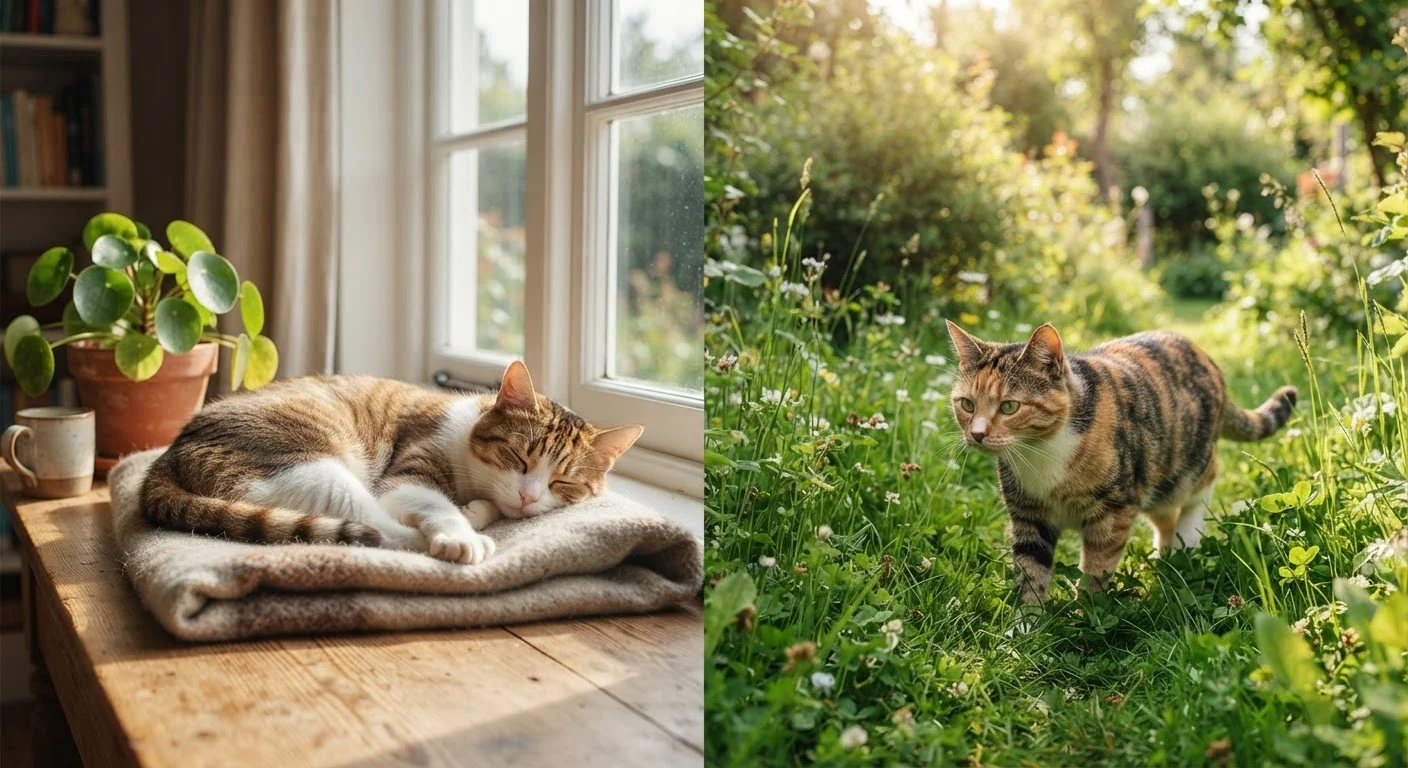
Neither lifestyle is inherently wrong, but indoor living generally offers a longer, safer life for most cats. Outdoor access introduces enrichment and natural stimulation but comes with measurable health and safety trade-offs. The best arrangement depends on your cat's temperament, your local environment, and your capacity to meet their enrichment needs.
| Best for | Recommended |
|---|---|
| Owners in urban or high-traffic areas prioritizing longevity | Indoor lifestyle |
| Active cats in rural or suburban settings with supervised access | Outdoor or supervised outdoor access |
| Owners seeking a middle ground between safety and stimulation | Contained outdoor access (e.g., catios or leash walks) |
The Core Difference: Environment Shapes Everything
Whether a cat lives entirely indoors or spends time outside shapes nearly every aspect of its daily life - from what it eats and how much it moves, to what diseases it may encounter and how long it is likely to live. For new cat owners or those reconsidering their current setup, understanding these differences is one of the most foundational decisions in responsible cat care.
This isn't a simple good-versus-bad comparison. Both lifestyles carry genuine benefits and real risks. The goal is to help you weigh those honestly so you can make an informed choice for your specific situation. For broader guidance on matching a pet to your home environment, see the Choosing a Pet hub.
| Indoor Cats | Outdoor Cats | |
|---|---|---|
| Average lifespan | 12-18 years (estimated) | 2-5 years free-roaming (estimated) |
| Primary health risks | Obesity, dental disease, stress | Trauma, infectious disease, parasites |
| Enrichment source | Owner-provided toys, play, structures | Natural environment, hunting, exploration |
| Parasite exposure | Lower, but not zero | Significantly higher |
| Vaccination needs | Core vaccines required | Core plus additional exposure-based vaccines |
| Behavioral stimulation | Requires deliberate enrichment effort | Naturally self-stimulating |
| Environmental hazards | Minimal if home is cat-proofed | Traffic, predators, weather, toxins |
Lifespan and Health Risks
One of the most cited differences between indoor and outdoor cats is life expectancy. Veterinary and animal welfare organizations generally report that indoor cats live considerably longer on average - estimates commonly range from 12 to 18 years for indoor cats, compared to estimates as low as 2 to 5 years for free-roaming outdoor cats, though actual figures vary widely depending on location and individual circumstances.
Outdoor cats face a distinct set of hazards: vehicle traffic, predatory animals, exposure to infectious diseases such as feline leukemia virus (FeLV) and feline immunodeficiency virus (FIV), and a higher parasite burden including fleas, ticks, and intestinal worms. They are also more likely to sustain fight-related injuries and abscesses from contact with other cats.
Indoor cats are not without health concerns. Obesity, dental disease, and stress-related conditions are more prevalent in cats with sedentary indoor lives. Without adequate enrichment, some indoor cats develop behavioral issues such as over-grooming or anxiety. For a deeper look at how living arrangements affect long-term health, the health trade-offs article offers veterinary-informed perspective.
12-18 yrs
Typical indoor cat lifespan
Veterinary and animal welfare organizations commonly cite this range for well-cared-for indoor cats.
~2-5 yrs
Estimated free-roaming outdoor cat lifespan
Free-roaming outdoor cats face substantially higher mortality risk from vehicles, disease, and predators.
Enrichment and Behavioral Needs
Cats are natural hunters and explorers. Outdoor cats self-enrich through stalking, climbing, and investigating novel environments - activities that satisfy deep behavioral drives. This stimulation can support mental health, though it comes alongside the physical risks described above.
Indoor cats depend almost entirely on their owners to meet these needs. Puzzle feeders, climbing structures, interactive play sessions, and window perches with outdoor views all serve as important enrichment tools. The absence of adequate stimulation is one of the most common - and preventable - welfare gaps for indoor cats.
A middle path that many veterinarians and animal welfare experts support is controlled outdoor access: a secure outdoor enclosure (often called a catio), a harness and leash for supervised walks, or a cat-proofed garden. These arrangements allow cats to experience outdoor stimuli without the greatest hazards of free-roaming. For a closer look at what each lifestyle demands from owners day to day, see what each lifestyle demands from an owner.
Preventive Care for Both Lifestyles
Regardless of whether your cat lives indoors, outdoors, or somewhere in between, routine veterinary care remains essential. Core vaccinations, regular wellness exams, and parasite prevention are not optional extras - they are foundational to feline health in any setting.
Outdoor cats typically require more frequent parasite screening and may need additional vaccines (such as those for FeLV) based on their exposure risk. Indoor cats still need core vaccines, as disease can be introduced through contact with other animals, new household pets, or even via items brought in from outside.
Spaying or neutering is strongly recommended for cats in both lifestyles - it reduces the risk of certain cancers, eliminates unwanted litters, and can reduce roaming behavior in outdoor cats. For general wellness guidance that applies across both lifestyles, the Pet Health & Wellness hub provides a solid starting point.
This article is for general informational purposes only and does not constitute veterinary advice. Always consult a licensed veterinarian for guidance specific to your cat's health and circumstances.
The content on this site is provided for informational purposes only and should not be considered a substitute for professional advice. While we strive to provide accurate and up-to-date information, we make no guarantees regarding its completeness or accuracy. Always consult a qualified professional for advice specific to your circumstances before making any decisions.