

Why Exercise Requirements Differ So Much by Species
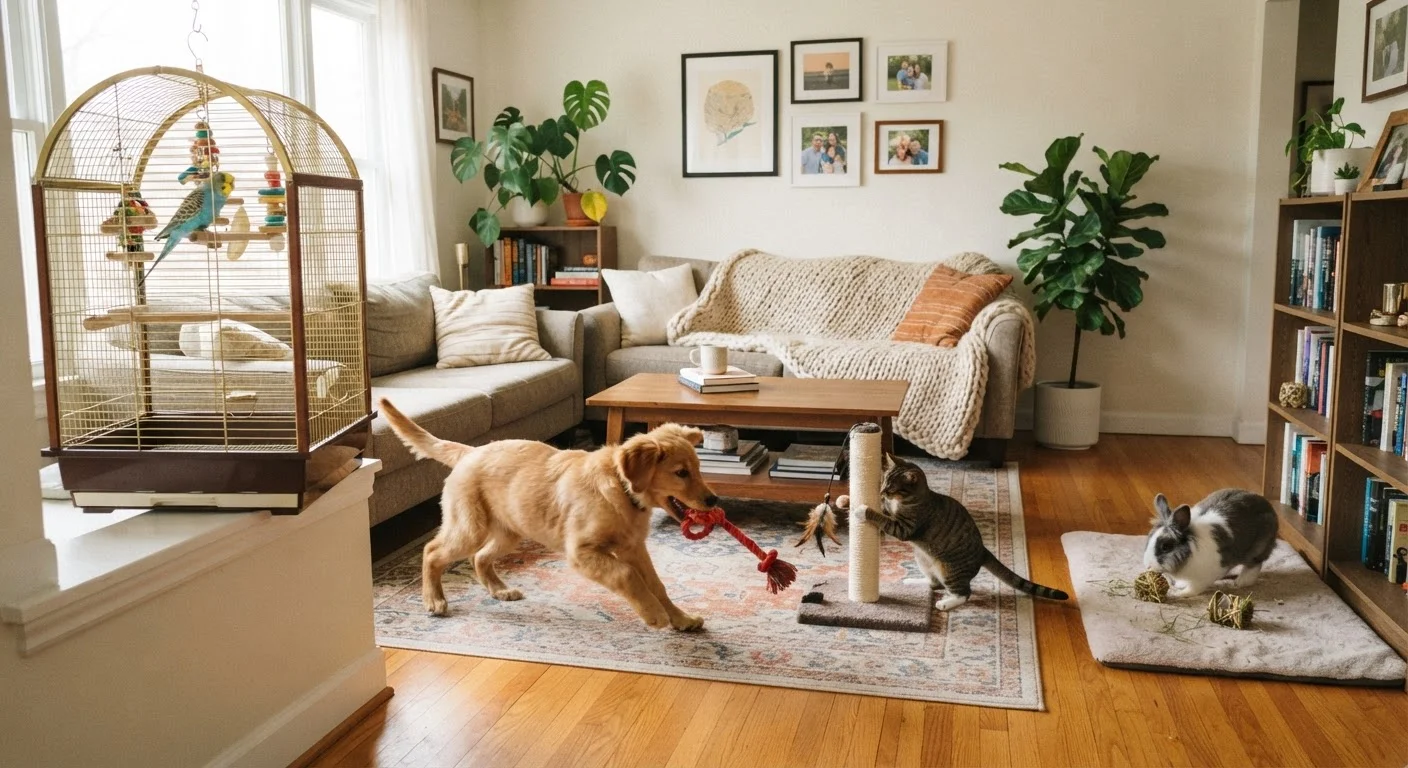
Exercise isn't a one-size-fits-all concept for pets. A border collie and a budgie both need daily stimulation, but the type, intensity, and duration vary dramatically by species, breed, age, and health status. Meeting a pet's activity needs isn't just about preventing weight gain - it directly influences behavior, mental health, and lifespan. The connection between boredom and health risk is well-documented across species.
This reference breaks down exercise needs by common household pet type, covering minimum daily activity, what counts as enrichment, and behavioral warning signs that a pet isn't getting enough stimulation.
| Daily exercise - high-energy dogs | 60-120 minutes (American Kennel Club general breed guidelines) |
| Daily play - indoor cats | 2-3 sessions, 10-15 min each (ASPCA feline enrichment guidance) |
| Free-roaming time - rabbits | Minimum 3 hours/day (House Rabbit Society care standards) |
| Out-of-cage time - parrots | 2-4 hours daily (Avian veterinary general guidance) |
| Daily activity - low-energy dog breeds | 20-30 minutes (AKC breed activity guidelines) |
| Social interaction - budgies and cockatiels | At least 1-2 hours out-of-cage (General avian care consensus) |
Dogs: The Highest and Most Variable Demand
Dogs have the widest exercise range of any common household pet. Breed, age, and health all shift what's appropriate significantly.
- High-energy breeds (herding dogs, sporting breeds, working dogs): 60-120 minutes of vigorous exercise daily, plus mental engagement
- Medium-energy breeds (retrievers, some terriers, hounds): 45-60 minutes of moderate activity daily
- Low-energy breeds (basset hounds, bulldogs, toy breeds): 20-30 minutes daily, with attention to heat sensitivity
- Senior or health-limited dogs: shorter, low-impact sessions - always follow veterinary guidance
Walks alone often aren't sufficient for high-drive dogs. Fetch, agility work, scent games, and interactive training sessions all count as enrichment. For a fuller picture of daily needs, see what dogs need every day.
Signs of under-stimulation: destructive chewing, excessive barking, hyperactivity indoors, redirected digging.
Environmental enrichment
Physical additions to a pet's living space - such as perches, tunnels, or puzzle feeders - that stimulate natural behaviors and reduce boredom. It complements active exercise rather than replacing it.
Redirected behavior
When a pet channels unmet physical or mental energy into an undesirable outlet, such as chewing furniture or excessive vocalization. It is often a signal of insufficient stimulation.
Foraging
A naturalistic activity where an animal searches for food rather than finding it in a bowl. Foraging toys and scatter feeding mimic this instinct and provide mental engagement.
GI stasis
A serious condition common in rabbits where the digestive system slows or stops. Lack of movement and insufficient fiber are known contributing factors, making exercise especially important for rabbits.
Cats, Rabbits, and Birds: Often Underestimated
Cats are frequently assumed to be self-sufficient, but indoor cats especially need structured play. Aim for two or three 10-15 minute interactive play sessions daily using wand toys, puzzle feeders, or laser pointers. Environmental enrichment - window perches, cat trees, and rotating toys - fills gaps between sessions. Signs of under-stimulation: overeating, excessive grooming, aggression, or lethargy.
Rabbits are highly active animals that need a minimum of 3 hours of free-roaming time outside their enclosure each day, ideally in a rabbit-proofed space. They benefit from tunnels, cardboard boxes, and foraging opportunities. Confined rabbits with insufficient exercise are prone to obesity, GI stasis, and skeletal problems. Signs of under-stimulation: bar-chewing, repetitive circling, or aggression when handled.
Birds (parrots, cockatiels, budgies) require out-of-cage time daily - typically 2-4 hours for parrots, shorter sessions for smaller species. Flight, climbing, and foraging activities are enriching. Social interaction is itself a form of exercise for highly social species. Signs of under-stimulation: feather plucking, screaming, repetitive head-bobbing, or biting.
If you're still weighing which pet fits your household, comparing small pets to dogs and cats can help clarify time and activity commitments.
Structuring Activity Into Your Daily Routine
Consistency matters as much as quantity. Pets that receive activity at predictable times show lower stress behaviors and are easier to manage. Building a structured daily routine helps owners distribute exercise, feeding, and rest in ways that align with each species' natural rhythms.
If your own energy level affects how much active time you can realistically offer a pet, matching a pet to your activity level is a practical next step before adopting.
This article provides general educational information about pet care. For concerns about a specific animal's health, behavior, or exercise limitations, consult a licensed veterinarian.
The content on this site is provided for informational purposes only and should not be considered a substitute for professional advice. While we strive to provide accurate and up-to-date information, we make no guarantees regarding its completeness or accuracy. Always consult a qualified professional for advice specific to your circumstances before making any decisions.