

Our Verdict
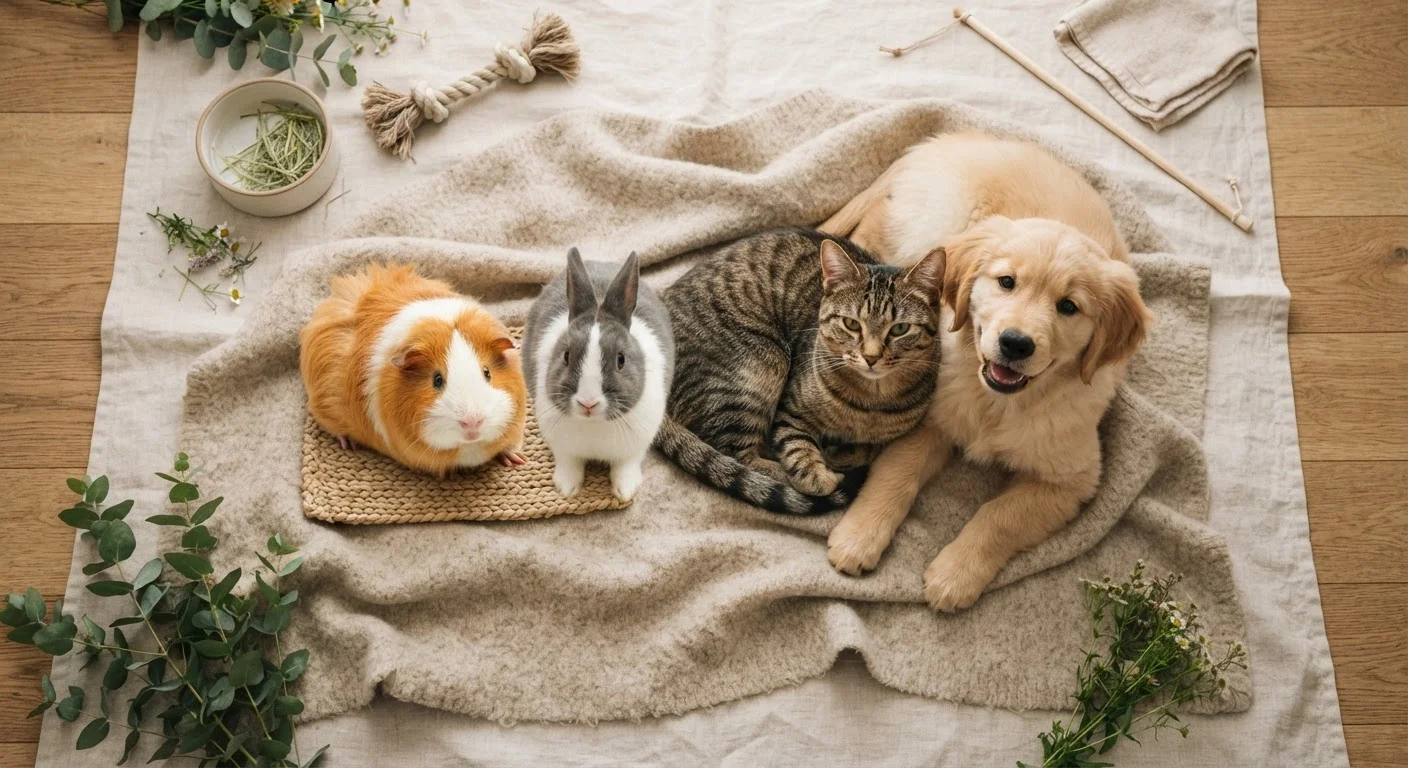
Dogs suit active, home-based owners who can commit several hours daily to care and interaction. Cats strike a balance between companionship and independence, fitting a wider range of schedules and spaces. Small pets are practical for those with limited space or budgets, but their needs are frequently underestimated - they demand daily attention, proper housing, and appropriate veterinary care.
| Best for | Recommended |
|---|---|
| Active owners with flexible schedules and outdoor access | Dogs |
| Busy professionals who want daily companionship without rigid schedules | Cats |
| Apartment dwellers, first-time owners, or those with tighter budgets | Small Pets (e.g., guinea pigs, rabbits) |
What This Comparison Actually Covers
Picking a pet isn't just about which animal you find appealing - it's about which animal your actual daily life can support. This comparison looks at three broad categories: dogs, cats, and small pets (a group that includes guinea pigs, hamsters, rabbits, gerbils, and similar species). Each category differs dramatically in time demands, space requirements, social needs, and long-term costs.
If you haven't yet taken stock of your schedule, home setup, and budget, the lifestyle self-assessment guide is a good place to start before reading on. This article focuses on direct, realistic comparisons rather than general enthusiasm for any one species.
| Dogs | Cats | Small Pets | |
|---|---|---|---|
| Daily time commitment | High (2-4+ hours) | Moderate (30-60 min active) | Low to moderate (30-60 min) |
| Space needed | Medium to large preferred | Adapts to small spaces | Small, but enclosure size matters |
| Typical ongoing costs | High | Moderate | Low to moderate |
| Vet access required | General practice | General practice | Exotic specialist often needed |
| Suitable for apartments | Breed-dependent | Generally yes | Generally yes |
| Emotional bond depth | Very strong, owner-focused | Strong, more independent | Moderate, species-dependent |
| Lifespan (general range) | 10-15 years | 12-18 years | 2-12 years (varies widely) |
Time and Daily Care Requirements
Dogs are the most time-intensive of the three categories. Most dogs need multiple outdoor walks each day, active play sessions, training reinforcement, and sustained human interaction. Leaving a dog alone for more than four to six hours routinely is considered poor welfare practice by most veterinary organizations. If your work schedule keeps you away from home most of the day, a dog is a serious commitment that may require dog walkers, daycare, or flexible arrangements.
Cats are considerably more self-sufficient. They sleep much of the day, use a litter box independently, and don't require outdoor walks. That said, cats are not solitary by nature - they benefit from daily interactive play and social time with their owners. A neglected cat can develop behavioral or stress-related health issues.
Small pets are frequently marketed as easy starter pets, but their daily needs are real. Guinea pigs, for example, are social animals that do poorly when isolated; rabbits require several hours of supervised out-of-cage time daily. Hamsters are nocturnal, meaning their active period often doesn't align with a family's schedule. For a full breakdown by species, see what pets actually need every day.
Match the Pet to Your Actual Schedule
Before committing, track how many hours per day you're genuinely home and available - not your ideal week, but a typical one. Dogs especially require consistent daily presence. If your schedule shifts frequently or involves extended travel, a more independent species will be a better long-term fit for both you and the animal.
Space, Housing, and Physical Environment
Dogs need room to move - ideally access to a yard or regular outdoor exercise in a park or open space. Larger breeds in small apartments often struggle without sufficient physical outlets, though some lower-energy breeds adapt reasonably well to compact living when exercised consistently. Your living situation matters significantly when narrowing down dog breeds or ruling them out entirely.
Cats adapt well to apartment living. A single-bedroom or studio apartment can comfortably house one or two cats, provided there's vertical space (cat trees, shelves) and environmental enrichment. They're generally quiet and don't disturb neighbors.
Small pets require appropriate species-specific enclosures - which are often larger than packaging implies. A standard pet store cage is frequently insufficient for a guinea pig or rabbit. Rabbits, in particular, need substantial floor space and cannot thrive in confined hutches. For readers in compact homes, small pets suited to apartments covers which species genuinely do well in limited square footage.
Costs: Upfront and Ongoing
Across all three categories, ongoing costs often exceed what new owners anticipate. Veterinary care - including routine checkups, vaccinations, and unexpected illness - applies to every species.
- Dogs: Higher food costs (especially for large breeds), routine vet visits, grooming (breed-dependent), training, boarding or pet-sitting, licensing, and flea/tick/heartworm prevention.
- Cats: Lower food costs than dogs, litter and litter box supplies, routine vet care, spay/neuter, and indoor enrichment items. Generally less expensive than dogs but not negligible.
- Small pets: Lower acquisition costs and food expenses, but enclosure setup can be significant if done correctly. Veterinary care for small mammals - especially rabbits and guinea pigs - requires an exotic animal veterinarian, which can cost more per visit than standard cat or dog care.
The true cost of "low-maintenance" pets is often underestimated, particularly for small mammals whose specialized vet needs catch owners off guard.
Companionship and Emotional Connection
Dogs offer the strongest owner-directed bond of the three. They are highly attuned to human emotion, respond to training, and actively seek out their owners' company. For people who live alone or want an engaged daily companion, this can be deeply rewarding - but it also means dogs experience distress when left alone too long.
Cats bond meaningfully with their owners, though on their own terms. Many cats are affectionate, curious, and interactive; others are more reserved. The relationship tends to be less demanding in terms of scheduling while still offering genuine connection.
Small pets offer companionship that's real but more limited in emotional complexity. Guinea pigs, for instance, vocalize and respond to familiar people. Rabbits can be affectionate and personality-rich. However, these animals are generally not suited to being carried or cuddled in the way dogs and cats often are, and mishandling can cause significant stress. Families with young children should review how a child's age shapes pet suitability before choosing a small pet for kids.
This article is for general informational and educational purposes only and does not constitute veterinary or professional advice. Consult a licensed veterinarian for guidance specific to your pet's health and care needs.
The content on this site is provided for informational purposes only and should not be considered a substitute for professional advice. While we strive to provide accurate and up-to-date information, we make no guarantees regarding its completeness or accuracy. Always consult a qualified professional for advice specific to your circumstances before making any decisions.