

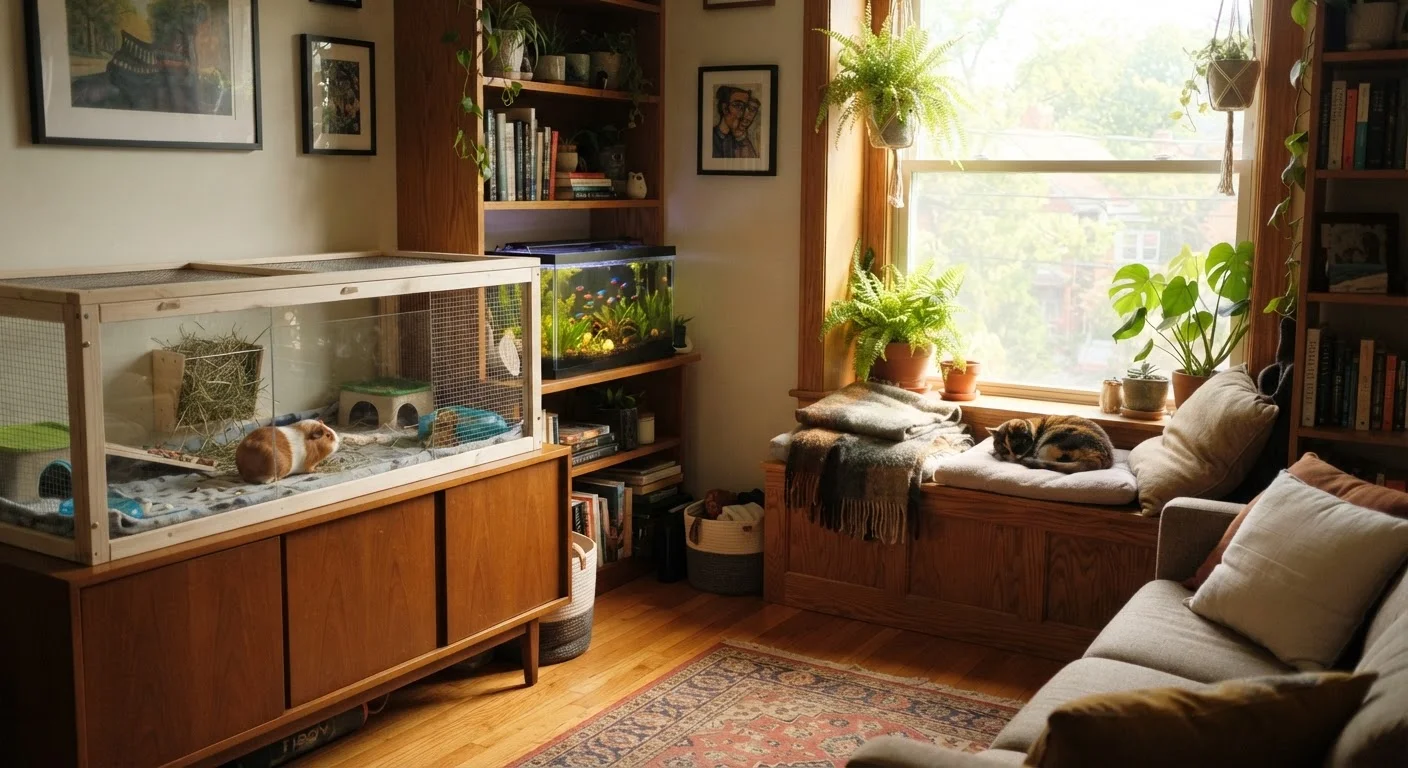
Why Apartment Living Changes the Pet Equation
Choosing a pet when you live in an apartment isn't just about square footage. Noise levels, lease restrictions, neighbor proximity, and your daily routine all shape which animals genuinely do well - and which ones quietly suffer. The goal isn't finding the smallest pet; it's finding one whose biological and behavioral needs align with what your space and schedule can realistically provide.
Before diving into specific animals, it helps to honestly assess your lifestyle - including work hours, travel frequency, and how much daily interaction you can sustain. For a broader comparison of how small pets stack up against dogs and cats in practical terms, see our piece on which pet type fits your lifestyle.
The animals below are recognized by veterinary and animal welfare organizations as generally well-suited to apartment settings - each with caveats worth understanding before you commit.
Guinea Pigs
Guinea pigs are social, gentle, and generally quiet - qualities that translate well to apartment life. They produce soft vocalizations rather than loud noise, don't require outdoor exercise, and can be housed in a well-designed enclosure of appropriate size (the Humane Society recommends a minimum of 7.5 square feet of floor space per pair).
They are social animals and generally do better in pairs, so prospective owners should plan for two. Their diet - primarily timothy hay, fresh leafy greens, and vitamin C-rich foods - is straightforward but must be maintained consistently. Guinea pigs require daily feeding, spot-cleaning of their enclosure, and weekly deep cleans. They are not hands-off pets, but their care routine is predictable and manageable in a small space.
Guinea pigs are quiet, predictable, and thrive in pairs - a reliable fit for many apartment households.
Aquarium Fish
Fish are among the few pets with essentially no noise footprint and no risk of lease violations. A well-maintained freshwater aquarium can serve as both a pet habitat and a calming visual element in a small space. Research, including a study published by Exeter University, has suggested that watching fish tanks is associated with reduced heart rate and blood pressure - though this is general observational data, not a clinical prescription.
The care commitment is real: tanks require regular water changes, filtration maintenance, and attention to water chemistry. Beginners often do better starting with a simple 10-20 gallon freshwater setup and hardy species like bettas or tetras rather than complex marine systems. Veterinary care is available for fish but often harder to access than for mammals, so prevention through proper tank management is especially important.
Fish have virtually no noise impact and can fit naturally into even the smallest apartment setup.
Cats (Particularly Lower-Energy Breeds)
Many cats adapt comfortably to apartment life, particularly breeds and individuals that tend toward calmer temperaments - such as Ragdolls, British Shorthairs, or adult rescues with established indoor habits. Cats are independent enough to manage alone during work hours, which matters considerably for full-time workers.
They do need vertical space (cat trees, shelves), daily play, a clean litter box, and regular veterinary care including vaccinations and parasite prevention. Noise is generally low, though some cats vocalize more than others. Lease terms and building policies vary - confirm whether your building permits cats and whether there are weight or breed restrictions before adopting.
A calm adult cat with vertical space and daily play can thrive comfortably in most apartments.
Hamsters
Hamsters are compact, contained, and largely nocturnal - meaning their active periods may not align with daytime apartment routines, but they also won't disturb neighbors. They require a sufficiently large enclosure (many animal welfare organizations now recommend a minimum of 450 square inches of unbroken floor space), an exercise wheel, enrichment materials, and a species-appropriate diet of pellets, fresh vegetables, and occasional protein.
They are typically solitary animals - Syrian hamsters in particular should be housed alone. Their lifespan is relatively short (two to three years on average), and they can be prone to health issues including dental problems and respiratory infections. A small-animal veterinarian should be accessible before adoption.
Hamsters need more space than most people assume - prioritize enclosure size over convenience.
Budgerigars (Budgies)
Budgerigars - commonly called budgies or parakeets - are among the most apartment-compatible birds. They are small, relatively quiet compared to larger parrots, and can learn to mimic words and sounds with consistent interaction. Like guinea pigs, they are social animals and often do better in pairs if their owner is away for long periods.
Budgies need a spacious cage (wider is more important than tall, since they fly horizontally), daily out-of-cage time in a safe, supervised environment, a varied diet, and mental enrichment. They are sensitive to airborne toxins - including non-stick cookware fumes and certain aerosols - so kitchen placement and household product choices matter significantly for their health. Avian veterinary care is specialized; identify an avian vet in your area before bringing one home.
Budgies thrive with social interaction and are sensitive to household air quality - plan accordingly.
Leopard Geckos
For readers open to reptiles, leopard geckos are frequently cited by herpetologists and reptile welfare organizations as a good starting point for first-time reptile owners. They are quiet, contained, and do not require UVB lighting the way many other lizards do, though a thermal gradient in their enclosure - a warm side and a cooler side - is essential for proper thermoregulation.
They eat live insects (primarily crickets and mealworms) that must be gut-loaded and dusted with calcium and vitamin supplements. Their enclosure needs regular cleaning and temperature monitoring. They are generally tolerant of gentle handling once acclimated, but they are not naturally cuddly animals. A reptile-experienced veterinarian should be consulted for routine wellness checks.
Leopard geckos are quiet and contained, but their precise environmental needs require consistent attention.
Making the Right Choice for You and Your Pet
No single pet is universally right for apartment living. What matters most is whether your specific setup - noise tolerance of neighbors, your building's pet policy, your daily hours at home, and your budget for veterinary care - can meet that animal's documented needs. The term "low-maintenance" is often misleading; what low-maintenance actually means deserves careful reading before any decision.
Check Your Lease Before You Fall in Love
Many apartment leases specify allowed species, size limits, or deposit requirements for pets - and some prohibit animals beyond cats and dogs entirely. Review your lease and speak with your property manager before selecting any pet. Rehoming a pet due to a lease violation is stressful for both owner and animal, and entirely avoidable with upfront research.
If you're weighing compact living more broadly, our guide on how your living situation shapes the right pet choice walks through spatial and lifestyle factors in depth. Whatever species you select, routine veterinary checkups, species-appropriate enrichment, and a stable environment remain the foundation of responsible care - regardless of how small the pet is.
This article is for general informational purposes only and does not constitute veterinary advice. Always consult a licensed veterinarian for guidance specific to a pet's health, diet, or care needs.
The content on this site is provided for informational purposes only and should not be considered a substitute for professional advice. While we strive to provide accurate and up-to-date information, we make no guarantees regarding its completeness or accuracy. Always consult a qualified professional for advice specific to your circumstances before making any decisions.