

Why the Scale Tells Only Part of the Story
When a pet owner notices their dog or cat gaining weight, the instinct is often to step on a scale. But a number in pounds or kilograms carries limited meaning without context. A healthy adult Labrador Retriever might weigh 65 pounds; another Labrador at the same weight might be visibly overweight due to a smaller frame. Conversely, a pet can fall within a "normal" weight range while losing muscle mass - a concern that a scale completely misses.
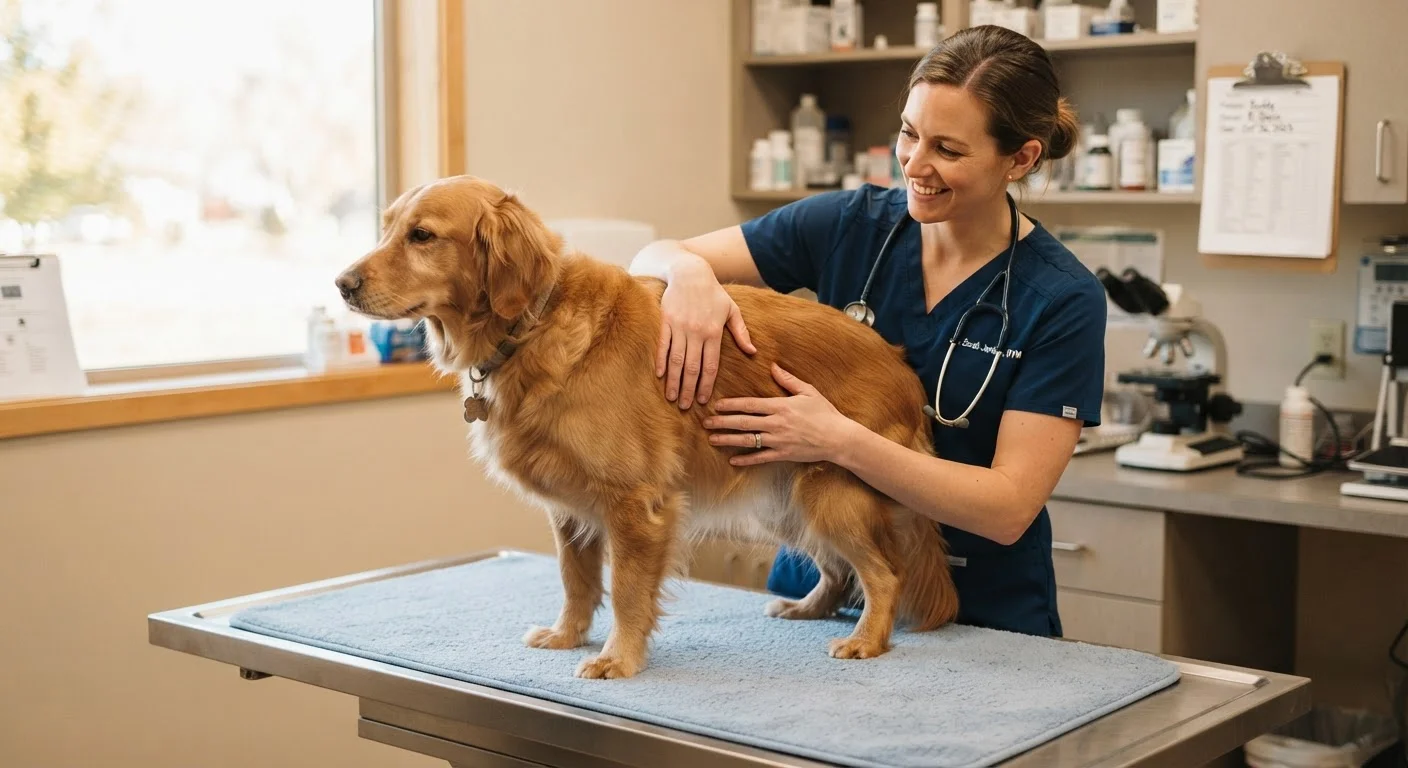
This is precisely why veterinarians rely on body condition scoring as a clinical tool. As part of a routine wellness exam, BCS gives the vet a standardized, repeatable way to assess body composition across visits - and across different clinicians. It's also a practical tool owners can adapt for use at home between appointments.
How the BCS Scale Works
The most widely used system in veterinary practice is the 9-point BCS scale, developed through research in clinical animal nutrition. Scores run from 1 (severely underweight) to 9 (severely obese), with 4 and 5 representing the ideal range. A 5-point version also exists - it uses the same logic but with less granularity between categories.
Vets evaluate three main areas during scoring:
- Ribs: Can they be felt easily with light pressure? Are they visible without touching?
- Waist: Is there a visible tuck when looking from above and from the side?
- Abdomen: Does the belly tuck up toward the hips, or does it hang low or protrude?
A pet scoring 4-5 has ribs that are palpable but not visible, a defined waist when viewed from above, and a slight abdominal tuck. A pet scoring 7 or higher has ribs that are difficult to feel under a fat layer, no visible waist, and a rounded or distended abdomen. At the other extreme, a score of 1 or 2 indicates visible ribs, spine, and hip bones with no detectable fat cover - a sign of serious undernutrition or underlying illness.
59%
U.S. dogs classified as overweight or obese
According to Association for Pet Obesity Prevention survey data, over half of dogs assessed in clinical settings score above the ideal BCS range.
61%
U.S. cats classified as overweight or obese
The same Association for Pet Obesity Prevention research found cats at even higher rates of excess body condition than dogs in the pet population surveyed.
9-point
Standard BCS scale used in clinical practice
The 9-point scale allows clinicians to detect gradual changes in body condition that a 5-point scale might miss, making it the preferred tool in many veterinary settings.
Performing a Basic BCS Check at Home
You don't need clinical training to do a rough BCS assessment - the technique is designed to be taught to owners. Here's the core process for dogs and cats:
- Look from above: Your pet should have an hourglass shape, with a visible narrowing behind the ribs. No waist definition suggests excess weight; an extreme narrowing may indicate underweight.
- Look from the side: The abdomen should tuck up slightly from the ribcage to the hips. A sagging belly or one that appears distended is a concern.
- Feel the ribcage: With gentle, flat-handed pressure, you should be able to feel individual ribs without pressing hard. If you need to press firmly to locate them, there's likely excess fat cover.
This is a useful skill to build into a monthly at-home health routine. Keep in mind that BCS is species-specific - the landmarks for a rabbit or guinea pig differ from those used for dogs and cats, so always confirm the right method with your vet for less common pets.
Build BCS Checks Into a Routine
Try assessing your pet's body condition at the same time each month - such as during a grooming session or after a walk. Consistency helps you notice gradual changes that are easy to miss day to day. Take brief notes or photos from above and the side to track changes over time and share them with your vet.
What Your Pet's BCS Score Means for Their Health
BCS isn't just a number - it maps to real health outcomes. Pets scoring in the overweight range (6-9) carry elevated risk for joint disease, diabetes, respiratory issues, and a shorter overall lifespan. Obesity is among the most common preventable conditions in pets, and BCS is one of the earliest ways to catch a trend before it becomes a medical problem.
On the other end of the scale, a low BCS score in a previously healthy pet is a signal that warrants prompt veterinary attention. Unexplained weight loss and muscle wasting can indicate metabolic disorders, dental pain, or other underlying conditions. If you notice your pet's BCS changing noticeably between visits, consult your vet rather than adjusting diet on your own.
Once you understand your pet's BCS, the logical next step is reviewing what - and how much - you're feeding them. Understanding how to interpret portion guidance starts with reading a pet food label accurately, including guaranteed analysis and calorie content, which most owners find less intuitive than they expect.
This article provides general information about veterinary assessment methods and is not a substitute for professional veterinary advice. Always consult a licensed veterinarian for guidance specific to your pet's health and nutritional needs.
Frequently Asked Questions
On the standard 9-point scale, a score of 4 or 5 is considered ideal for both dogs and cats. At this range, ribs are easily felt but not visibly prominent, there is a visible waist when viewed from above, and there is a slight abdominal tuck when viewed from the side.
Yes, a basic assessment is something most owners can do between vet visits. You observe your pet's silhouette from above and the side, then gently run your hands along the ribcage, spine, and hips. Your veterinarian can walk you through the technique and confirm your assessment at the next appointment.
Weight alone doesn't account for differences in breed size, bone structure, or muscle mass. A large-framed dog may weigh more than a breed chart suggests but still be in ideal condition, while a smaller-framed pet at a "normal" weight could carry excess fat. BCS provides context that a scale cannot.
BCS is typically evaluated at every routine wellness exam, which for most adult pets means at least once a year. Pets with a history of weight issues, older animals, or those on a weight-management plan may benefit from more frequent check-ins - your vet can advise on the right interval.
Yes, BCS systems have been adapted for many species including rabbits, guinea pigs, horses, and birds, though the specific landmarks and scoring criteria differ by species. If you have an exotic or less common pet, ask your vet which scoring system they use.
The content on this site is provided for informational purposes only and should not be considered a substitute for professional advice. While we strive to provide accurate and up-to-date information, we make no guarantees regarding its completeness or accuracy. Always consult a qualified professional for advice specific to your circumstances before making any decisions.