

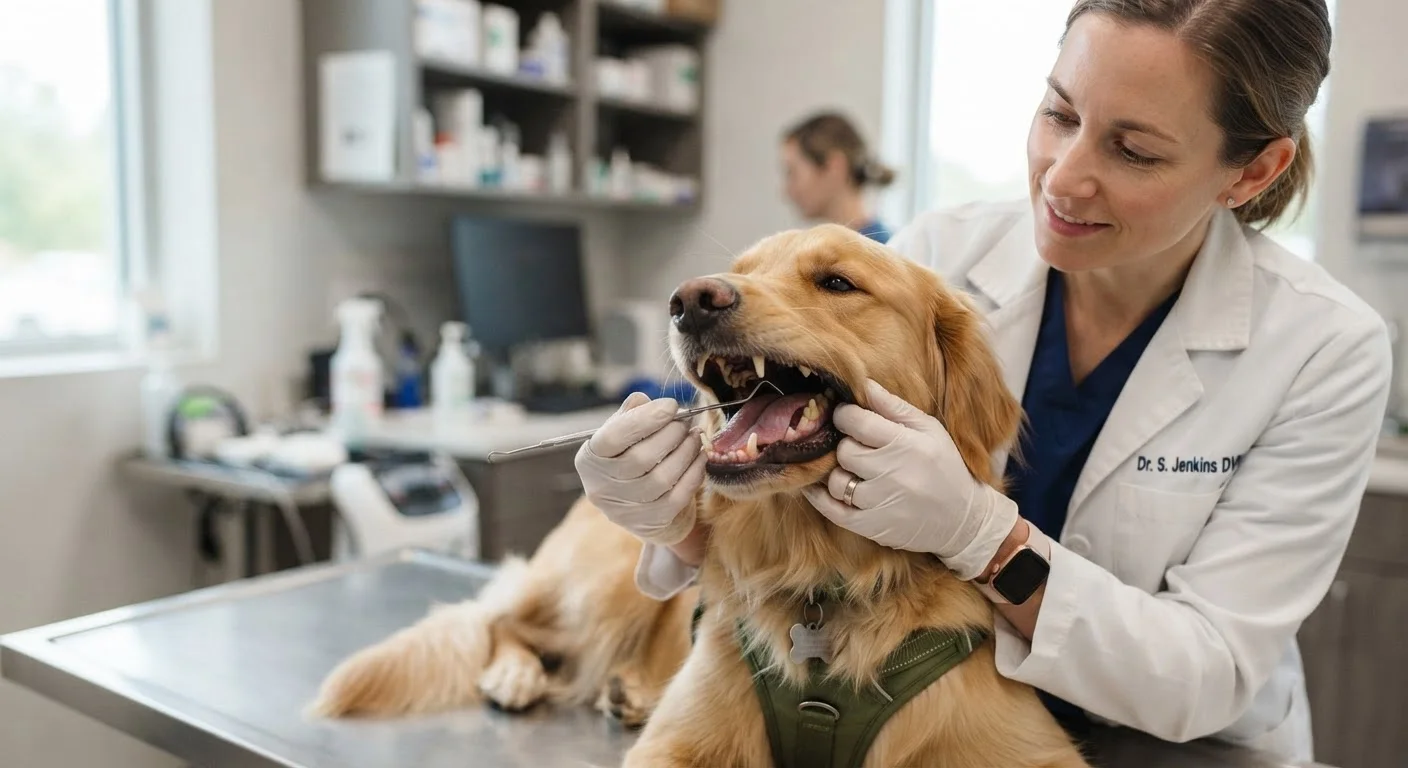
Why Pet Dental Health Is Often Overlooked
Dental care ranks among the most commonly neglected aspects of routine pet health, even among attentive owners. Part of the reason is visibility: unlike a limp or a cough, oral disease is mostly hidden inside the mouth and progresses silently. Pets - particularly cats - are skilled at concealing discomfort, making it easy to miss early warning signs. For more on recognizing when a pet is in pain, see Signs Your Pet May Be in Pain.
Another barrier is the misconception that bad breath is simply normal for dogs and cats. In reality, persistent halitosis is usually an early indicator of bacterial accumulation and gum inflammation - not a quirk of species. Common pet health myths like this one can delay care that makes a real difference in long-term wellbeing.
According to the American Veterinary Dental College, periodontal disease is the most common clinical condition in adult dogs and cats - with most animals showing signs by the time they reach three years of age. That timeline makes early preventive care, not reactive treatment, the most important goal.
~80%
Dogs with periodontal disease by age 3
The American Veterinary Dental College reports that most dogs show signs of periodontal disease by age three.
~70%
Cats with dental disease by age 3
Veterinary dental surveys estimate that the majority of cats have some degree of oral disease by their third year of life.
#1
Most common clinical condition in adult pets
Periodontal disease is identified as the most prevalent clinical diagnosis in adult dogs and cats by veterinary dental authorities.
How Periodontal Disease Progresses
Periodontal disease begins with plaque - a sticky film of bacteria that forms on tooth surfaces after eating. Within days, plaque mineralizes into tartar (calculus), which adheres firmly to enamel and cannot be removed by brushing alone. As tartar accumulates at and below the gumline, bacteria trigger inflammation in the surrounding gum tissue, a condition called gingivitis. At this stage, the process is still largely reversible with professional cleaning.
Left untreated, gingivitis advances to periodontitis - irreversible destruction of the ligaments and bone supporting the teeth. Pockets form between the gum and tooth root, harboring anaerobic bacteria that accelerate tissue breakdown. Teeth become loose, painful, and eventually lost. By this stage, extraction is often the only option to relieve chronic infection and pain.
Anesthesia-Free Dental Scaling Is Not Equivalent Care
Some grooming facilities offer dental scaling without anesthesia and market it as a safer or lower-cost alternative. Veterinary dental specialists are clear that this approach cannot address disease below the gumline - where most damage occurs - and may create a false sense of security. It is not considered an acceptable substitute for professional veterinary dental care. If anesthesia is a concern for your pet, discuss the risks and benefits with your veterinarian rather than forgoing proper cleaning altogether.
Systemic Effects: Beyond the Mouth
The consequences of advanced periodontal disease extend well past tooth loss. Chronically inflamed, ulcerated gum tissue provides a pathway for oral bacteria to enter the bloodstream - a process called bacteremia. Research in veterinary medicine has documented associations between severe periodontal disease and changes in kidney function, cardiac valve abnormalities, and liver stress, though the precise causal mechanisms are still an area of active study.
The practical takeaway for owners: oral infection is not an isolated problem. Dental disease in pets can affect heart and kidney health, and addressing it early is a meaningful part of overall preventive care. This is especially relevant for older pets or those already managing chronic conditions.
Dogs vs. Cats: Key Differences in Dental Disease
While both species are susceptible to periodontal disease, there are important differences in how oral disease presents and progresses in dogs compared to cats.
Dogs
Dogs are particularly prone to heavy tartar accumulation, especially on the upper back teeth (carnassials). Large breed dogs may develop tooth fractures from chewing hard objects, which create entry points for infection. Smaller and toy breeds tend to suffer more severe periodontal disease relative to their size due to tooth crowding in a compact jaw.
Cats
Cats face an additional dental condition not common in dogs: tooth resorption (formerly called feline odontoclastic resorptive lesions, or FORLs). In this painful process, the tooth structure is progressively destroyed from within or at the gumline, often making extraction necessary. Cats also commonly develop stomatitis - severe, widespread oral inflammation that can make eating nearly impossible. These conditions have different management approaches from standard periodontal disease and require veterinary diagnosis.
Start tooth brushing as early in a pet's life as possible - ideally during kittenhood or puppyhood - so the sensation becomes routine before adult teeth are fully established.
Behavioral acceptance of brushing is significantly higher in animals conditioned to it early. Older pets can still be trained, but it takes more patience and a slower desensitization approach.
If your cat stops grooming, loses interest in food, or becomes unusually withdrawn, include an oral exam in your vet visit - these subtle changes can signal painful tooth resorption or stomatitis.
Cats are masters at hiding pain. Tooth resorption in particular causes significant discomfort but rarely produces the dramatic signs owners expect from a dental problem.
Home Care and Professional Cleanings
The most effective tool for preventing periodontal disease at home is daily tooth brushing using a pet-safe toothpaste (never human toothpaste, which contains ingredients toxic to pets). Veterinary dental organizations consistently rank brushing above other at-home methods. Dental chews, water additives, and specially formulated diets can serve as supplemental strategies, but none replace mechanical plaque removal.
Professional veterinary dental cleanings - performed under general anesthesia - allow thorough scaling above and below the gumline, probing of tooth pockets, dental radiographs, and extraction of non-viable teeth if needed. Anesthesia is necessary because a conscious pet cannot tolerate the instruments required to clean subgingival surfaces safely and effectively. Anesthesia-free dental scaling, offered by some grooming services, is not endorsed by veterinary dental specialists as an equivalent alternative.
For broader context on daily care routines and foundational pet wellness, the Pet Care Basics hub provides practical guidance across species.
Start Small With Home Brushing
If your pet resists a toothbrush, begin by letting them lick pet-safe toothpaste from your finger, then gradually introduce a finger brush over several weeks. Progress to a soft-bristled pet toothbrush only once the pet is comfortable. Even brushing a few days per week provides meaningful benefit over no brushing at all.
When to See Your Veterinarian
Owners should not wait for obvious symptoms before discussing dental health with their vet. During annual or semi-annual wellness visits, ask for an oral examination and an honest assessment of your pet's dental grade. Early-stage disease is far less costly - financially and medically - than advanced periodontitis requiring multiple extractions.
Seek veterinary attention promptly if you observe any of the following: persistent bad breath, pawing at the mouth, dropping food while eating, reluctance to chew, facial swelling, drooling, or any visible discoloration or bleeding of the gums. These can all indicate pain or active infection. Waiting too long to call the vet with dental symptoms can allow disease to progress to stages where tooth loss or systemic effects are unavoidable.
Dental health is an integral part of whole-body wellness - as relevant to your pet's quality of life as nutrition or weight management. For context on other preventable health conditions, see why your pet's weight matters.
This article is for general informational purposes only and does not constitute veterinary medical advice. Always consult a licensed veterinarian for guidance specific to your pet's health needs.
The content on this site is provided for informational purposes only and should not be considered a substitute for professional advice. While we strive to provide accurate and up-to-date information, we make no guarantees regarding its completeness or accuracy. Always consult a qualified professional for advice specific to your circumstances before making any decisions.