

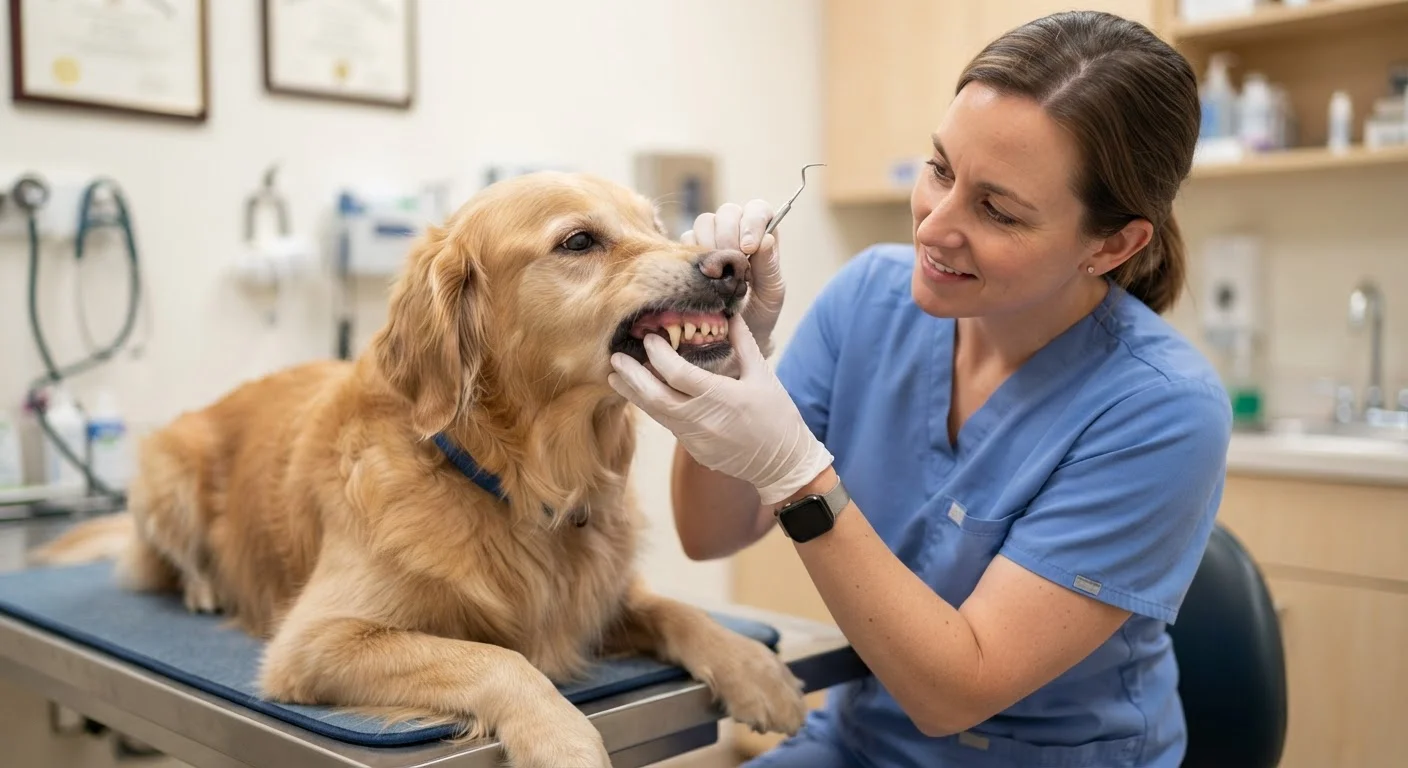
What's Actually Happening Inside Your Pet's Mouth
Dental disease doesn't begin with a dramatic symptom. It starts quietly - with plaque, a thin bacterial film that forms on tooth surfaces every day. If plaque isn't removed, it mineralizes into tartar (also called calculus) within days. Tartar is firmly bonded to enamel and cannot be brushed away at home once it forms.
As tartar accumulates at and below the gumline, it creates an environment where bacteria thrive. The gums become inflamed - a stage called gingivitis - which is still reversible with professional treatment. Left unaddressed, the infection advances deeper into the structures supporting the tooth: the periodontal ligament and the surrounding bone. This is periodontal disease, and it is not reversible. Tissue and bone lost at this stage do not regenerate.
The process is the same across species. Dogs, cats, rabbits, and ferrets all develop periodontal disease by similar mechanisms, though breed, diet, and genetics influence how quickly it progresses. Small-breed dogs and brachycephalic breeds (those with flat faces) are particularly prone to rapid progression due to tooth crowding.
Dental Disease Is Graded in Stages
Veterinarians classify periodontal disease on a scale from Stage 1 (gingivitis only, fully reversible) to Stage 4 (severe bone loss and tooth destruction). Understanding the stage guides treatment decisions. Early-stage disease caught at a routine exam is far less costly - financially and in terms of the pet's comfort - than advanced-stage treatment requiring multiple extractions.
Why 'Just Bad Breath' Is a Misleading Dismissal
Many owners assume that unpleasant mouth odor is a normal or minor pet issue. It isn't. Halitosis in pets is almost always a sign of bacterial load - meaning active infection is present. The stronger the odor, the more advanced the disease is likely to be.
What makes this more serious than an aesthetic concern is the systemic dimension. Bacteria from infected gum tissue can enter the bloodstream through inflamed, ulcerated tissue. This is known as bacteremia. Over time, these bacterial deposits have been associated with inflammatory changes in the kidneys, heart valves, and liver in companion animals. While the science is still evolving and causation is complex, veterinary cardiologists and internists consider chronic oral infection a meaningful health risk factor.
Pets also hide pain with remarkable effectiveness - a survival trait inherited from wild ancestors. A pet eating normally and appearing comfortable may still be experiencing significant oral discomfort. This is why professional evaluation matters: recognizing pain in pets often requires knowing what subtle signs to look for, and dental disease is a frequent underlying cause.
~80%
Dogs with dental disease by age 3
According to the American Veterinary Medical Association, most dogs show signs of periodontal disease by their third year of life.
~70%
Cats affected by periodontal disease by age 3
Veterinary dental health organizations report similarly high prevalence rates in cats, many of whom show no obvious clinical signs to owners.
Stage 1-4
Standardized grading scale for periodontal disease
Veterinary dentists use a four-stage classification system to grade disease severity, from early gingivitis (Stage 1) to advanced bone loss (Stage 4).
What Veterinary Dental Care Actually Involves
A professional dental cleaning performed by a veterinarian is significantly more involved than a cosmetic teeth cleaning. It requires general anesthesia - a step that concerns some owners but is essential for safe, thorough evaluation and treatment. Awake patients cannot hold still for probing below the gumline, and a cleaning performed without anesthesia addresses only visible surfaces, missing the disease where it matters most.
During a full dental procedure, the veterinarian or veterinary technician will scale above and below the gumline, probe each tooth for pocket depth, and take dental radiographs (X-rays) to assess root and bone health. Teeth that are non-salvageable are extracted. Extractions, while often distressing to hear about, typically result in measurable relief - pets frequently eat better and behave more actively following removal of chronically infected teeth.
Oral health is a standard component of the annual wellness exam, where veterinarians assess gum condition and flag early signs of disease before they progress.
What Pet Owners Can Do at Home
Home care cannot replace professional cleanings, but it can meaningfully slow plaque progression between visits. The most effective tool is a soft-bristled toothbrush and a pet-safe enzymatic toothpaste used daily. Human toothpaste contains fluoride and other compounds that can be harmful if swallowed, so it should never be used on pets.
If brushing is not tolerated, there are adjunctive options that carry evidence of effectiveness - specifically, products that carry the Veterinary Oral Health Council (VOHC) Seal of Acceptance. This seal indicates the product has met defined criteria for plaque or tartar reduction through controlled trials. VOHC-accepted options include certain dental diets, water additives, and dental chews.
Consistency matters more than any single product choice. Plaque begins reforming within hours of cleaning, so daily disruption - by whatever method a pet tolerates - has a cumulative protective effect. Starting oral care habits early, ideally in puppyhood or kittenhood, makes acceptance far more likely.
Start Dental Habits Early
Introducing tooth brushing when a pet is young dramatically improves long-term tolerance. Use a finger brush or small soft toothbrush with a pet-safe enzymatic toothpaste, and pair sessions with calm handling and positive reinforcement. Even brief daily contact with the teeth and gums builds the habit over time.
Dental health connects to the broader picture of preventive care. Just as maintaining a healthy weight reduces strain on multiple organ systems, keeping the mouth clean reduces the chronic bacterial burden the body must manage. Both are foundational elements of long-term wellness - explore more in our Pet Care Basics resource.
This article provides general health information for educational purposes and is not a substitute for professional veterinary advice. Always consult a licensed veterinarian regarding your pet's specific dental and overall health needs.
Frequently Asked Questions
It is extremely common. Veterinary organizations estimate that most dogs and cats show signs of periodontal disease by age three. Many cases go undetected because pets rarely display obvious signs of mouth pain.
Research suggests a link between chronic oral infection and changes in heart, kidney, and liver tissue. Bacteria from infected gums can enter the bloodstream and deposit in organ tissue over time. Veterinarians consider oral health an important part of overall systemic health.
Bad breath is the most common owner-noticed sign, but it is not the only one. Difficulty chewing, dropping food, pawing at the mouth, or reduced appetite can also indicate oral pain. A veterinarian can assess the full extent of disease, including below the gumline.
Frequency varies by species, breed, age, and individual risk factors. Many veterinarians recommend annual professional cleanings for adult dogs and cats, but your vet is the best source of guidance for your specific pet's needs.
Daily tooth brushing with a pet-safe toothpaste is considered the gold standard for home dental care by most veterinary dental guidelines. It is the single most effective daily action owners can take to slow plaque accumulation.
This is a common misconception. Standard dry kibble provides minimal mechanical cleaning. Only specially formulated dental diets with a recognized seal from the Veterinary Oral Health Council (VOHC) have demonstrated evidence of plaque or tartar reduction.
The content on this site is provided for informational purposes only and should not be considered a substitute for professional advice. While we strive to provide accurate and up-to-date information, we make no guarantees regarding its completeness or accuracy. Always consult a qualified professional for advice specific to your circumstances before making any decisions.