

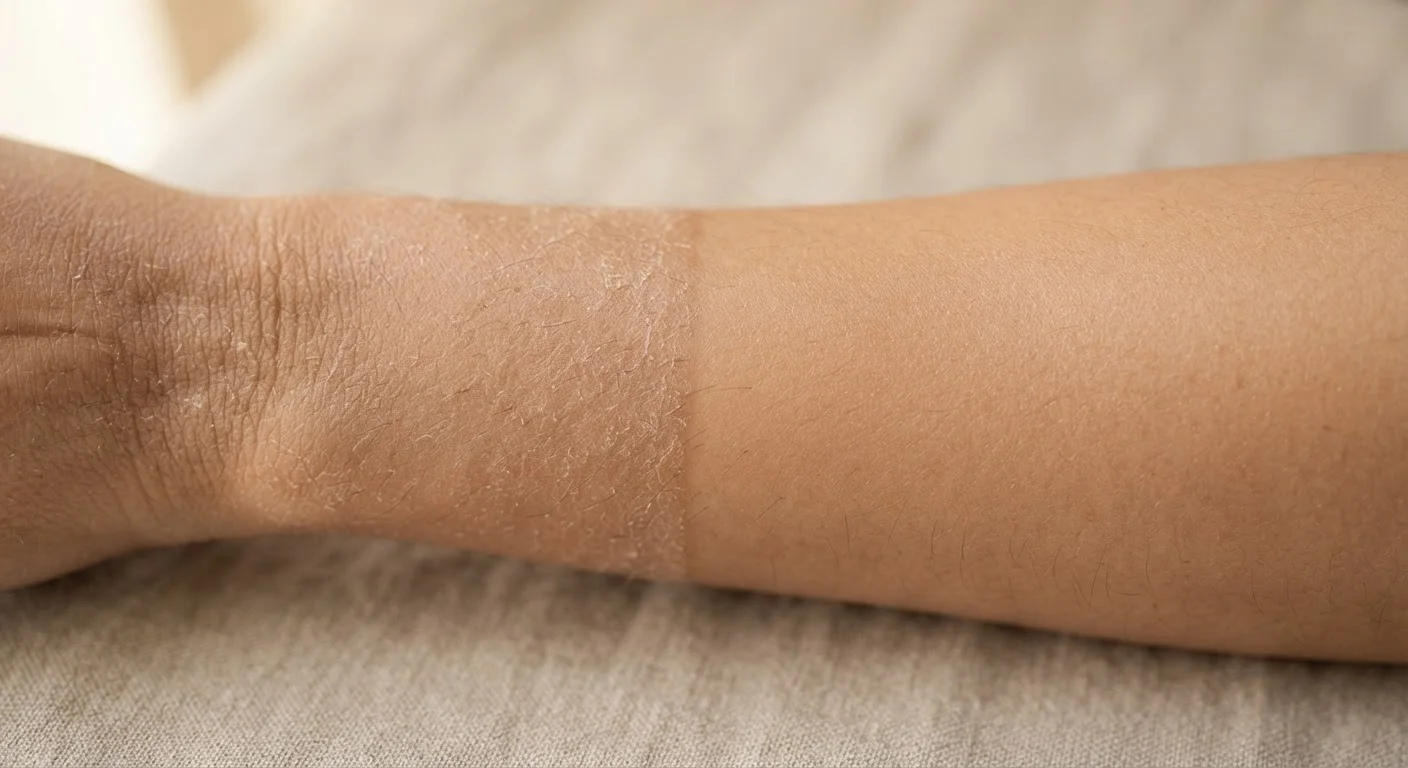
The Immediate Response: What Happens in the First Few Days
When moisturizer is removed from a regular routine, the skin doesn't fail overnight - but the signs begin quickly. Within the first few days, most people notice tightness after cleansing, a sensation that reflects rising transepidermal water loss (TEWL). Water that would normally be partially retained by the moisturizer's occlusive or humectant ingredients now evaporates more freely from the skin's surface.
The stratum corneum - the outermost layer of the epidermis - relies on a balance of natural moisturizing factors (NMFs), lipids, and external moisture support to stay pliable. When that external support disappears, the surface layer can begin to feel rough or look dull, particularly in climates with low ambient humidity.
This early-stage dryness is not yet structural damage; it reflects the skin's immediate response to a change in its environment. But it is a signal worth paying attention to. To understand why, it helps to know what the skin barrier actually does - and how quickly disruption can build.
Notice the Tightness Signal Early
A feeling of tightness or 'pulling' after cleansing is one of the earliest signs that the skin barrier is losing moisture faster than it can compensate. Taking that cue seriously - by reintroducing a moisturizer promptly - can prevent the progression to more reactive, sensitized skin. Catching the signal early makes recovery faster and simpler.
Weeks of Consistent Skipping: Barrier Integrity Starts to Shift
Over several weeks without moisturizer, the effects move beyond surface dryness. The lipid matrix between skin cells - which acts like mortar between bricks - can become depleted when not supplemented externally, especially for people with naturally low sebum production or those who cleanse frequently. This structural shift is measurable: studies using TEWL instruments consistently show that skin that lacks regular moisturizer support loses water at higher rates than moisturized skin.
As barrier integrity declines, the skin becomes more reactive. Ingredients that were once well-tolerated - acids, retinoids, even fragrance - may begin to sting or cause redness. Allergens and environmental pollutants also penetrate more easily through a compromised barrier, which can trigger sensitivity responses that didn't exist before.
~30-40%
Increase in TEWL with compromised barrier
Research in dermatological journals has documented that individuals with a disrupted stratum corneum can experience significantly elevated transepidermal water loss compared to healthy baseline measurements.
2-4 weeks
Typical timeframe for barrier sensitivity to emerge
Dermatology literature generally indicates that noticeable changes in barrier reactivity and sensitivity can develop within weeks of consistent barrier disruption without compensatory moisturization.
~50%
Of adults underestimate their skin's hydration needs
Consumer surveys on skincare habits suggest that a significant portion of adults - including those with oily skin - believe they do not need a daily moisturizer, despite dermatological guidance to the contrary.
It's worth noting that individual variation is significant. Someone with a naturally robust barrier, living in a humid climate, and using a gentle cleanser may experience milder effects than someone with atopic tendencies in a dry environment. But across most skin types, the trend is consistent: less barrier support leads to less barrier function.
Daily shower habits compound this effect considerably - small cleansing decisions like water temperature and soap choice can accelerate barrier breakdown when moisturizer isn't applied afterward.
Can Skipping Moisturizer Affect Skin Long-Term?
The longer-term picture is less black-and-white, but dermatological research supports a few consistent observations. Chronically dehydrated skin tends to reflect light unevenly, which can make fine lines appear more pronounced - not because moisturizer prevents biological aging, but because adequate hydration affects how the skin surface looks and feels.
There is also an indirect relationship with sun protection: many moisturizers contain SPF, and skipping the moisturizer step often means skipping that protective layer entirely. Consistent unprotected sun exposure is one of the most established drivers of photoaging. For body skin specifically, this gap is often overlooked - SPF on the body is a commonly skipped step that matters more than most people realize.
Rebuilding a compromised barrier takes time and consistency. Reintroducing a moisturizer - particularly one that combines humectants, emollients, and occlusives - generally produces noticeable improvement within days to weeks, though structural recovery may take longer depending on the degree of disruption. For a deeper look at how those ingredient categories work together, see why lotion alone rarely works.
Skin Type Does Not Exempt You
Oily and combination skin types are the most likely to skip moisturizer, often under the assumption that added hydration will worsen breakouts or shine. However, hydration (water content) and oiliness (sebum production) are distinct skin properties. Most dermatologists recommend lightweight, non-comedogenic moisturizers even for oily skin to maintain barrier function without clogging pores.
This article is for general informational purposes only and does not constitute medical advice. If you experience persistent skin irritation, redness, or discomfort, consult a board-certified dermatologist for personalized guidance.
Frequently Asked Questions
For most people, consistently skipping moisturizer leads to elevated water loss from the skin surface, which can cause dryness, tightness, and increased sensitivity. The impact varies by skin type, climate, and other habits like cleansing frequency. Over time, a habitually under-moisturized barrier may become more reactive and harder to stabilize.
Yes. Oily skin produces excess sebum, but that doesn't necessarily mean it's well-hydrated. Without a moisturizer, the skin can still experience water loss, which may paradoxically trigger even more oil production. Lightweight, non-comedogenic formulas are generally recommended for oily skin types.
Some people notice tightness or dryness within a few days, especially in low-humidity environments. Structural changes to the barrier, such as increased sensitivity or flaking, may become apparent over weeks of consistent omission. Individual genetics, diet, and environmental factors all influence how quickly effects appear.
A chronically dry and impaired barrier may accelerate the appearance of fine lines, as dehydrated skin reflects light less evenly. However, the relationship between moisturizer use and long-term aging is complex and influenced by many variables. Dermatologists generally consider consistent moisturization a basic supportive practice for skin health.
Dry skin is a skin type characterized by reduced sebum production, while dehydrated skin is a condition reflecting a lack of water content in the skin layers. Skipping moisturizer primarily contributes to dehydration, though over time it can worsen the experience of those with a dry skin type. Both conditions benefit from moisturizer, though the ideal formula may differ.
The content on this site is provided for informational purposes only and should not be considered a substitute for professional advice. While we strive to provide accurate and up-to-date information, we make no guarantees regarding its completeness or accuracy. Always consult a qualified professional for advice specific to your circumstances before making any decisions.