

The Numbers Behind Nighttime Danger
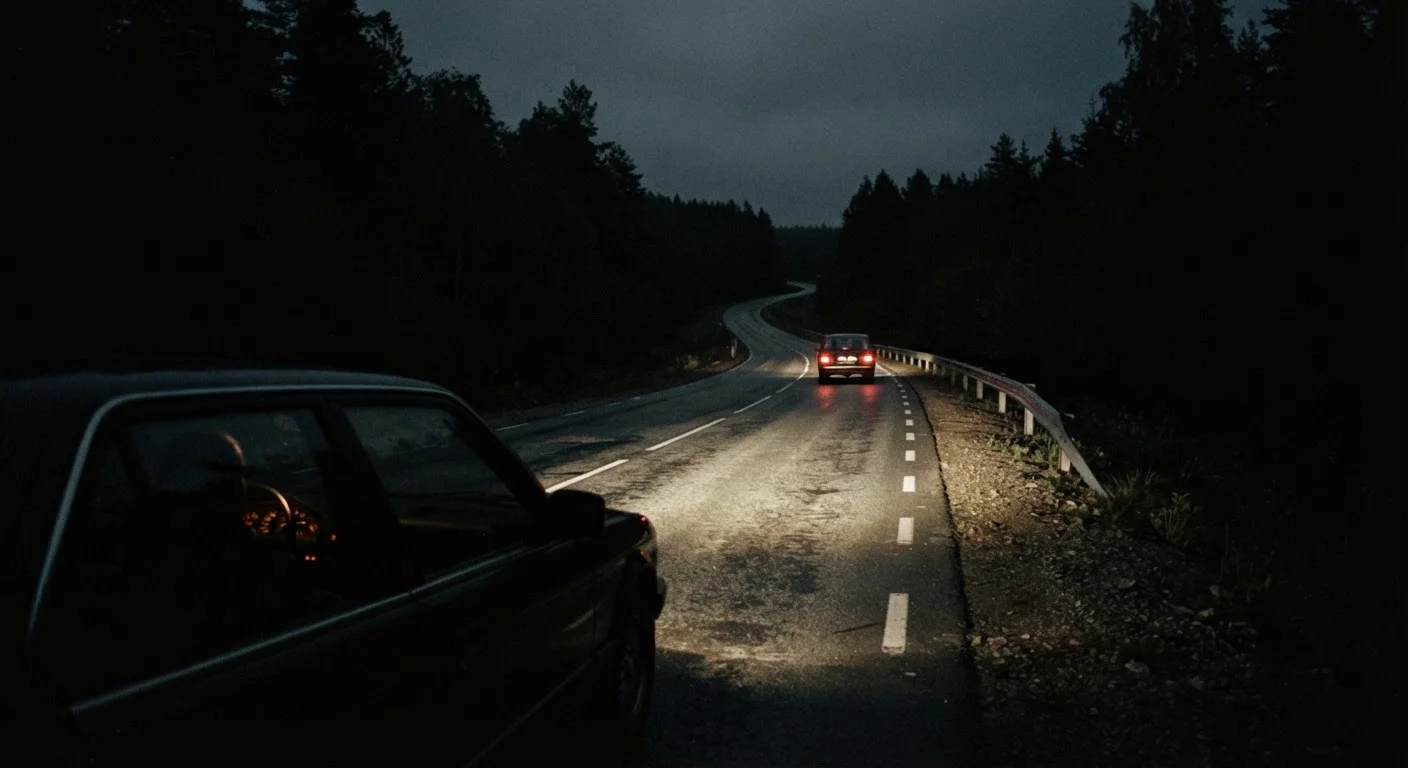
Most drivers intuitively know that driving after dark feels different - but many don't appreciate just how much the statistics shift. According to the National Highway Traffic Safety Administration, nighttime hours account for roughly half of all traffic fatalities in the United States, despite representing only about a quarter of total driving time. That disparity - a roughly 3x higher fatality rate per mile driven - reflects a combination of factors that compound one another in dangerous ways.
Fatal crash rates are especially elevated on weekend nights, when both impaired driving and late-night fatigue are at their peak. Rural roads see some of the most dramatic risk increases after dark, where lighting infrastructure is minimal and emergency response times are longer.
~50%
Of U.S. traffic fatalities occur at night
According to NHTSA data, roughly half of all fatal crashes happen during nighttime hours despite night representing about 25% of driving time.
160 ft
Typical low-beam headlight range
Standard low-beam headlights illuminate approximately 160 feet ahead - less than 2 seconds of stopping distance at 60 mph.
4x
Higher drunk-driving fatality rate at night
NHTSA figures indicate alcohol-impaired driving fatalities are roughly four times more likely to occur at night than during daytime hours.
What Darkness Does to Your Vision
Human eyes are not designed for high-speed driving in low light. In darkness, the eye shifts from cone-based (color, sharp detail) to rod-based vision, which is more sensitive to light but significantly worse at resolving fine detail and peripheral objects. The practical result: drivers see less, see it later, and have less time to react.
Standard low-beam headlights illuminate approximately 160 feet ahead. At highway speeds of 60 mph, a vehicle covers that distance in under two seconds. If a deer, pedestrian, or road hazard appears at the edge of that light cone, the driver has very little time - and very little margin - to respond. This mismatch between stopping distance and sight distance is sometimes called overdriving your headlights, and it's a common and underappreciated hazard.
Glare from oncoming headlights worsens the problem by temporarily blinding drivers and reducing contrast recovery. Older drivers are particularly affected, as the aging eye adapts more slowly after glare exposure.
Drowsiness: The Hidden Nighttime Threat
The body's circadian rhythm naturally reduces alertness during the late-night and early-morning hours, regardless of how much sleep a person got the night before. This biological pressure toward sleep peaks roughly between 2 a.m. and 4 a.m., making those hours especially hazardous for drivers who push through fatigue.
Drowsy driving shares many characteristics with alcohol impairment - slowed reaction time, reduced situational awareness, and lapses in judgment. Microsleeps, involuntary sleep episodes lasting just a few seconds, can occur without the driver being aware they happened. At 65 mph, a three-second microsleep means the vehicle travels nearly 300 feet with no conscious driver input.
For a closer look at how fatigue and alcohol compare at the wheel, see how drowsy and drunk driving impairment compare. The similarities are striking - and inform why late-night driving deserves the same caution many drivers reserve only for alcohol.
Recognize the Warning Signs of Fatigue
Difficulty keeping your eyes open, drifting between lanes, missing exits, and inability to recall the last few miles are all signs that fatigue is impairing your driving. If any of these occur, find a safe place to stop and rest. Continuing to drive while severely fatigued is not safer than pulling over.
Impaired Drivers and Other Road Users After Dark
Alcohol-impaired driving is concentrated in nighttime hours. NHTSA data shows that drunk-driving fatalities are roughly four times more common at night than during the day. This means a sober driver on the road between midnight and 3 a.m. faces a significantly elevated risk of a crash caused by someone else's impairment - a risk that can't be fully mitigated by the sober driver's own behavior.
Pedestrians and cyclists are also at elevated risk after dark, and many nighttime crashes involve these vulnerable road users. Pedestrians wearing dark clothing can be nearly invisible until they're well within a vehicle's headlight range, leaving minimal reaction time. Intersections remain particularly dangerous after dark, where the visual cues that help drivers judge speed and distance during the day are diminished. Understanding why intersections carry such concentrated risk can inform better habits regardless of the hour.
Practical Adjustments That Reduce Nighttime Risk
While nighttime driving will always carry elevated risk, several behavioral adjustments help close the gap. Reducing speed on unlit or rural roads is one of the most effective - matching your speed to what you can actually see gives more time to respond to hazards. Increasing following distance matters too; the stopping distances that feel adequate during the day become insufficient when reaction time is even slightly delayed. For more on why following distance is routinely underestimated, see why tailgating is more dangerous than most drivers realize.
Using high beams appropriately on unlit roads - switching to low beams for oncoming traffic - meaningfully extends the sight distance available. Keeping windshields and headlights clean reduces glare and improves light transmission. If fatigue sets in, pulling over and resting is the only reliable solution; stimulants like caffeine provide temporary relief at best and do not restore full driving ability.
Foundational habits - the kind covered in driver education programs - apply with even greater importance after dark, when the margin for error is narrower.
A driver traveling at 65 mph on a rural highway at 1 a.m. suddenly encounters a deer at the edge of their headlight range.
A commuter drives home after a night shift, feeling alert enough to continue but experiencing brief moments where they can't recall the last mile of road.
A pedestrian in dark clothing crosses a poorly lit street while a driver approaches at the posted 35 mph speed limit.
Frequently Asked Questions
Nighttime driving reduces visibility, increases the likelihood of encountering drowsy or impaired drivers, and limits a driver's ability to detect hazards early. NHTSA data consistently shows fatal crash rates are significantly higher at night despite lower overall traffic volume.
Standard low-beam headlights typically illuminate about 160 feet ahead. At 60 mph, a vehicle travels roughly 88 feet per second, meaning a driver has only about 1.8 seconds to react to something at the edge of their light - not nearly enough time in many hazard scenarios.
Research indicates that the hours between midnight and 3 a.m. carry the highest crash risk, largely due to peak drowsy driving and elevated rates of alcohol-impaired driving. Weekend nights are particularly dangerous.
Yes. Reducing speed gives drivers more time to react to hazards that fall within the limited range of headlights. Matching speed to sight distance is a core principle of safe nighttime driving.
High beams significantly extend visibility - up to 350-400 feet - and should be used on unlit roads when no oncoming traffic is present. Drivers should switch back to low beams when another vehicle approaches to avoid blinding other drivers.
Fatigue slows reaction time, narrows attention, and impairs judgment in ways that parallel alcohol intoxication. The body's circadian rhythm naturally suppresses alertness in the late-night and early-morning hours, making fatigue especially dangerous at those times.
The content on this site is provided for informational purposes only and should not be considered a substitute for professional advice. While we strive to provide accurate and up-to-date information, we make no guarantees regarding its completeness or accuracy. Always consult a qualified professional for advice specific to your circumstances before making any decisions.