

Option A
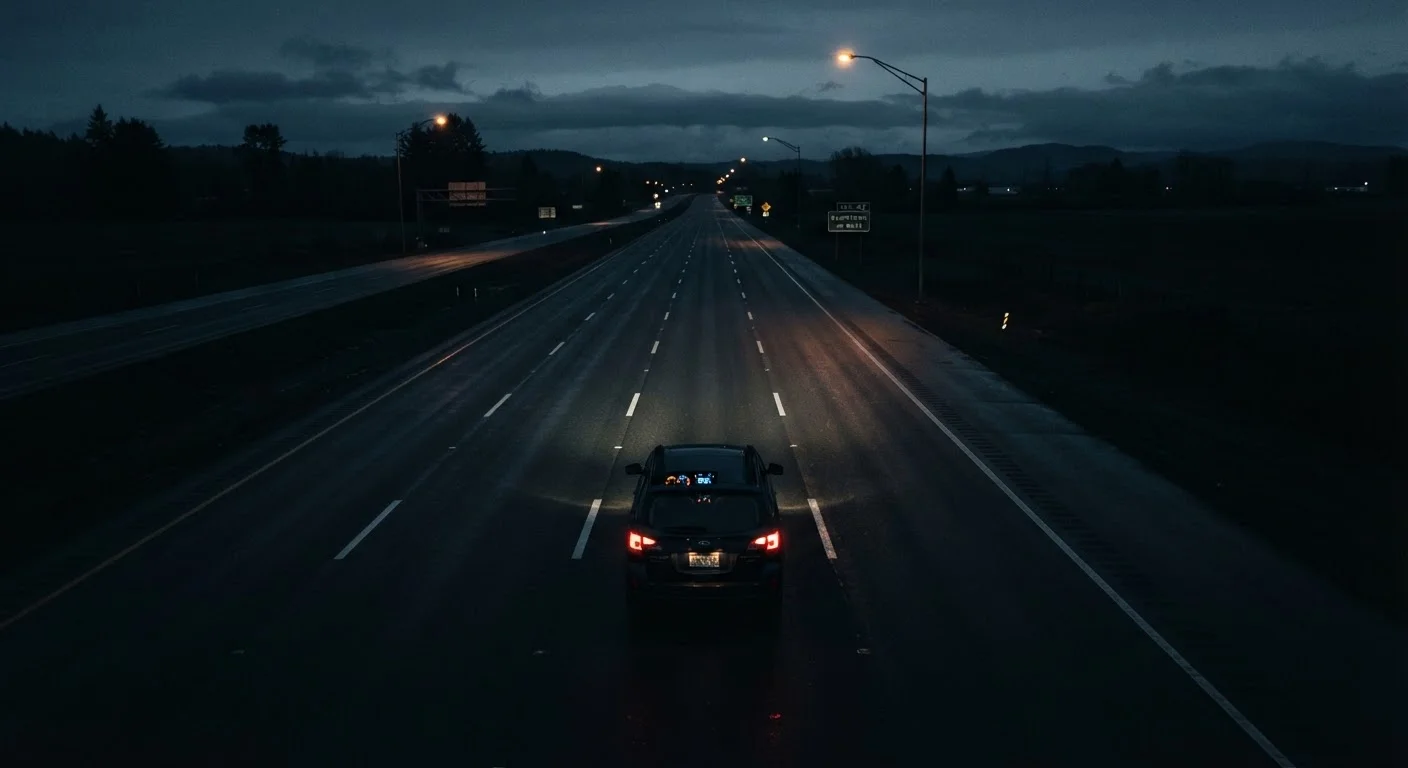
Drowsy Driving
The silent, underestimated impairment.
Best for: Understanding how sleep deprivation degrades driving ability in ways most drivers fail to recognize in themselves.
Option B
Drunk Driving
The legally defined, widely recognized hazard.
Best for: Understanding how alcohol measurably impairs reaction time, coordination, and judgment with established legal thresholds.
The Core Comparison: What Impairment Actually Means
When drivers hear "impaired driving," most think of alcohol. But research consistently shows that severe sleep deprivation produces cognitive and physical deficits that closely parallel alcohol intoxication. Understanding both helps clarify just how serious fatigue behind the wheel can be.
Alcohol impairs driving by slowing the central nervous system. It reduces reaction time, degrades depth perception, narrows peripheral vision, and impairs judgment - all critical functions for safe vehicle operation. The legal threshold in every U.S. state is a blood alcohol concentration (BAC) of 0.08%, though measurable impairment begins at lower levels.
Drowsiness impairs driving through a different but overlapping mechanism. Sleep deprivation reduces alertness and slows neural processing. It also causes attention lapses and, critically, microsleeps - involuntary sleep episodes lasting one to ten seconds during which a driver is completely unresponsive. At 60 mph, a ten-second microsleep means a vehicle travels approximately 880 feet without any conscious input from the driver.
For a broader look at how cognitive load affects driving, see our distraction research explainer on hands-free versus phone-in-hand use.
| Criterion | Drowsy Driving | Drunk Driving |
|---|---|---|
| Primary mechanism | Reduced alertness, attention lapses | CNS depression, slowed processing |
| Self-awareness of impairment | Often very low - drivers underestimate fatigue | Variable - drivers may recognize intoxication |
| Roadside detection | No objective test currently available | Breathalyzer and blood tests available |
| Legal threshold | No standardized BAC equivalent | 0.08% BAC in all U.S. states |
| Microsleep risk | High - involuntary sleep episodes occur | Low - loss of consciousness is rare |
| Crash reporting accuracy | Widely believed to be underreported | More reliably captured via toxicology |
| Time of peak risk | Late night and early morning hours | Late night and weekend hours |
What the Research Shows About Equivalence
Some of the most cited research on this topic comes from studies conducted at institutions including the University of New South Wales. Those studies found that being awake for approximately 17-18 continuous hours produced performance deficits equivalent to a BAC of around 0.05%. After 24 hours without sleep, impairment was comparable to a BAC near 0.10% - above the legal driving limit.
~0.10%
BAC equivalent after 24 hours without sleep
Research from the University of New South Wales found this approximate equivalence in driving performance deficits.
880 ft
Distance traveled during a 10-second microsleep at 60 mph
A vehicle traveling at highway speed covers nearly the length of three football fields with no driver input during a microsleep.
1 in 25
Adult drivers who report falling asleep at the wheel in the past 30 days
According to CDC survey data, drowsy driving is more prevalent than many drivers assume.
What makes drowsiness distinctively dangerous is its effect on self-awareness. Alcohol can reduce inhibitions, but drivers generally know they've consumed it. Fatigue, by contrast, impairs the very cognitive functions that allow a person to recognize they are impaired. Research has shown that people significantly underestimate how impaired they are when sleep-deprived, often rating their own performance as adequate when objective testing reveals serious deficits.
Nighttime hours compound both risks. Our companion piece on nighttime driving risks explains why crash rates rise after dark - a trend that reflects both reduced visibility and the higher prevalence of both drowsy and impaired drivers on the road.
Enforcement, Detection, and the Accountability Gap
One significant practical difference between these two forms of impairment is how - and whether - they can be measured at the roadside. Drunk driving has established detection tools: breathalyzers, field sobriety tests, and blood tests provide objective, legally defensible BAC readings. Law enforcement agencies have decades of practice applying these standards.
Drowsy driving has no equivalent. There is currently no validated, widely deployed roadside test that can objectively measure a driver's level of fatigue. Officers may note behavioral signs - drifting lanes, erratic speed, delayed responses - but proving drowsiness as the cause of a crash is difficult. This accountability gap means drowsy driving is widely believed to be underreported in crash statistics.
The National Highway Traffic Safety Administration (NHTSA) estimates that drowsy driving was a factor in thousands of fatal crashes annually in the United States, though the agency acknowledges the true number is likely higher due to underreporting. By contrast, alcohol-impaired driving fatality data is more reliably captured through toxicology and standardized crash investigation protocols.
No Safe "Push Through" for Fatigue
Unlike with mild alcohol impairment, there is no reliable intervention that quickly reverses severe drowsiness behind the wheel - not opening windows, turning up music, or drinking coffee. Caffeine can offer temporary alertness, but research shows it does not fully restore the cognitive performance lost to significant sleep deprivation. The only reliable countermeasure is sleep. If you feel drowsy while driving, safety guidance consistently recommends pulling over in a safe location.
The content on this site is provided for informational purposes only and should not be considered a substitute for professional advice. While we strive to provide accurate and up-to-date information, we make no guarantees regarding its completeness or accuracy. Always consult a qualified professional for advice specific to your circumstances before making any decisions.