

Why Dashboard Warning Lights Exist
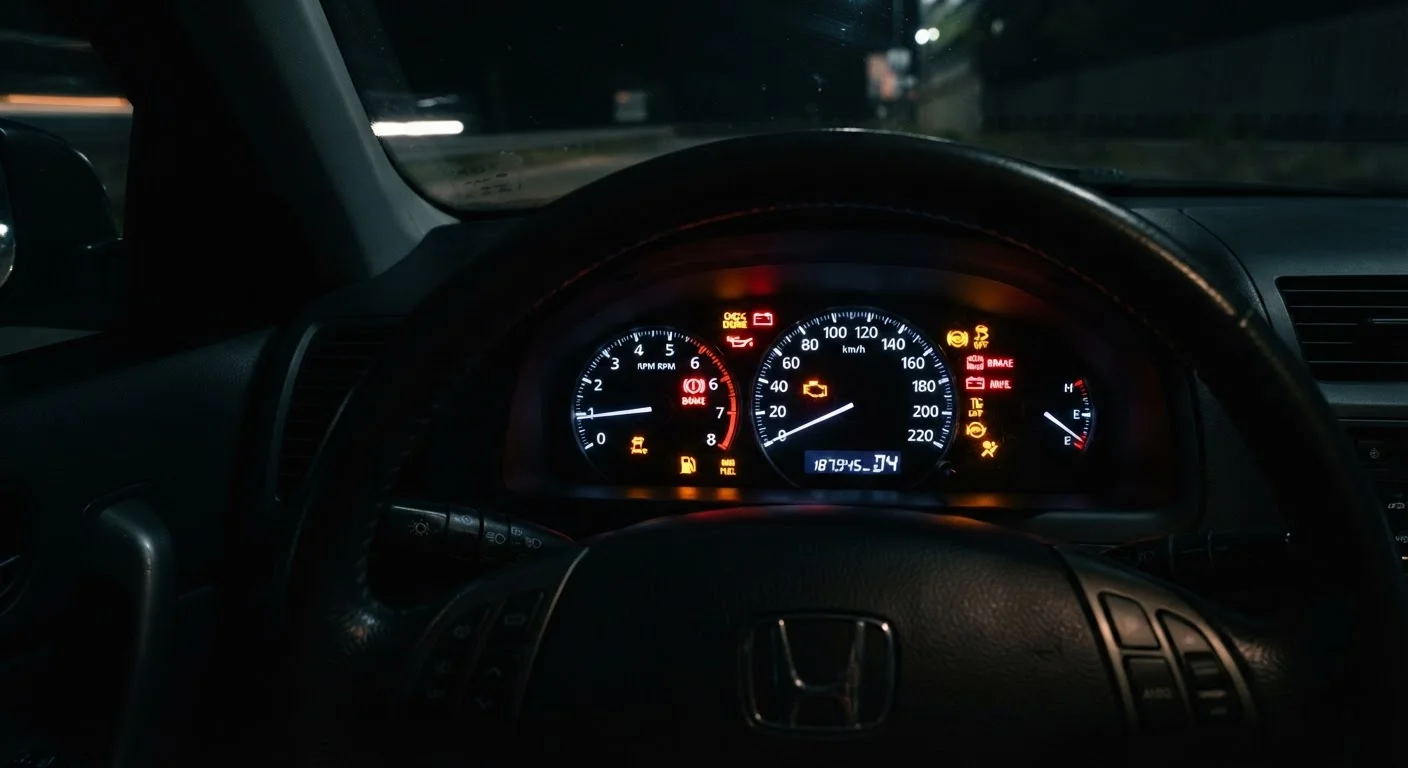
Modern vehicles are equipped with an onboard diagnostics system (OBD) that continuously monitors dozens of sensors throughout the car. When something falls outside normal operating parameters, the system triggers a warning light on your instrument cluster. These lights aren't suggestions - they're your vehicle communicating a real condition that needs attention.
Not all warnings carry equal urgency. Manufacturers use a color-coded system to signal priority: red typically means stop driving or act immediately, amber or yellow means attention is needed soon, and green or blue lights are informational indicators that a system is active (like high beams or cruise control).
Understanding these signals is a core part of responsible vehicle ownership. For a broader view of how proactive maintenance fits into your overall car care, see Understanding Your Car's Maintenance Schedule.
| Standard warning color: red | Stop or act immediately |
| Standard warning color: amber/yellow | Schedule service soon |
| Standard warning color: green/blue | System active (informational) |
| OBD-II standard adopted | Required on all U.S. vehicles since 1996 (U.S. EPA and CARB regulations) |
| TPMS required in new U.S. vehicles | Since model year 2008 (NHTSA TPMS Final Rule) |
| Owner's manual location | Glove box or manufacturer's website |
The Most Common Warning Lights Decoded
Below are the dashboard symbols drivers encounter most often, along with what they indicate and how urgently you should respond.
OBD (Onboard Diagnostics)
A standardized system built into vehicles that monitors engine and emissions components via electronic sensors. When a fault is detected, it stores a diagnostic trouble code (DTC) and triggers a dashboard warning light.
DTC (Diagnostic Trouble Code)
An alphanumeric code stored by the OBD system when a sensor reading falls outside acceptable parameters. A scan tool connected to the OBD port retrieves these codes to help identify the source of a warning.
TPMS (Tire Pressure Monitoring System)
A sensor-based system that tracks air pressure inside each tire and alerts the driver when pressure drops below a safe threshold, typically 25% below the recommended PSI.
Catalytic Converter
An emissions control device in the exhaust system that converts harmful combustion byproducts into less toxic gases. Engine misfires can overheat and permanently damage this component.
Alternator
A generator driven by the engine that recharges the battery and powers the vehicle's electrical systems while the engine runs. A failing alternator is a common cause of battery warning lights.
Instrument Cluster
The panel directly behind the steering wheel that houses the speedometer, fuel gauge, tachometer, and all dashboard warning lights.
Check Engine Light
Perhaps the most misunderstood light on any dashboard, the check engine light (a small engine silhouette) can trigger for reasons ranging from a loose gas cap to a failing catalytic converter. A steady light means schedule a diagnostic scan soon. A flashing check engine light signals an active misfire that can damage the catalytic converter - reduce speed and seek service promptly.
Battery Warning
A red battery symbol indicates that the charging system - not necessarily the battery itself - is underperforming. This could point to a failing alternator, corroded terminals, or a worn drive belt. If this light appears while driving, minimize electrical load and head to a mechanic without delay; the vehicle may stall if the battery drains completely.
Tire Pressure Monitoring System (TPMS)
An exclamation point inside a horseshoe-shaped icon means one or more tires are significantly under- or over-inflated. Check all four tires (and your spare if applicable) with a gauge and inflate to the pressure listed on the driver's door jamb sticker - not the maximum figure printed on the tire sidewall.
Oil Pressure Warning
A red oil can symbol is one of the most serious dashboard alerts. Low oil pressure can cause rapid, severe engine damage. Pull over safely, shut off the engine, and check the oil level. Do not continue driving until the condition is diagnosed.
Brake System Warning
If the brake warning light appears and your parking brake is fully released, the vehicle may have low brake fluid or a hydraulic system issue. Reduced braking ability is a direct safety risk - have the system inspected immediately. For context on related brake symptoms, learn what brake sounds can signal before they escalate.
Temperature Warning
A thermometer submerged in wavy lines signals engine overheating. Pull over, turn off the engine, and allow it to cool completely before checking the coolant level. Never open the radiator cap on a hot engine - pressurized coolant can cause serious burns.
What to Do When a Light Comes On
The right response depends on the light's color and behavior. Red lights or flashing amber lights generally warrant stopping the vehicle as soon as it is safe to do so. A steady amber light typically means you have time to schedule professional diagnosis within the next few days - but don't ignore it for weeks.
For any warning you can't immediately identify, consult your owner's manual first. Every vehicle's manual includes a full index of its warning symbols, often with model-specific context that generic guides can't provide. If you purchased a used vehicle and are unsure of its history, reviewing a vehicle history report can surface prior damage or repair patterns that make certain warning lights more predictable.
Scan Tools Are Widely Available
Inexpensive OBD-II scan tools can read diagnostic trouble codes at home, and many auto parts retailers offer free in-store scanning. However, retrieving a code only identifies which system triggered the alert - it does not replace a professional diagnosis. A mechanic can perform live data analysis and physical inspection to determine the actual root cause.
This article is for general informational purposes only. For diagnosis and repair of any vehicle warning light, consult a qualified automotive technician.
The content on this site is provided for informational purposes only and should not be considered a substitute for professional advice. While we strive to provide accurate and up-to-date information, we make no guarantees regarding its completeness or accuracy. Always consult a qualified professional for advice specific to your circumstances before making any decisions.