

What Engine Oil Actually Does
Engine oil performs several critical jobs simultaneously. Its primary role is lubrication - creating a thin, protective film between metal surfaces like pistons, crankshaft bearings, and camshafts that move against each other thousands of times per minute. Without that film, metal contacts metal directly, generating heat and grinding away material at a microscopic level.
Oil also acts as a coolant for internal components that the radiator system doesn't reach, carries combustion byproducts and metal particles to the filter, and helps seal piston rings against the cylinder walls. Modern oils also contain detergent additives that keep internal surfaces clean and prevent deposits from forming.
Understanding these functions makes it clear why degraded oil isn't just a minor inconvenience - it's a compromised system trying to do the same demanding work with fewer resources.
The Degradation Timeline: What Changes Mile by Mile
Oil doesn't fail all at once. The degradation process is gradual, which is partly why neglecting changes feels inconsequential in the short term.
In the early miles after a fresh oil change, the additive package is fully active. Detergents suspend contaminants, viscosity modifiers keep the oil flowing correctly across temperature ranges, and antioxidants slow chemical breakdown. As miles accumulate, heat cycles and oxidation steadily deplete these additives.
By the time oil is significantly overdue, several things have happened: viscosity has shifted (the oil may thicken or thin unpredictably), the additive package is largely exhausted, and the fluid now carries a higher concentration of combustion acids, metal particles, and soot. At this stage, it provides meaningfully less protection than fresh oil - and begins to leave deposits rather than clean them.
5,000-10,000 mi
Typical modern oil change interval
Most vehicle manufacturers recommend this range for full-synthetic oil under normal driving conditions, as noted in owner's manuals and OEM service documentation.
~$4,000+
Average cost of engine replacement or rebuild
Engine repairs resulting from oil starvation or sludge damage routinely run into thousands of dollars, compared to the modest cost of regular oil changes.
40%
Engine wear that occurs at cold start
Industry engineering sources note that a significant share of engine wear happens in the first moments after startup, when fresh, properly viscous oil is essential to reach all surfaces quickly.
Drivers who routinely push well past recommended intervals are essentially forcing their engines to run longer and longer stretches on increasingly compromised lubrication.
Sludge: The Most Damaging Long-Term Consequence
Engine sludge - a thick, tar-like substance that accumulates in oil passages, on valve covers, and around the oil pan - is the most serious consequence of chronic oil neglect. It forms when degraded oil, water vapor from combustion, and oxidation byproducts combine and bake onto engine surfaces under heat.
Sludge is dangerous because it physically restricts oil flow. Oil passages in modern engines are narrow; even partial blockage reduces pressure and starves components like camshaft bearings and hydraulic lifters. Vehicles that develop significant sludge often exhibit noisy valve trains, reduced oil pressure, and in severe cases, catastrophic bearing failure.
Certain engine designs are more susceptible to sludge than others, but no engine is immune if oil changes are neglected long enough. The most expensive automotive repairs mechanics commonly see trace back to prolonged maintenance neglect rather than any single dramatic failure.
Check Your Oil Between Changes
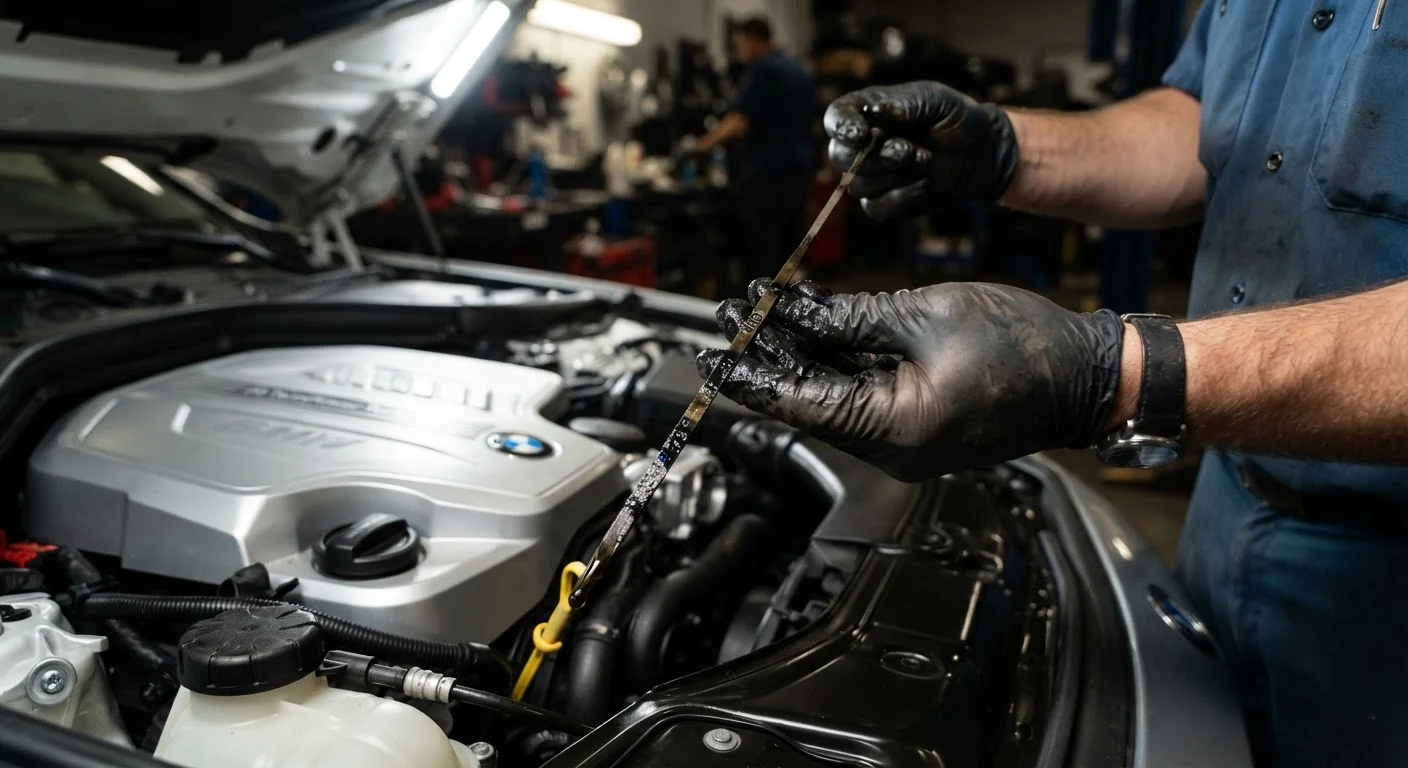
Pulling the dipstick every month or so takes less than two minutes and can reveal a lot. If the oil looks very dark and gritty rather than amber-brown, or if the level has dropped noticeably, both are worth attention before your next scheduled change. Low oil level between changes can also indicate a leak or consumption issue that deserves a mechanic's inspection.
One Skipped Change vs. Chronic Neglect
Context matters when assessing risk. Missing a single oil change by a few hundred miles in a modern vehicle running full-synthetic oil is a very different situation from routinely doubling or tripling manufacturer intervals across years of ownership.
A single delayed change on a healthy engine with clean oil history is unlikely to cause measurable damage - the oil's remaining additive life provides some buffer. The risk compounds significantly when late changes become a pattern, when the engine is already older or has high mileage, or when driving conditions are severe (frequent short trips, extreme temperatures, trailer towing).
Oil-life monitoring systems found in most current vehicles account for these real-world factors rather than using a fixed mileage counter. They sample data on temperature cycles, RPM patterns, and trip length to estimate remaining oil life more accurately. Paying attention to that system - rather than ignoring the warning light - is one of the simplest ways to protect an engine.
For a broader view of what your vehicle actually needs and when, reviewing your manufacturer's maintenance schedule is the most reliable starting point. And since oil is just one of several fluids your engine depends on, see which other fluids deserve regular attention as part of a complete maintenance routine.
Frequently Asked Questions
Going slightly over your interval once is unlikely to cause immediate damage, especially with modern full-synthetic oil. However, the protective additives in the oil are more depleted, leaving engine surfaces slightly more vulnerable. It's worth getting the change done promptly rather than continuing to delay.
Common signs include a ticking or knocking noise on startup, sluggish oil pressure readings, the oil pressure warning light illuminating, or visibly thick, dark deposits when you remove the oil cap. A mechanic can inspect the valve train area for sludge during a service visit.
Full-synthetic oil does last longer than conventional oil and is more resistant to breakdown under heat and stress. However, it still degrades - it simply does so more slowly. You should still follow your manufacturer's recommended interval, which synthetic oil may extend but not eliminate.
Mild sludge cases can sometimes be addressed with an engine flush and a series of short-interval oil changes, but severe sludge often requires disassembly and manual cleaning. In the worst cases, irreversible bearing or timing chain damage may have already occurred.
For most modern vehicles, no. The 3,000-mile rule was appropriate for older engines using conventional oil, but today's engines and synthetic formulations typically support intervals of 5,000 to 10,000 miles or more. See <a href="/autos-vehicles/car-maintenance/the-truth-behind-common-car-maintenance-myths">our breakdown of outdated maintenance myths</a> for more context.
The manufacturer's recommended interval is in your owner's manual, usually in a dedicated maintenance schedule section. Many vehicles also display this information through an onboard oil-life monitoring system. See <a href="/autos-vehicles/car-maintenance/understanding-your-cars-maintenance-schedule">how to read your maintenance schedule</a> for a full walkthrough.
The content on this site is provided for informational purposes only and should not be considered a substitute for professional advice. While we strive to provide accurate and up-to-date information, we make no guarantees regarding its completeness or accuracy. Always consult a qualified professional for advice specific to your circumstances before making any decisions.