

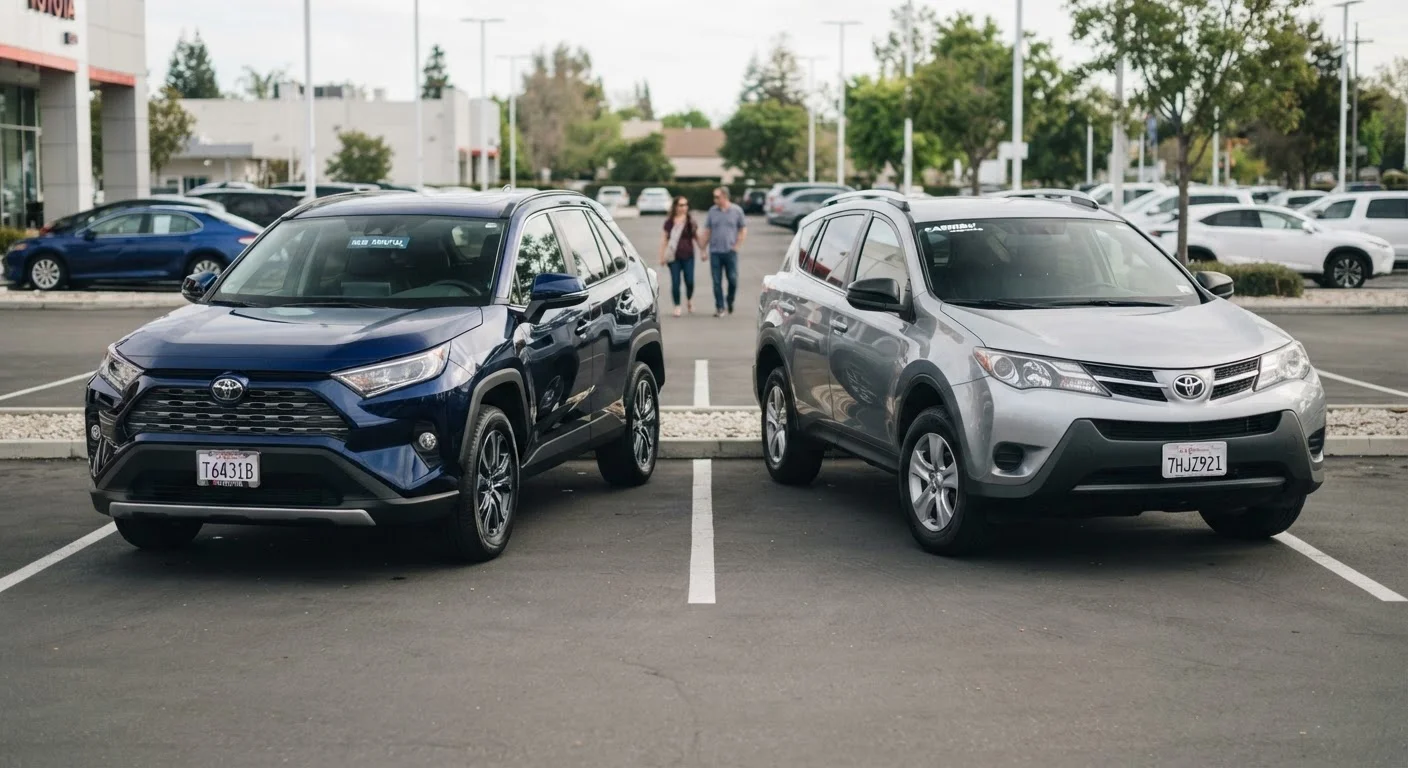
Option A
New Car
The latest features, full warranty, and zero prior ownership history.
Best for: Buyers who prioritize manufacturer warranties, the newest safety technology, and predictable financing terms.
Option B
Used Car
Lower purchase price with a track record you can research.
Best for: Budget-conscious buyers who want to minimize depreciation loss and lower their monthly payment.
The Depreciation Factor: Where the Money Goes First
Depreciation is often the largest single cost of vehicle ownership - and it hits new cars hardest. A new vehicle can lose a substantial portion of its value within the first year and continue declining sharply through years two and three. By contrast, a used car has already passed through that steepest part of the depreciation curve, meaning the buyer absorbs less value loss over their ownership period.
This is not a reason to automatically choose used. If you plan to own a vehicle for a decade, the annual depreciation on a new car becomes a much smaller figure relative to total use. But for buyers who anticipate trading in within a few years, starting with a vehicle that has already depreciated is a measurable financial advantage.
Understanding the true cost of car ownership - including depreciation, insurance, and maintenance - gives you a more complete picture than sticker price alone.
| Criterion | New Car | Used Car |
|---|---|---|
| Purchase Price | Higher (full MSRP) | Lower (post-depreciation) |
| Depreciation Exposure | Significant in years 1-3 | Much of it already absorbed |
| Financing Rates | Generally lower; incentives possible | Generally higher |
| Warranty Coverage | Full factory warranty included | Limited or none (varies) |
| Vehicle History | Fully known (zero miles) | Requires research and inspection |
| Technology & Safety Features | Latest available | Depends on model year |
| Insurance Cost (typical) | Higher | Lower |
| Customization Options | Factory order possible | Limited to available inventory |
Financing, Interest Rates, and Incentives
New cars generally qualify for lower interest rates than used vehicles. Manufacturers sometimes offer promotional financing rates - occasionally as low as zero percent - to move inventory, an option simply not available on the used market. Lenders also tend to view new vehicles as lower-risk collateral, which can translate into more favorable loan terms.
Used car loans, on the other hand, typically carry higher interest rates, and the spread between new and used financing can be meaningful over a multi-year loan. A lower purchase price on a used vehicle can be partially offset by that rate difference, depending on the term and amount financed.
~20%
Average first-year new car depreciation
Industry estimates commonly place new vehicle depreciation at roughly 15-20% in the first year of ownership, with the steepest loss occurring shortly after purchase.
1-2%+
Typical rate gap: used vs. new auto loans
According to Federal Reserve consumer credit data, interest rates on used vehicle loans have historically run higher than new vehicle loan rates, often by one to two percentage points or more.
3 years
Age at which depreciation curve typically flattens
Automotive valuation analysts generally observe that a vehicle's rate of depreciation slows considerably by the third or fourth year, making two- to three-year-old used vehicles a common value consideration.
It's also worth noting that common car-buying myths around financing - such as assumptions about negotiating power or credit score impact - can affect the decisions buyers make at the dealership.
Reliability, Condition, and What You Actually Know
New cars come with a known history: zero miles, no prior accidents, and a factory warranty that sets a clear expectation for coverage. That predictability has real value, particularly for buyers who are uncomfortable evaluating a vehicle's mechanical condition.
Used cars require more due diligence. A vehicle history report (such as those provided by CARFAX or AutoCheck) can reveal accident history, title issues, and service records - but these reports are not exhaustive. An independent pre-purchase inspection by a qualified mechanic adds another layer of confidence and is generally recommended before any significant used-vehicle purchase.
For buyers who want the used-car price advantage with some of the assurance of new, Certified Pre-Owned programs are worth understanding. CPO vehicles undergo manufacturer-specified inspections and typically include extended warranties, though they command a price premium over standard used vehicles.
Where you buy also matters. The differences between buying from a private seller versus a dealership affect consumer protections, paperwork, and negotiating dynamics in ways that vary significantly.
Making the Decision: A Framework for Your Situation
Neither new nor used is universally the right choice. The better question is which option aligns with your financial position, intended ownership length, risk tolerance, and the specific vehicle you need.
Consider your total budget - not just the down payment, but monthly payments, expected insurance premiums, and estimated maintenance costs over the ownership period. New vehicles often carry higher insurance costs and may require premium fuel or specialized service. Used vehicles may incur higher repair costs as they age, though this depends heavily on make, model, and mileage.
If you're weighing other ownership structures entirely, the mechanics of leasing versus buying introduce a different set of trade-offs around equity, mileage, and long-term cost that are worth understanding before committing.
Ultimately, the most informed buyers enter the process having researched total ownership costs, secured pre-approved financing, and clearly defined how long they intend to keep the vehicle. Those three factors, more than any headline price difference, tend to determine which choice delivers genuine value.
The content on this site is provided for informational purposes only and should not be considered a substitute for professional advice. While we strive to provide accurate and up-to-date information, we make no guarantees regarding its completeness or accuracy. Always consult a qualified professional for advice specific to your circumstances before making any decisions.