

Our Verdict
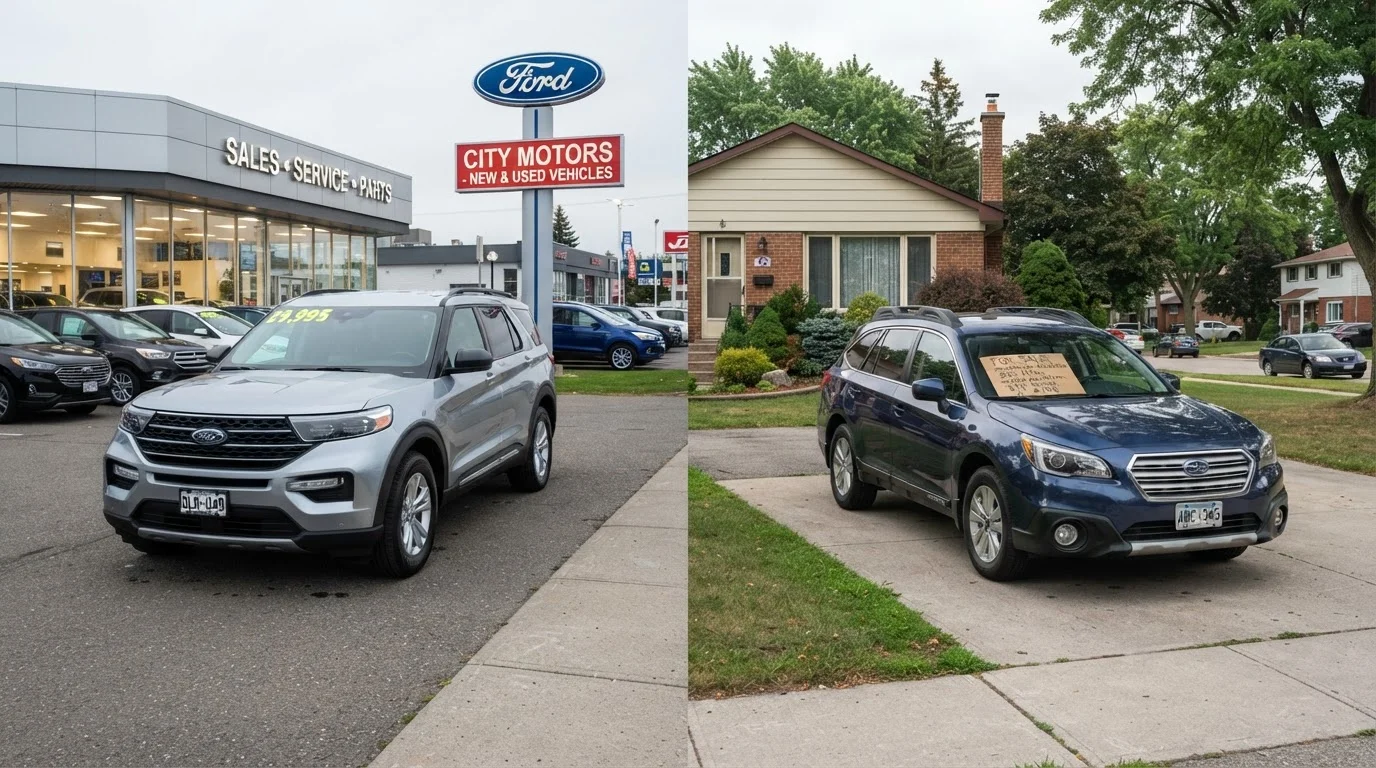
Dealerships offer a more structured, legally protected process with financing convenience, but that structure comes at a cost in fees and less negotiating flexibility. Private sales can yield lower prices and a wider vehicle selection, but demand more due diligence, upfront cash or financing arrangements, and acceptance of greater as-is risk. Neither channel is inherently superior.
Buyers who want convenience, financing options, and formal protections are generally better served by a dealership; buyers with mechanical knowledge, a trusted pre-purchase inspector, and pre-arranged financing may find better value through private sellers.
How the Two Channels Work
When buying a used vehicle, most shoppers choose between two primary channels: a licensed dealership or a private individual seller. Each path follows a different process, carries a different risk profile, and involves different paperwork - and understanding those differences before you start shopping can prevent costly surprises.
Dealerships are regulated businesses. They must comply with federal and state consumer protection laws, maintain licensing, and adhere to truth-in-advertising rules enforced by the Federal Trade Commission. Private sellers, by contrast, are private citizens conducting a transaction - they operate with far fewer legal obligations and virtually no disclosure requirements in most states.
For a full overview of the car-buying process regardless of channel, see The Car-Buying Process, Start to Finish.
Buying From a Dealership
Dealerships offer a consolidated experience: vehicle selection, financing, trade-in processing, and title transfer typically happen under one roof. For buyers who value convenience and a degree of legal recourse, this is a meaningful advantage.
Financing arranged on-site for qualified buyers
Most dealerships work with multiple lenders, giving buyers access to financing options without needing to visit a bank separately. This can simplify the transaction, though it's still worth comparing rates from outside lenders.
Title and registration paperwork handled in-house
Dealers typically manage the title transfer, registration, and state tax documentation, reducing administrative burden on the buyer.
Consumer protection laws generally apply
Dealer transactions are subject to FTC regulations, state lemon laws (in applicable situations), and implied warranty rules - providing more avenues for recourse if something goes wrong.
Certified pre-owned programs add inspection assurance
Manufacturer-certified programs require multi-point inspections and typically include limited warranty coverage, offering a layer of protection not available in private sales.
That said, dealerships layer in costs that private sales do not. Documentation fees, dealer preparation charges, and in some cases add-on products (extended warranties, paint protection) can add hundreds or thousands to the final price. It's important to review every line item on the finance and insurance (F&I) office contract before signing.
Most state lemon laws and implied warranty protections apply to dealer sales of used vehicles, though coverage varies. If a vehicle is sold "as-is" - which dealers must disclose in writing on an FTC Buyers Guide - those protections are limited. For financing considerations specific to dealerships, Dealer Financing vs. Outside Lender explains how both routes compare.
Buying From a Private Seller
Private sales are conducted between individuals with no intermediary. The seller lists the vehicle - often through classified platforms or community marketplaces - and the buyer negotiates directly. This directness is both the appeal and the risk.
Dealer fees raise the effective purchase price
Documentation fees, prep charges, and add-on products can add several hundred to over a thousand dollars above the sticker price. Not all of these fees are negotiable, though some are.
Less pricing flexibility in some transactions
Dealerships operate within margin structures and may be less willing to negotiate steeply, particularly on in-demand vehicles or certified inventory.
Finance and insurance office adds complexity
The F&I process introduces products - extended warranties, gap insurance, credit life insurance - that buyers may feel pressured to accept. Each should be evaluated independently against outside alternatives.
Price is typically the primary draw. Without overhead costs, private sellers often price vehicles below comparable dealer listings. However, buyers assume more responsibility: there's no mandated disclosure process, no dealer licensing board to file a complaint with, and virtually no post-sale recourse in most states. Vehicles sold privately are generally sold as-is, full stop.
Financing is also more complicated. Most private sellers expect cash or a cashier's check. If you need a loan, you'll need to arrange it in advance through a bank or credit union, as private sellers cannot facilitate financing the way dealerships can.
Always Request a Vehicle History Report
Regardless of whether you buy from a dealer or a private seller, obtaining a vehicle history report (using the vehicle's VIN) is a standard due-diligence step. These reports can surface prior accidents, odometer discrepancies, title issues, and service records. Neither a clean report nor a dealer's word eliminates all risk, but the information helps you make a more informed decision.
A pre-purchase inspection by a trusted, independent mechanic is strongly advisable for any private sale. This step is not a guarantee against future problems, but it significantly reduces the risk of purchasing a vehicle with undisclosed mechanical issues.
Key Differences at a Glance
The table below summarizes how the two channels compare across the factors most buyers consider:
| Factor | Dealership | Private Seller |
|---|---|---|
| Price | Higher (fees included) | Often lower |
| Financing | Offered in-house | Must arrange separately |
| Legal protections | Greater (state/federal oversight) | Minimal |
| Paperwork | Handled by dealer | Buyer must manage |
| Vehicle history transparency | Required disclosures (varies by state) | Seller's discretion |
| Post-sale recourse | More avenues available | Very limited |
~40%
Used vehicle sales through private channels
Industry estimates suggest roughly 40% of used vehicle transactions in the U.S. occur between private parties rather than through licensed dealers.
$1,000+
Average dealer documentation and add-on fees
Consumer advocacy organizations have noted that combined dealer fees frequently exceed $1,000 above the advertised vehicle price, varying significantly by state and dealership.
Whether you're weighing new versus used or exploring myths that affect negotiation strategy, Car-Buying Myths That Cost Shoppers Money is worth reviewing before you finalize any offer.
The content on this site is provided for informational purposes only and should not be considered a substitute for professional advice. While we strive to provide accurate and up-to-date information, we make no guarantees regarding its completeness or accuracy. Always consult a qualified professional for advice specific to your circumstances before making any decisions.