

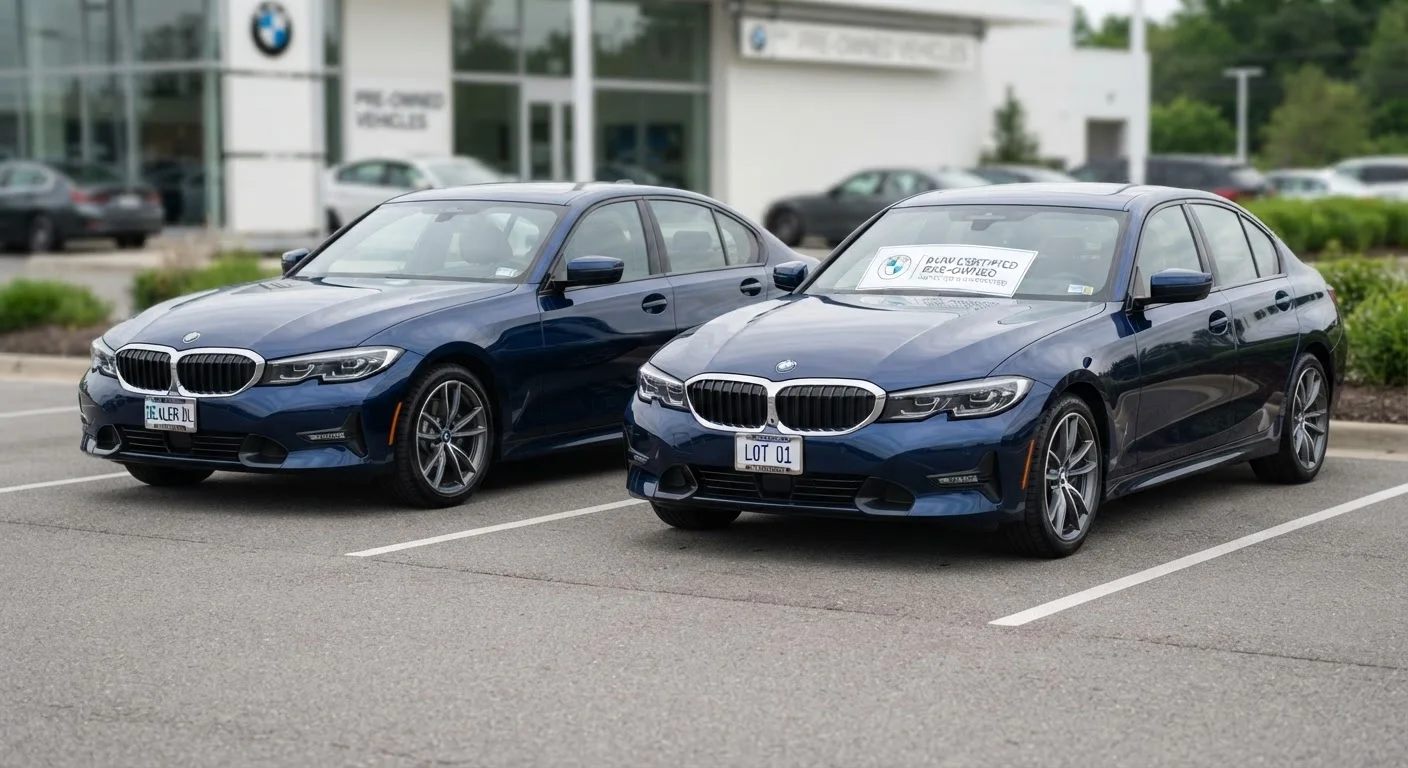
Option A
Certified Pre-Owned (CPO)
The inspected, warranty-backed used vehicle option.
Best for: Buyers who want added peace of mind and manufacturer-backed protection without paying new-car prices.
Option B
Regular Used Vehicle
The straightforward, lower-cost pre-owned option.
Best for: Budget-conscious buyers comfortable with more due diligence and who may not need extended warranty coverage.
What Makes a Vehicle 'Certified Pre-Owned'?
The term certified pre-owned (CPO) is not a generic label - it refers to a structured program, typically run by a vehicle manufacturer, that sets specific eligibility criteria and inspection standards a used vehicle must meet before it can carry the certification badge.
To qualify for most CPO programs, a vehicle must generally meet age and mileage thresholds (commonly under five to six model years old and fewer than 60,000 to 80,000 miles). Once deemed eligible, the vehicle undergoes a multi-point inspection - often 100 to 200 individual checkpoints - covering the engine, transmission, brakes, tires, electrical systems, and structural integrity. Vehicles that don't pass are either repaired to meet the standard or disqualified from the program.
Crucially, certified vehicles come with an extended warranty backed by the manufacturer, often layering on top of any remaining factory coverage. Many programs also include roadside assistance, loaner vehicle provisions, and a vehicle history report. These benefits are standardized within each manufacturer's program, though terms differ across brands - so it's worth reading the fine print carefully before assuming what's included.
CPO Programs Vary by Manufacturer
Not all CPO programs are created equal. A luxury brand's CPO offering may cover 100,000 miles of powertrain protection, while another manufacturer's program may cap coverage at 60,000 miles. Always request the specific terms of the CPO warranty in writing, and verify whether it transfers to a subsequent owner - transferability affects resale value.
How Regular Used Vehicles Work
A regular used vehicle - sometimes called a non-certified or standard pre-owned vehicle - carries no manufacturer-mandated inspection requirement. It may be sold by a franchised dealership, an independent dealer, or a private party, and the condition, history, and disclosures you receive will vary accordingly.
Some dealerships conduct their own internal inspections and may offer limited warranties, but these are not standardized in the way CPO programs are. Private-party sales are typically as-is, meaning the buyer assumes full responsibility for any issues discovered after the transaction.
This doesn't mean regular used vehicles are inherently riskier - many are well-maintained and represent strong value. But the burden of verification falls more squarely on the buyer. Tools like vehicle history reports (available through services such as Carfax or AutoCheck) and independent pre-purchase inspections are especially important when evaluating a non-certified vehicle.
| Criterion | Certified Pre-Owned | Regular Used |
|---|---|---|
| Inspection standard | Manufacturer multi-point (100-200 checks) | None required; varies by seller |
| Extended warranty | Manufacturer-backed, standardized | None, or limited dealer warranty |
| Vehicle history report | Typically included | Not always provided |
| Eligibility limits | Age and mileage caps apply | No restrictions |
| Price | Higher (certification premium) | Lower upfront cost |
| Roadside assistance | Often included | Rarely included |
| Financing rates | Sometimes preferential | Standard used-car rates |
The Cost Difference and Whether It's Worth It
CPO vehicles consistently command a price premium over comparable non-certified used cars. The gap can range from a few hundred dollars to several thousand, depending on the vehicle, the market, and the depth of coverage the CPO program provides.
Whether that premium is justified depends on your specific circumstances. If a vehicle is already covered by a remaining factory warranty, CPO status adds less incremental protection than it would for a vehicle just outside the factory window. Conversely, if you're buying a vehicle at or near the end of its original warranty with no CPO coverage, the cost of an extended third-party warranty may approach what a CPO premium would have cost anyway.
70+
Active CPO programs in the U.S. market
Most major manufacturers and several luxury brands operate their own distinct CPO programs with varying standards and coverage terms.
~$1,000-$3,500
Typical CPO price premium range
Industry analysts generally estimate the certification premium in this range, though it varies widely by brand, model, and market conditions.
It's also worth accounting for total ownership costs beyond the sticker price. Insurance, maintenance, registration, and depreciation all factor into long-term value - as explored in our guide to the true cost of car ownership. Additionally, common car-buying myths sometimes lead buyers to overvalue or undervalue CPO status - understanding what the certification actually includes is essential before making a judgment call.
The content on this site is provided for informational purposes only and should not be considered a substitute for professional advice. While we strive to provide accurate and up-to-date information, we make no guarantees regarding its completeness or accuracy. Always consult a qualified professional for advice specific to your circumstances before making any decisions.