

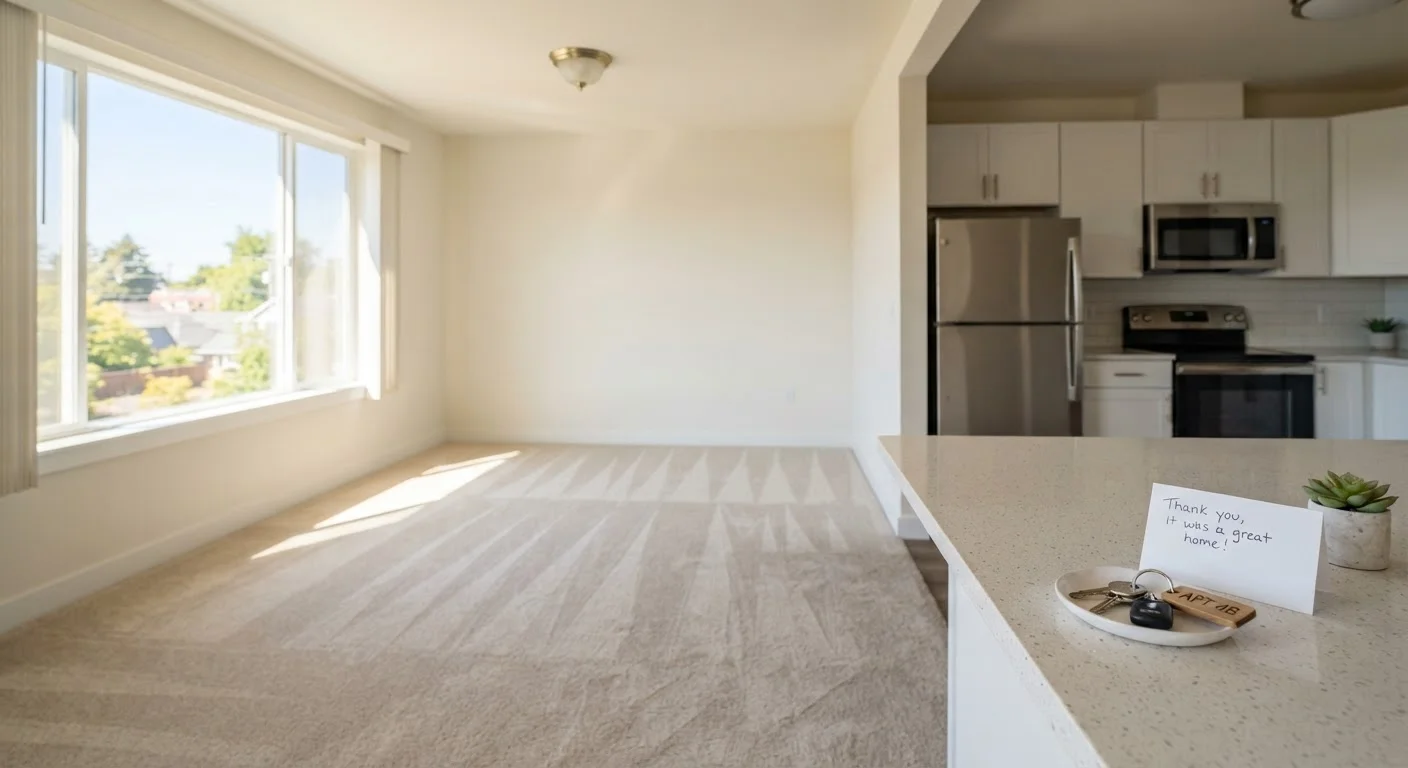
Why Move-Out Missteps Have Long Consequences
Vacating a rental feels like the end of a chapter, but how you leave shapes your access to housing long after you've gone. A withheld deposit is an immediate financial hit, but a negative rental reference or a balance reported to a tenant screening bureau can follow you into future applications - sometimes for years.
Most move-out disputes are preventable. They typically stem from unread lease clauses, skipped documentation, or assumptions about what a landlord can and cannot charge. Understanding the stakes before your notice period begins puts you in a fundamentally stronger position. See our guide to how security deposits work for a deeper look at what landlords can lawfully deduct.
Rental History Lives Beyond Your Landlord
Many landlords report tenant behavior to third-party screening services such as rental reporting bureaus. A record of unpaid balances, early terminations, or eviction filings can appear on future rental applications even if a dispute was never resolved in court. Reviewing your own rental history report before applying elsewhere helps you identify and address any inaccuracies.
Best Practices for a Clean Move-Out
A well-executed move-out isn't complicated, but it does require deliberate preparation. The following practices address the most common points of conflict between tenants and landlords - and give you the documentation needed to support your position if a dispute arises.
Read your lease's move-out provisions before submitting your notice to vacate.
Leases frequently specify notice periods (commonly 30 or 60 days), accepted cleaning standards, and key-return procedures. Missing any of these requirements can result in additional fees, forfeiture of deposit, or liability for extra rent days.
Request a pre-move-out walkthrough with your landlord before your last day.
Many states grant tenants the right to an inspection before vacating so issues can be identified and corrected in advance. This reduces the landlord's ability to deduct for items you could have addressed yourself at lower cost.
Document the unit's condition with timestamped photos and video on your final day.
Visual evidence creates a contemporaneous record that is difficult to dispute. Without documentation, move-out disputes often come down to a landlord's word against a tenant's. Timestamped media establishes condition at a specific moment.
Clean the unit thoroughly, paying close attention to kitchens, bathrooms, and appliances.
Cleaning is one of the most common justifications landlords cite for deposit deductions. Professional cleaning fees can quickly exceed what renters might expect, so thorough self-cleaning reduces that risk meaningfully.
Return all keys, fobs, parking passes, and access devices on or before your move-out date.
Unreturned access items are a straightforward deduction that landlords are almost always entitled to make. Replacement costs for key fobs or smart-access systems can be surprisingly high.
Provide a forwarding address in writing so the landlord can return your deposit on time.
Most states require landlords to return security deposits within a defined window - often 14 to 30 days - to your last known address. Failing to supply a forwarding address can complicate the return process and muddy any future dispute.
For a broader view of the leasing mistakes that most often cost renters money, see common leasing pitfalls and how to sidestep them.
Know Your Rights - and Your Deposit's Legal Protections
Security deposit law is state-specific, but certain tenant protections are broadly consistent. Landlords are generally required to provide an itemized list of deductions within a legally defined window, and they cannot charge for normal wear and tear - a term that covers gradual deterioration from ordinary use, such as faded paint or minor carpet wear. Damage, by contrast, refers to harm caused by negligence or misuse.
“The best protection a renter has at move-out is the same protection they established at move-in: a clear, documented record of the unit's condition. Without that baseline, disputes are almost impossible to win.”
— Real Estate Editorial Team, Editorial analysis based on landlord-tenant law guidance and tenant advocacy resources
If you believe deductions are unlawful, most states provide a small claims court pathway for disputes. Learn what counts as normal wear and tear and how to dispute unlawful deductions. You can also review security deposit rules landlords don't always advertise to understand the specific protections that may apply in your state.
Start Strong for Your Next Rental
The habits that protect your deposit on the way out are the same ones that build a strong rental record for your next application. Landlords and property managers rely heavily on prior landlord references and tenant screening reports - a reputation for leaving units in good condition and settling accounts in full is a genuine competitive advantage in tight rental markets.
If you're approaching your first rental experience or want to make sure your move-in documentation is airtight from day one, our room-by-room rental inspection checklist can help you establish the baseline record that makes a clean move-out far easier to prove.
This article provides general informational guidance for renters and does not constitute legal or financial advice. Deposit rules, notice requirements, and tenant rights vary by state and locality. Consult a qualified attorney or local tenant advocacy organization for guidance specific to your situation.
The content on this site is provided for informational purposes only and should not be considered a substitute for professional advice. While we strive to provide accurate and up-to-date information, we make no guarantees regarding its completeness or accuracy. Always consult a qualified professional for advice specific to your circumstances before making any decisions.