

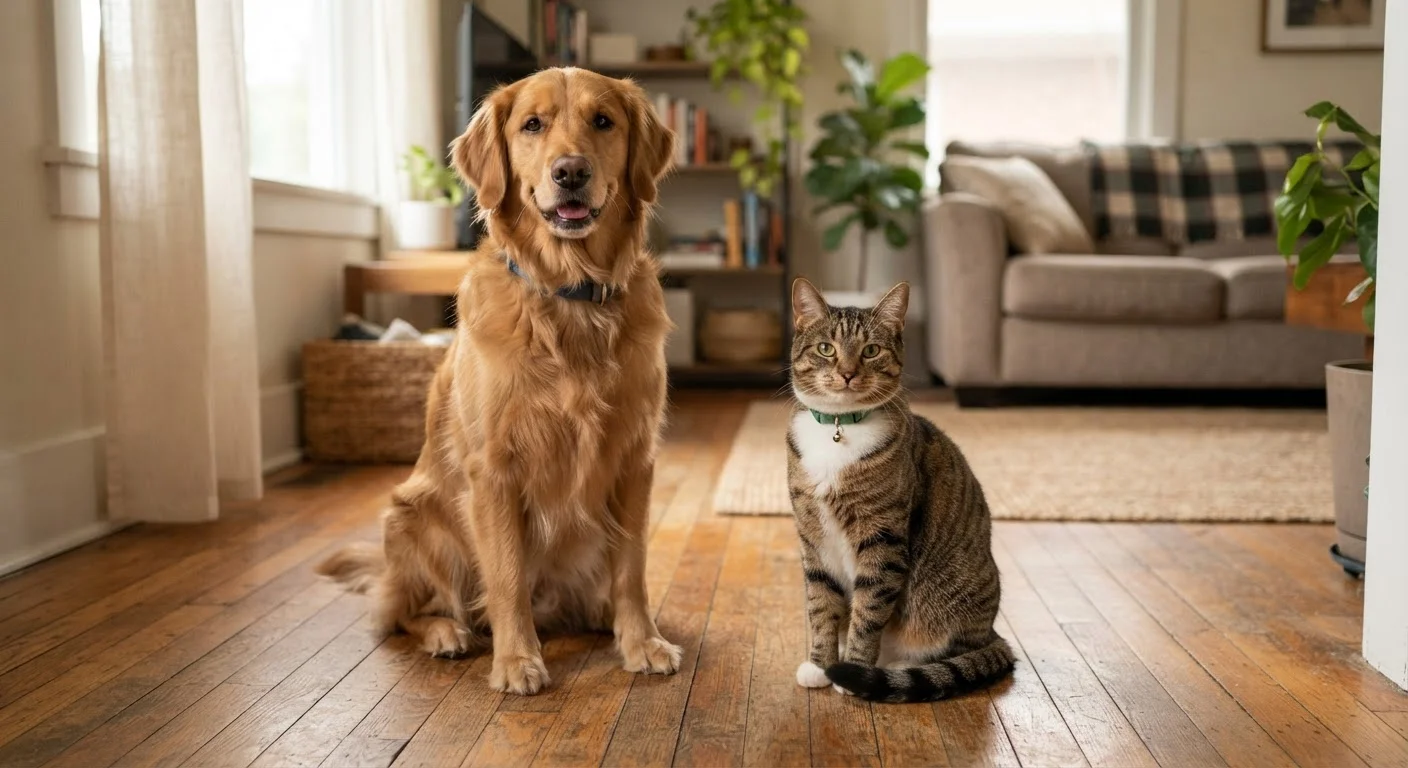
Option A
Dog Ownership
The engaged, active companion requiring consistent daily investment.
Best for: People with flexible schedules, outdoor lifestyles, or households that want an interactive, socially bonded pet.
Option B
Cat Ownership
The independent, lower-maintenance companion suited to quieter routines.
Best for: Busy professionals, apartment dwellers, or owners who prefer a self-sufficient pet with lower time demands.
Time Commitment: The Biggest Practical Divide
The most consequential difference between owning a dog and owning a cat isn't cost or space - it's time. Dogs are social animals that evolved alongside humans and generally require multiple daily walks, regular training sessions, playtime, and sustained companionship. Many veterinary and animal behaviorist guidelines suggest dogs need at least one to two hours of active engagement per day, depending on breed and age.
Cats, by contrast, are behaviorally closer to solitary hunters. They sleep an average of 12-16 hours daily and are largely content managing their own stimulation through environmental enrichment - window perches, scratching posts, and periodic interactive play. A working adult can reasonably leave a cat alone for a standard eight-hour workday without significant welfare concerns, something that's generally not advisable with dogs without a dog walker or daycare arrangement.
For a more detailed breakdown of how these time demands compare to smaller alternatives, see Small Pets vs. Dogs and Cats.
| Criterion | Dog Ownership | Cat Ownership |
|---|---|---|
| Daily time required | 1-2+ hours active engagement | 30-45 min interactive play |
| Alone time tolerance | Limited (4-6 hrs max for most) | High (8+ hrs manageable) |
| Typical annual cost | Higher ($1,500-$4,000+) | Lower ($700-$2,000+) |
| Space requirement | Benefits from yard or nearby parks | Adapts well to apartments |
| Training demands | Ongoing, especially early on | Minimal structured training needed |
| Grooming needs | Varies; often requires professional help | Mostly self-grooming; less intervention |
| Social bonding style | Highly dependent on owner relationship | More independent, selective |
Cost Realities: What Annual Ownership Actually Looks Like
Both dogs and cats involve meaningful ongoing expense, but the gap between them is real. According to the American Pet Products Association and similar industry surveys, dog owners in the U.S. tend to spend more annually than cat owners across nearly every category - food, veterinary care, grooming, boarding, and training.
Dogs, particularly larger breeds, eat substantially more. Professional grooming is often necessary for certain coat types. Boarding or pet-sitting when owners travel costs more for dogs because of their exercise requirements. Training classes - while optional - are widely recommended for dogs and represent an additional recurring cost in the early years.
$1,533
Avg. annual dog ownership cost (U.S.)
Based on ASPCA estimates covering food, veterinary care, supplies, and licensing for a medium-sized dog.
$1,159
Avg. annual cat ownership cost (U.S.)
ASPCA figures covering food, routine veterinary care, litter, and basic supplies for a typical indoor cat.
65.1M
U.S. households owning dogs
According to the American Pet Products Association's 2023-2024 National Pet Owners Survey.
46.5M
U.S. households owning cats
From the same APPA survey, reflecting cats as the second most common companion animal in American homes.
Cats typically cost less to feed, rarely require professional grooming, and can often be left with an automatic feeder and a neighbor checking in periodically during owner travel. That said, veterinary expenses - including spay/neuter procedures, annual wellness exams, and unexpected illness or injury - are significant for both species. For a fuller picture, the real annual cost of pet ownership goes beyond adoption fees to cover what owners should actually budget.
Space, Lifestyle Fit, and Housing Realities
Living situation is a practical filter many prospective owners underweight. Dogs - especially medium to large breeds - generally benefit from access to outdoor space and struggle in very small apartments without significant daily exercise compensating for confined quarters. Many landlords in U.S. cities impose weight or breed restrictions on dogs that don't apply to cats, limiting options in rental markets.
Cats adapt well to apartment life as long as vertical space (cat trees, shelving) and environmental enrichment are provided. They don't require outdoor access to maintain welfare, though some owners allow supervised or enclosed outdoor time. The considerations around indoor versus outdoor access are explored in detail in indoor vs. outdoor pet arrangements.
Rental Housing and Pet Policies
A significant share of U.S. renters face pet restrictions that disproportionately affect dog owners. Many landlords charge higher pet deposits for dogs, impose breed or weight limits, or prohibit dogs entirely. Cats face fewer restrictions in most rental markets, though policies vary widely by property and state. Prospective pet owners in rental housing should verify lease terms before adopting any animal.
Neither species imposes an insurmountable housing challenge, but dogs demand more intentional planning around space and neighborhood walkability. A dog owner in a dense urban area without nearby parks takes on a meaningfully harder logistical situation than the same person owning a cat.
For those weighing all of these variables together, how dogs and cats compare for busy American lifestyles offers a parallel side-by-side look at daily care demands.
The content on this site is provided for informational purposes only and should not be considered a substitute for professional advice. While we strive to provide accurate and up-to-date information, we make no guarantees regarding its completeness or accuracy. Always consult a qualified professional for advice specific to your circumstances before making any decisions.