

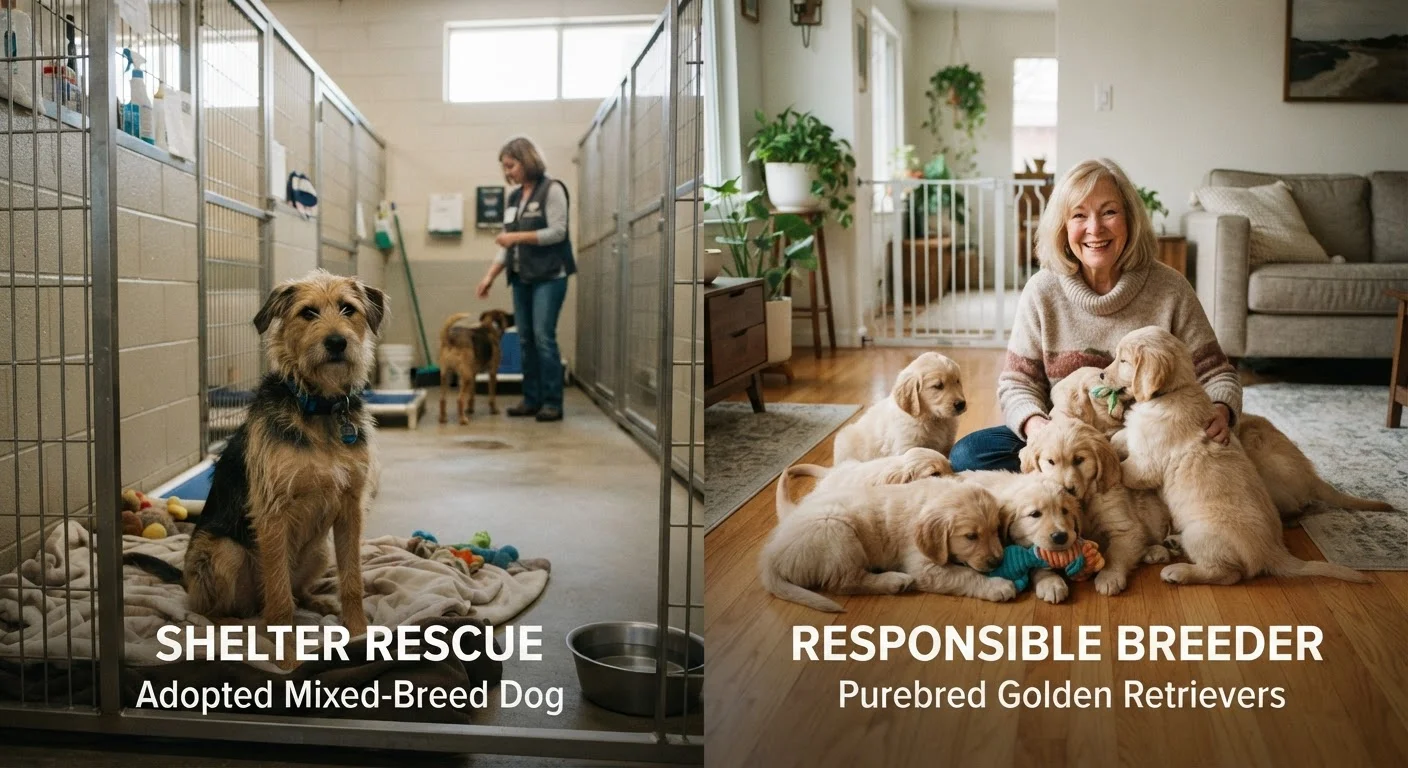
Our Verdict
Shelter adoption and purchasing from a responsible breeder are both legitimate paths to pet ownership, each with distinct trade-offs. Adoption offers lower costs, immediate need fulfillment, and observable adult temperaments, while responsible breeding provides breed predictability and documented health histories. The right choice depends on your household's specific needs, experience level, and long-term commitment.
| Best for | Recommended |
|---|---|
| Budget-conscious or first-time pet owners | Shelter or rescue adoption |
| Those needing predictable breed traits for specific tasks or lifestyles | Reputable breeder |
| Families wanting an adult pet with a known temperament | Shelter or rescue adoption |
| Owners experienced with puppies willing to invest significant time and money | Reputable breeder |
The Core Difference Between the Two Paths
Adopting from a shelter or rescue organization means giving a home to an animal already in need of one - often a mix of breeds, though purebreds appear regularly too. Purchasing from a breeder means acquiring a pet intentionally produced for specific traits, with a documented lineage. Both involve forming a long-term bond with an animal, but the processes, costs, and expectations diverge considerably.
For a broader overview of what each process involves step by step, see what each path actually involves before you begin. The information below focuses on the practical implications for your household.
| Shelter / Rescue Adoption | Reputable Breeder | |
|---|---|---|
| Typical upfront cost | $50-$300, often bundled with services | $800-$5,000+, varies by breed |
| Age of animal | Mostly adults; some puppies/kittens available | Typically puppies or kittens |
| Temperament predictability | Observable directly; staff insight available | Breed traits predictable; individual varies |
| Health history documentation | Limited or unknown lineage | Genetic screening and parentage records |
| Spay/neuter included | Usually included in fee | Typically not included |
| Wait time | Minimal; animal available quickly | Weeks to months on waitlist |
| Animal welfare impact | Directly reduces shelter overcrowding | Supports ethical breeding when done responsibly |
Financial Costs: More Than the Adoption or Purchase Fee
Shelter adoption fees generally range from under $50 to around $300, depending on the organization, the animal's age, and the region. Critically, that fee often bundles vaccinations, a microchip, and a spay or neuter procedure - services that would cost several hundred dollars if purchased separately. For more detail on the spay/neuter component specifically, sorting through the conflicting advice on timing and health outcomes is worth reading.
Purchasing from a responsible breeder typically costs between $800 and several thousand dollars depending on breed and health testing standards. Those higher prices reflect genetic health screenings, veterinary certifications, and years of selective breeding expertise - not arbitrary markup. Be cautious of unusually low breeder prices, which can indicate inadequate health testing or poor conditions.
~6.5M
Animals entering U.S. shelters annually
According to the ASPCA, approximately 6.5 million companion animals enter U.S. animal shelters each year.
~920,000
Shelter animals euthanized each year
The ASPCA estimates around 920,000 shelter animals are euthanized annually in the United States, down from higher historical figures.
Predictability vs. Flexibility: Temperament and Health History
One of the most cited reasons for choosing a breeder is predictability. Purebred dogs and cats bred by responsible parties come with documented parentage and, in many cases, results from breed-specific genetic health panels. This matters for families with specific needs - allergies, activity level compatibility, or working roles like service animal placement.
Shelter animals, particularly mixed breeds, offer less lineage documentation, but this is not the same as unpredictability. Most shelter animals are adults whose personalities are fully formed and observable. Shelter staff often have detailed behavioral notes on each animal. What to look for during a meet-and-greet outlines how to assess a shelter animal's temperament meaningfully before committing.
Recognizing Responsible Breeders vs. Problematic Sources
The term "breeder" covers a wide spectrum. Responsible breeders health-test breeding stock, limit litter frequency, vet potential buyers carefully, and take animals back if circumstances change. They welcome facility visits and answer questions transparently. By contrast, puppy mills and irresponsible backyard breeders prioritize volume and profit over animal welfare, often producing animals with chronic health or behavioral problems.
Red flags when evaluating a breeder include: refusal to allow in-person visits, no health certifications for parent animals, multiple breeds available simultaneously, and pressure to purchase quickly. If a source feels transactional rather than collaborative, treat that as a meaningful signal.
Avoid Pet Stores Selling Live Animals
Many pet stores sourcing puppies and kittens obtain them from high-volume commercial breeding operations, even when marketed otherwise. Purchasing from these outlets financially supports conditions that responsible breeding standards explicitly prohibit. If breed-specific traits are important to you, seek out independent breeders directly and visit their facilities in person before committing.
Ethical Considerations and the Bigger Picture
Animal shelters in the United States euthanize hundreds of thousands of healthy animals annually due to capacity constraints, according to the American Society for the Prevention of Cruelty to Animals (ASPCA). Adoption directly reduces demand on that system. This is a genuine ethical consideration - though it does not automatically make breeding unethical when practiced responsibly.
Responsible breeders who conduct proper health testing, socialize their animals carefully, and maintain breed integrity serve a legitimate function, particularly for working breeds and those with specific health requirements. The ethical calculus differs significantly between them and high-volume operations motivated purely by profit.
Whichever path you choose, preparation matters. Bringing a pet home for the first time covers the setup, first-vet-visit logistics, and early adjustment period that every new owner should anticipate.
The content on this site is provided for informational purposes only and should not be considered a substitute for professional advice. While we strive to provide accurate and up-to-date information, we make no guarantees regarding its completeness or accuracy. Always consult a qualified professional for advice specific to your circumstances before making any decisions.