

Our Verdict
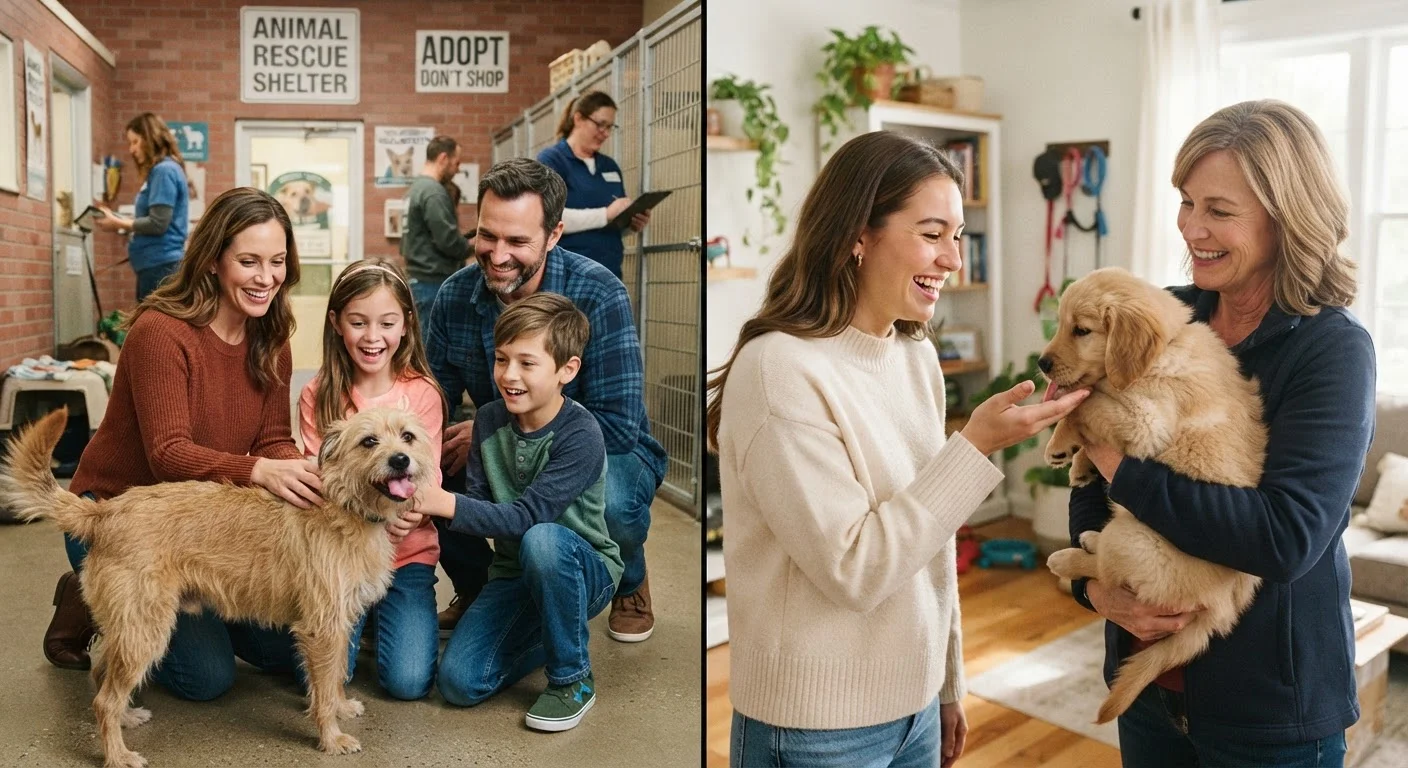
Adoption and purchasing from a breeder are genuinely different experiences with different trade-offs - neither is universally better. The right path depends on your lifestyle, flexibility with unknowns, budget, and what you're looking for in a pet. For a deeper look at the ethical and practical dimensions of each option, see Adopting vs. Buying from a Breeder.
| Best for | Recommended |
|---|---|
| Those open to adult animals and comfortable with some behavioral unknowns | Shelter or rescue adoption |
| Those seeking a specific breed with documented lineage and predictable traits | Reputable breeder |
| First-time owners with limited upfront budget | Shelter or rescue adoption |
| Families with specific size, temperament, or allergy-related needs | Reputable breeder |
How the Adoption Process Works
Adopting from a municipal shelter or a rescue organization involves more structure than many people expect. Most shelters require a written application, a conversation with staff or a volunteer, and sometimes a home visit or reference check. The goal is matching animals with households where they're likely to thrive long-term.
Fees at shelters typically range from roughly $50 to $300, depending on the animal's species, age, and the organization. That fee usually covers spay or neuter surgery, core vaccinations, and a microchip - services that would cost considerably more if purchased separately. Adult animals are often available immediately; puppies and kittens may have waitlists.
One honest limitation of shelter adoption is incomplete history. Some animals arrive as strays with no records. Staff observations and behavioral assessments help, but certain traits - how a dog behaves around children, for instance - may only become clear over time at home. Understanding why pet returns happen can help prospective adopters set realistic expectations from the start.
| Shelter/Rescue Adoption | Reputable Breeder | |
|---|---|---|
| Typical upfront cost | $50-$300 | $1,000-$3,000+ |
| Includes spay/neuter & vaccines | Usually yes | Varies; often not included |
| Known health history | Often limited or unknown | Documented lineage and health tests |
| Breed predictability | Lower; many mixed breeds | High for purebreds |
| Wait time | Often immediate; puppies may wait | Waitlists common (months) |
| Post-adoption support | Varies by organization | Often included via breeder contract |
| Screening of applicant | Application and interview | Questions, visit, contract |
What Buying from a Breeder Involves
Purchasing a pet from a responsible breeder is a longer, more deliberate process than browsing an online listing and wiring a deposit. Reputable breeders typically health-test their breeding animals for hereditary conditions common to the breed, maintain veterinary records, and require buyers to sign a contract that may include return provisions if the owner can no longer keep the pet.
Prices vary widely by species and breed - purebred dogs from health-tested lines commonly run from $1,000 to well above $3,000. Waiting lists are common for popular breeds. A responsible breeder will ask you questions too: about your living situation, experience with the breed, and what you're looking for. That two-way screening is a positive sign.
Prospective buyers should be cautious of sellers who have multiple breeds always available, won't allow visits, or can't provide documentation. These are common indicators of commercial breeding operations that may not prioritize animal welfare.
How to Spot a Responsible Breeder
Ask to see health testing results for both parent animals and request references from previous buyers. A responsible breeder will welcome questions and encourage you to visit their facility. Reluctance to allow visits or vague answers about veterinary records are worth noting carefully.
Comparing the Two Paths Side by Side
When weighing adoption against purchasing, a few dimensions matter most: cost, predictability, timeline, and the level of support you'll receive afterward. Neither route is without trade-offs, and the right choice often comes down to what kind of uncertainty you're prepared to navigate.
For a broader view of how species choice intersects with lifestyle, the Small Pets vs. Dogs and Cats comparison covers time commitment, space needs, and companionship across major pet types - a useful complement to this decision.
It's also worth noting that mixed-breed animals adopted from shelters tend to have fewer inherited health conditions on average than some purebred animals, according to general veterinary guidance - though this varies considerably by individual animal and breed. No path guarantees a healthy pet; ongoing veterinary care is essential regardless of how you acquire one.
Preparing for What Comes Next
Whichever path you choose, the real work begins when the animal comes home. First-time owners in particular benefit from planning before the pet arrives - setting up appropriate space, scheduling an early veterinary visit, and understanding species-specific needs. Our guide on bringing a pet home for the first time walks through that transition in practical detail.
For those still deciding between species entirely, getting a dog vs. getting a cat offers a grounded comparison of what each animal actually demands from owners on a daily basis.
If you want a comprehensive resource that covers lifestyle fit, housing, costs, and long-term commitment across all major pet types, everything that goes into choosing the right pet provides that end-to-end framework.
This article is for general informational purposes only. Consult a veterinarian for guidance specific to an animal's health or behavioral needs.
The content on this site is provided for informational purposes only and should not be considered a substitute for professional advice. While we strive to provide accurate and up-to-date information, we make no guarantees regarding its completeness or accuracy. Always consult a qualified professional for advice specific to your circumstances before making any decisions.