

Why the Meet-and-Greet Is More Complex Than It Looks
A shelter meet-and-greet is not a personality test with a clean result. Animals in shelter environments are responding to an unfamiliar, often noisy setting with unpredictable routines - conditions that can mute or amplify their natural tendencies in ways that don't reflect how they'll behave in a home. Understanding this from the start is the most important frame you can bring to the visit.
That said, meet-and-greets still provide meaningful information when approached with the right questions and realistic expectations. The goal is to gather enough data - behavioral, historical, and practical - to make a well-informed decision rather than an emotional one. If you're still weighing what type of pet and what path to adoption looks like for you, see our overview of what adoption and buying each actually involve.
Shelter Stress Affects Animal Behavior
Most animals in shelters are operating under significant stress, which can temporarily suppress or amplify normal behaviors. A fearful dog in a kennel may be calm and affectionate at home, while a seemingly outgoing cat may be overstimulated and reactive. Do not treat the meet-and-greet as a definitive behavioral assessment - treat it as one data point among several.
Shelter Staff or Adoption Counselor
Provides behavioral history, daily observations, and honest assessment of the animal's needs and challenges.
Notepad or Phone Notes App
Record observations from each visit so you can compare animals objectively rather than relying on memory.
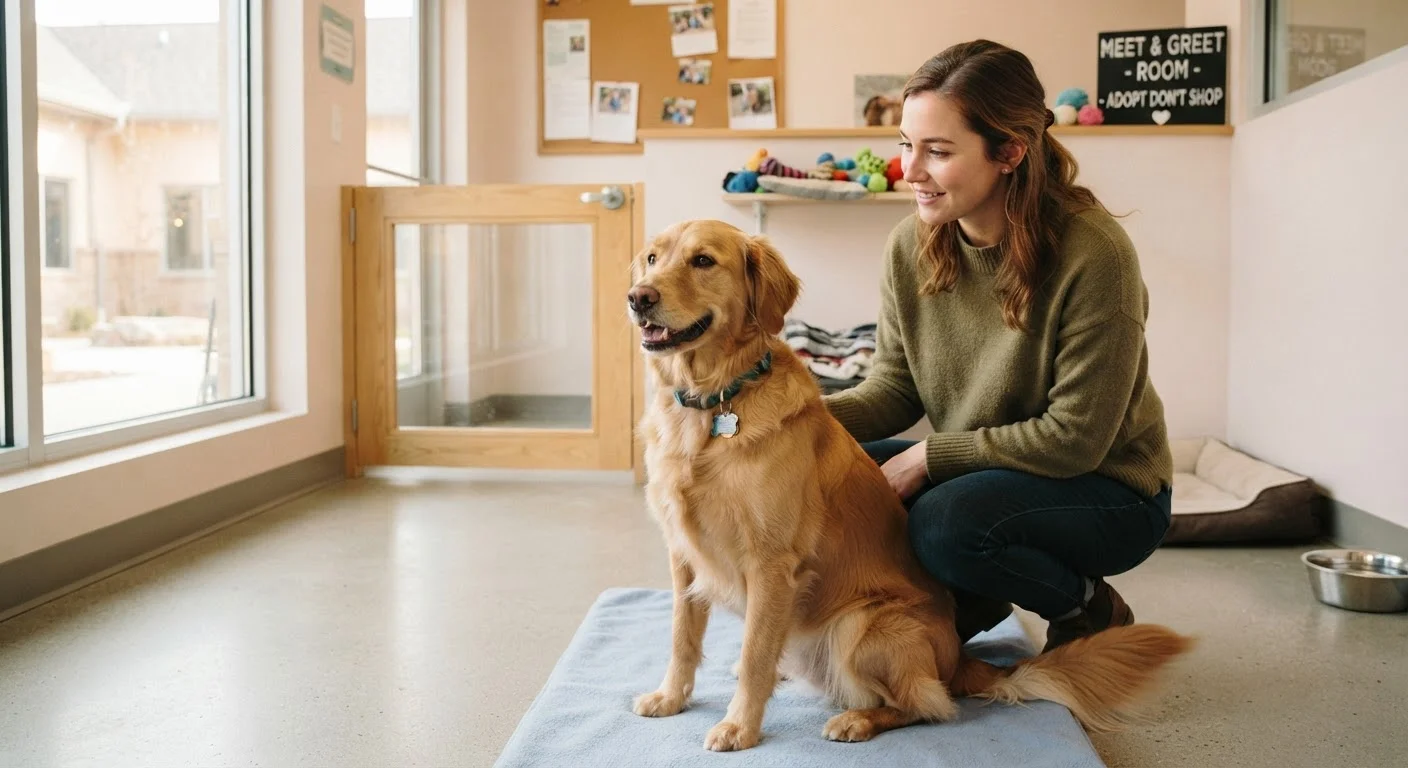
Quiet Meet-and-Greet Room
A lower-stimulation environment where animals can show more of their baseline temperament.
What to Watch For - and What to Ask
The most useful behavioral signals during a meet-and-greet are subtle ones: how quickly an animal recovers from surprise, whether it solicits contact or tolerates it passively, and how its body language shifts as it becomes more comfortable with you. These patterns tend to be more durable than initial excitement or shyness.
Request a Quieter Space When Possible
Many shelters can offer a quiet room or outdoor area for meet-and-greets away from kennel noise. Animals in calmer environments show more of their baseline temperament. If this option isn't available, schedule your visit during a lower-traffic time of day.
Staff knowledge is equally important. Shelters track behavioral observations over time, and a well-run intake assessment - common at established shelters - may include notes on how an animal responds to handling, other animals, and environmental stressors. Ask to see any intake or behavioral notes available.
Do Your Homework Before You Arrive
Before setting foot in the shelter, complete an honest assessment of your household needs. Consider your daily schedule, activity level, living space, and whether you have children, other pets, or budget constraints. Our guide on assessing your lifestyle before choosing a pet walks through the key questions to work through in advance.
Come prepared with a short list of non-negotiable requirements - size limits, energy level, allergy considerations - so that emotions in the moment don't override practical fit.
Observe Before Interacting
When you first approach an animal's kennel or enclosure, pause and watch before initiating contact. Notice the animal's baseline posture: Is the body loose and relaxed, or stiff and rigid? Are ears held naturally, or pinned flat? Is the tail wagging broadly or tucked low?
A dog that barks frantically at every passerby may simply be kennel-stressed, while one that retreats to the back of the space may need more time to build confidence. Neither reaction is automatically disqualifying - but both are worth noting and discussing with staff.
Enter the Meet-and-Greet Space Calmly
Request to move the animal to a quieter space if available. Enter slowly, crouch down if appropriate, and let the animal approach you on its own terms. Avoid direct, sustained eye contact with dogs initially, as this can be perceived as a threat signal.
Pay attention to how the animal responds to your presence over the first few minutes. Recovery from initial excitement or nervousness is a meaningful behavioral indicator - animals that settle relatively quickly often transition better to new environments.
Conduct Simple Behavioral Checks
With shelter staff guidance, test a few basic interactions. For dogs, observe how the animal responds to gentle handling - touching paws, ears, and back. Note whether it tolerates or stiffens at touch. For cats, see whether the animal engages with a toy or retreats from movement.
Ask staff to demonstrate any handling the animal has responded to positively or negatively in the past. You're not looking for perfection - you're looking for a realistic picture of what this animal needs day-to-day.
Ask Staff Targeted Questions
Adoption counselors and daily caregivers hold behavioral data you cannot gather in one visit. Ask specifically: How does this animal behave around other dogs or cats? Has it shown any resource guarding around food or toys? How does it respond to being left alone? Has it shown fear, reactivity, or aggression in any context?
Request honest answers, and take them seriously. Shelters operate best when adopters and animals are well-matched - reputable staff have no incentive to hide behavioral challenges from you.
Consider a Return Visit
If you feel a connection but have lingering questions, schedule a second meet-and-greet. A follow-up visit - ideally at a different time of day - often reveals behavior you missed initially. Animals that were agitated during a busy Saturday afternoon may be calm and curious on a quiet Tuesday morning.
If you have children or other pets, most shelters can arrange a supervised introduction before adoption is finalized. For families, our companion article on what families should weigh before bringing an animal home covers temperament and safety factors worth reviewing before that step.
Once you've made your decision and brought your new companion home, the transition period requires its own thoughtful approach. Our guide on bringing a new pet home without derailing their health covers first-week vet visits, stress reduction, and the health steps new owners commonly overlook. General ongoing care guidance is also available through our pet care basics hub.
Don't Skip the Staff Conversation
Shelter staff and volunteers observe animals daily across varied situations - feeding time, introductions to other animals, response to handling. Skipping this conversation means missing behavioral history you cannot gather in a single visit. Always ask for a candid summary of any known challenges before finalizing your decision.
This article provides general informational guidance on evaluating shelter animals and is not a substitute for professional behavioral assessment. For animals with known behavioral histories or complex needs, consult a certified animal behavior professional before adopting.
The content on this site is provided for informational purposes only and should not be considered a substitute for professional advice. While we strive to provide accurate and up-to-date information, we make no guarantees regarding its completeness or accuracy. Always consult a qualified professional for advice specific to your circumstances before making any decisions.