

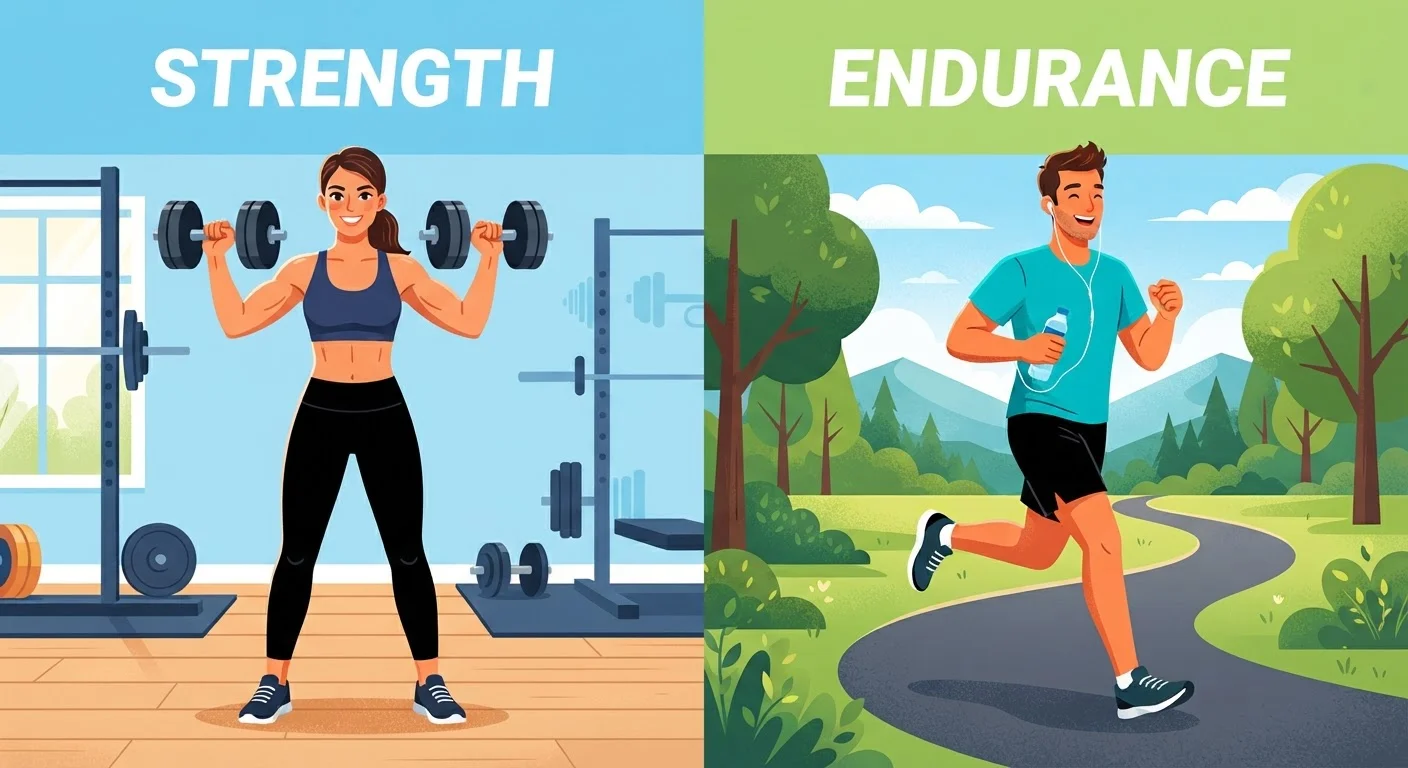
Option A
Strength Training
The muscle-building, metabolism-supporting foundation.
Best for: People looking to build muscle, improve bone density, boost resting metabolism, and maintain functional strength as they age.
Option B
Cardio
The heart-health and endurance workhorse.
Best for: People aiming to improve cardiovascular fitness, manage weight, lower blood pressure, and enhance mental health through sustained aerobic activity.
What Strength Training Does to Your Body
Resistance training - whether with free weights, machines, resistance bands, or bodyweight - works by creating small amounts of stress in muscle fibers, prompting them to rebuild stronger. Over time, this process, known as muscular hypertrophy, increases both muscle size and functional strength. To understand the mechanics behind rep ranges, load, and progression, see how reps, sets, and progressive overload work.
Beyond aesthetics, the systemic benefits are significant. Strength training is one of the most evidence-supported interventions for improving bone mineral density, which reduces fracture risk - particularly relevant for women approaching menopause and older adults generally. It also improves insulin sensitivity, helping the body regulate blood glucose more effectively, which has implications for type 2 diabetes prevention.
One often-overlooked benefit is the effect on resting metabolic rate. Muscle tissue is metabolically active, meaning it burns calories even at rest. Building and maintaining lean muscle can therefore support energy balance over time, though the effect is modest and should not be overstated.
| Criterion | Strength Training | Cardio |
|---|---|---|
| Primary adaptation | Muscle and bone strength | Heart and lung efficiency |
| Metabolic effect | Raises resting metabolic rate | Burns calories during activity |
| Bone density | Strong positive effect | Moderate effect (weight-bearing only) |
| Cardiovascular risk reduction | Moderate evidence of benefit | Strong, well-documented evidence |
| Mental health support | Moderate benefit | Strong evidence, especially anxiety and depression |
| Blood sugar regulation | Improves insulin sensitivity | Improves glucose uptake during exercise |
| Equipment needs | Weights, bands, or bodyweight | Often minimal (walking, running) |
| Time to see results | Strength gains in weeks; hypertrophy takes months | Aerobic improvements within weeks |
What Cardio Does to Your Body
Cardiovascular exercise - running, cycling, swimming, brisk walking, rowing - challenges the heart and lungs to deliver oxygen more efficiently to working muscles. With regular training, the heart becomes more effective at pumping blood per beat (a measure called stroke volume), resting heart rate typically decreases, and the body's capacity for sustained effort improves. For a deeper look at what aerobic fitness means physiologically, see what aerobic fitness actually means for your body.
Cardio is also among the best-studied interventions for blood pressure reduction, lowering LDL cholesterol, and improving blood vessel elasticity. These adaptations collectively reduce the risk of heart disease and stroke - the leading causes of death in the United States. If you want to explore one specific approach within this category, Zone 2 cardio has gained attention for building aerobic capacity without excessive fatigue.
The mental health benefits are equally well documented. Regular aerobic activity is associated with reduced symptoms of anxiety and depression, improved sleep quality, and better cognitive function across age groups, according to research published in journals including JAMA Psychiatry and The Lancet Psychiatry.
Cardio Intensity Matters for Outcomes
Not all cardio produces the same physiological effects. Low-intensity steady-state activity, moderate aerobic work, and high-intensity intervals each stress the cardiovascular system differently and produce distinct adaptations. The type of cardio you choose should align with your current fitness level and specific health goals. A healthcare or fitness professional can help you identify the right approach.
Head-to-Head: Key Differences at a Glance
The two modalities target overlapping but distinct physiological systems. Neither is complete without the other, and the health literature consistently supports combining both. You can explore that case in more depth through our article on whether you have to choose between cardio and strength training.
Also worth noting: the boundary between the two is not rigid. High-intensity circuit training, for instance, taxes both aerobic capacity and muscular strength simultaneously. For a clear explanation of the underlying energy systems, see aerobic vs. anaerobic exercise.
How to Approach Both in a Balanced Routine
The American College of Sports Medicine (ACSM) recommends that most healthy adults aim for at least 150 minutes of moderate-intensity aerobic activity per week alongside two or more days of muscle-strengthening activity targeting major muscle groups. These are general population guidelines - individuals with specific health conditions or goals should consult a qualified healthcare professional before starting or significantly changing an exercise program.
If you are newer to exercise or working with limited time, even modest amounts of both types offer measurable health returns. Research consistently shows that some physical activity is better than none, and that the marginal benefit of going from sedentary to moderately active is particularly large. Whether you train at home or in a gym setting can also shape how you structure these two approaches - see home workouts vs. gym memberships for a practical trade-off analysis.
If building strength without weights interests you, bodyweight training can be an effective starting point, though it has limits for advanced muscle development. For cardio specifically, the walking vs. running debate is a useful reference when choosing intensity level. Explore our full fitness and exercise hub for additional guidance on building a sustainable movement practice.
This article is for general informational and educational purposes only and does not constitute medical advice. Always consult a qualified healthcare professional before beginning a new exercise program, especially if you have an existing health condition.
The content on this site is provided for informational purposes only and should not be considered a substitute for professional advice. While we strive to provide accurate and up-to-date information, we make no guarantees regarding its completeness or accuracy. Always consult a qualified professional for advice specific to your circumstances before making any decisions.