

Why Most Exercise Schedules Fall Apart
The most common reason people abandon workout routines is not lack of motivation - it is poor scheduling design. Plans built around ideal conditions rather than real-life constraints collapse the moment a busy week arrives. An effective weekly exercise schedule works with your existing life, not against it.
Evidence consistently supports consistency over intensity. According to research published in exercise science literature, frequent moderate activity produces more durable health benefits than sporadic intense sessions. If you are returning to fitness after a long break, this principle is especially important - starting gently and building gradually is far safer and more effective than diving into an aggressive regimen.
Understanding why schedules fail - overly ambitious goals, no backup plans, and ignoring recovery - is the first step to building one that lasts. The steps below walk you through a structured process for creating a weekly plan designed around your real constraints.
What you will need
What You'll Need to Get Started
Creating a realistic schedule does not require specialized equipment or a gym membership. The tools below cover what helps most people stay organized and consistent. See how to structure a weekly workout plan for further guidance on aligning your schedule with your goals and recovery needs.
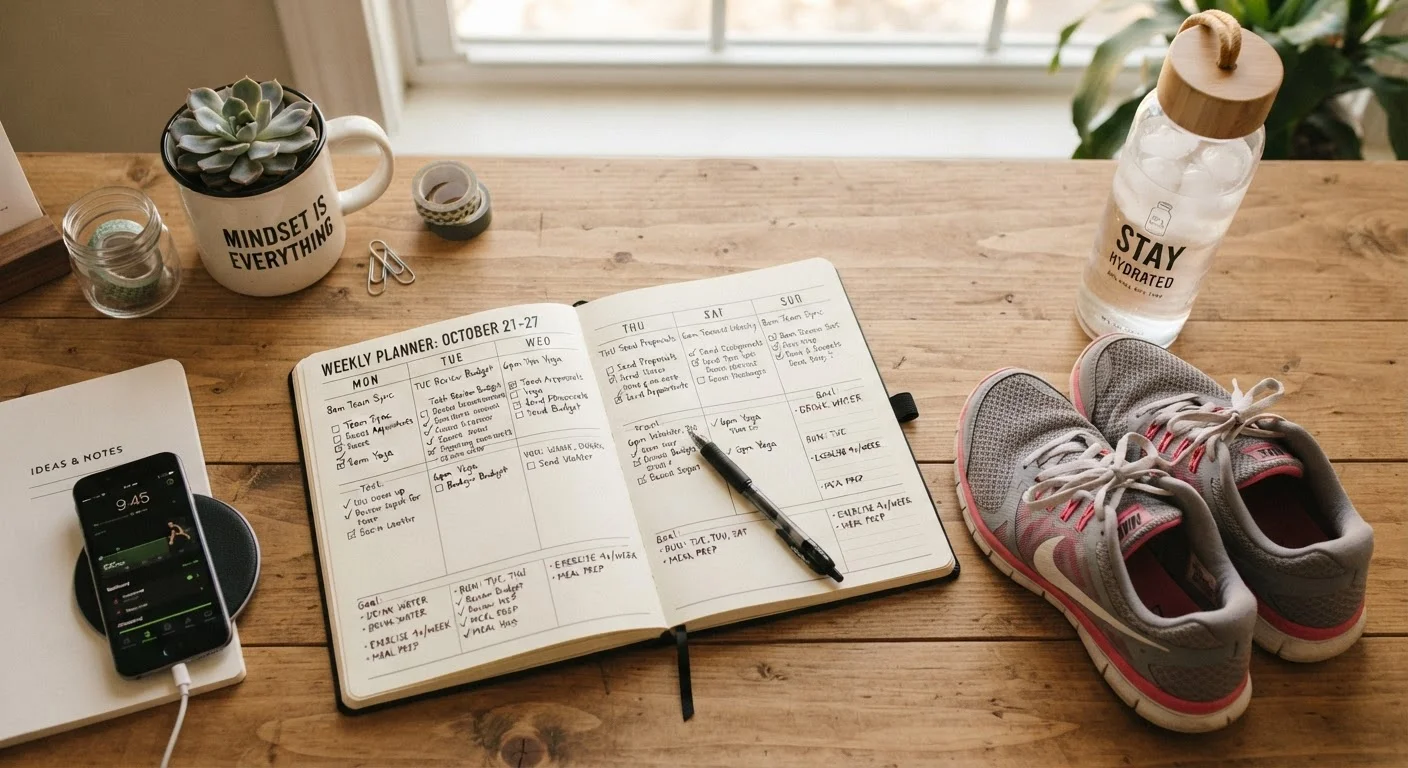
Weekly calendar or planner
Block out designated workout times and treat them as non-negotiable appointments.
Fitness tracking app or journal
Log completed sessions to identify patterns, track progress, and stay accountable.
Timer or stopwatch
Keep sessions focused and within your planned time window, especially for short workouts.
Comfortable, appropriate footwear
Proper shoes reduce injury risk across walking, running, and gym-based activities.
Once you have your tools ready, work through the five steps below in sequence. Each builds on the previous one.
Step-by-Step: Building Your Weekly Schedule
Follow these steps to create a weekly exercise schedule grounded in your actual availability, fitness level, and lifestyle. The process typically takes 15 to 30 minutes the first time, and shorter check-ins each week after that.
Audit Your Current Week
Before adding anything new, map out where your time actually goes. For one week, note your fixed commitments - work hours, commute, childcare, and recurring obligations. Identify three to five windows of 20 minutes or more that are consistently available, even if imperfect. Most people discover more usable time than they assumed once they see the full picture on paper or in a calendar app.
Set a Realistic Weekly Movement Goal
The CDC guidelines for adults recommend at least 150 minutes of moderate-intensity aerobic activity - such as brisk walking - or 75 minutes of vigorous-intensity activity per week, plus muscle-strengthening activities on two or more days. Use this as a reference, not a rigid rule. If you are just returning to exercise, a lower starting volume is appropriate. Spread activity across at least three days rather than concentrating it all in one long session.
Choose Activity Types That Fit Your Windows
Match activity formats to available time and context. A 20-minute window at home works well for bodyweight strength training or yoga. A 40-minute lunch break might accommodate a brisk walk plus a cool-down. Aim for a mix across the week: two to three days of cardiovascular activity, one to two days of strength or resistance work, and at least one full recovery or light-movement day. Variety reduces overuse injuries and keeps motivation higher over time.
Block Time on Your Calendar
Treat scheduled workouts the same way you treat a work meeting or medical appointment - block the time, set a reminder, and decline conflicts when possible. Research consistently shows that implementation intentions (deciding in advance when, where, and how you will act) significantly improve follow-through compared to vague intentions to exercise more. Write the specific activity next to the time slot, not just the word "workout."
Build in Flexibility and a Review Cycle
Life is unpredictable. Build one floating session per week - a slot you can move without guilt if an obligation arises. At the end of each week, spend five minutes reviewing what you completed, what was missed, and what obstacle appeared. Adjust the following week accordingly. This reflective habit prevents a single bad week from becoming a permanent dropout. Over four to six weeks, patterns will emerge that help you refine your plan into something genuinely sustainable.
Stack Habits to Save Time
Pair exercise with something you already do - walk during a lunch break, stretch while watching television, or do bodyweight movements before your morning shower. Research on habit stacking shows that attaching new behaviors to existing routines lowers the effort needed to get started.
Fitting Exercise Into a Broader Wellness Routine
Physical activity does not exist in isolation. Sleep quality, stress levels, nutrition, and preventive care all influence how well your body responds to exercise. Consider weaving your workout schedule into a broader preventive health routine that also accounts for annual screenings, adequate rest, and stress management.
If you are building exercise habits from scratch rather than refining an existing routine, the guide to building a weekly exercise habit from scratch offers a practical, low-pressure starting point with no gym required. Consistency at a modest level, sustained over months, delivers far greater long-term health benefits than short bursts of intense effort followed by extended inactivity.
Don't Skip Recovery Days
Rest and recovery are not optional extras - they are when muscle repair and adaptation actually occur. Scheduling fewer than one or two rest or low-intensity days per week increases injury risk and burnout. If you feel persistent soreness, fatigue, or pain, reduce intensity and speak with a healthcare professional.
Consult a Professional Before Starting
This article provides general fitness education and is not personalized medical advice. If you have a chronic health condition, recent injury, or have been inactive for an extended period, consult a qualified healthcare provider before beginning a new exercise program. They can help you identify safe starting points tailored to your individual health status.
This article is for general informational and educational purposes only and does not constitute medical advice. Always consult a qualified healthcare professional before starting, modifying, or stopping any exercise program, particularly if you have a medical condition or injury.
The content on this site is provided for informational purposes only and should not be considered a substitute for professional advice. While we strive to provide accurate and up-to-date information, we make no guarantees regarding its completeness or accuracy. Always consult a qualified professional for advice specific to your circumstances before making any decisions.