

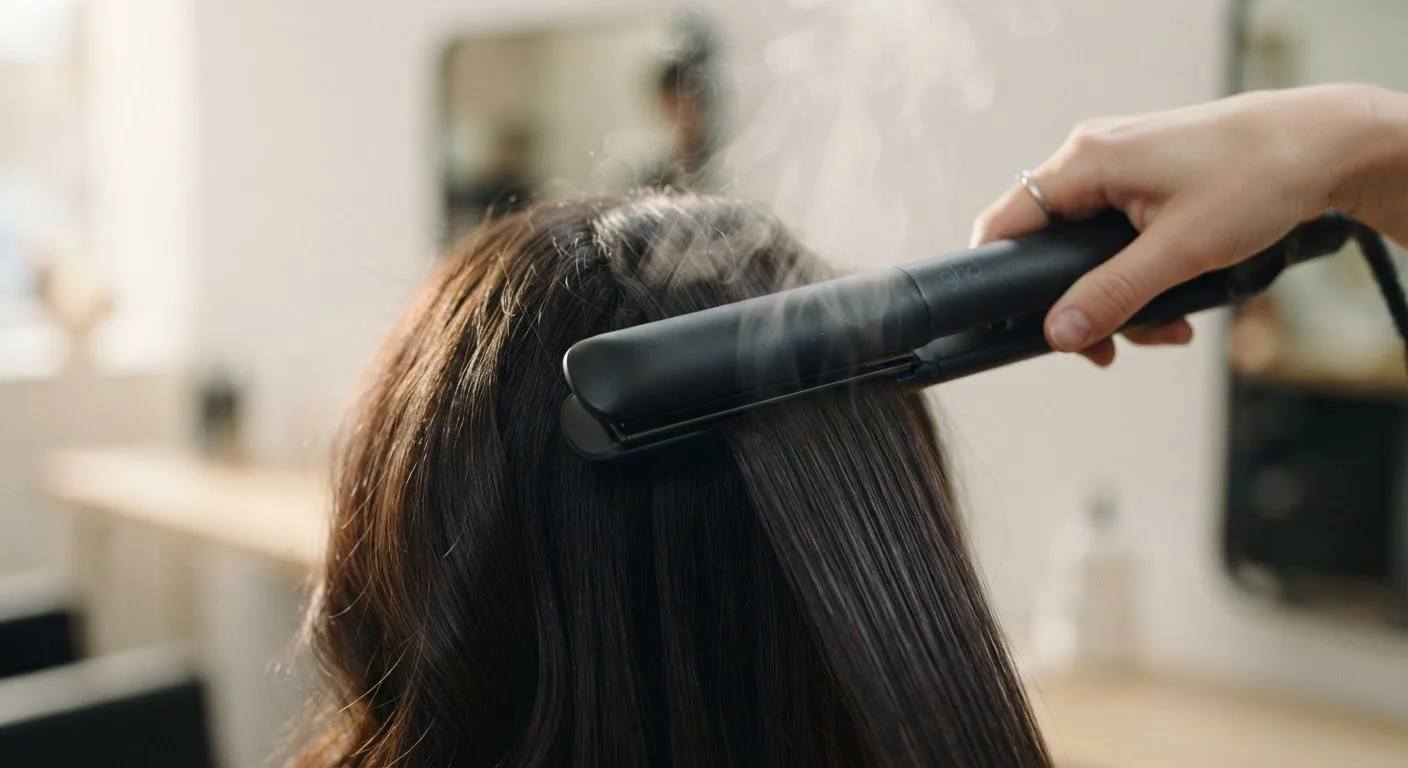
The Architecture of a Hair Strand
To understand heat damage, it helps to think of a hair strand as a precisely engineered cable. The outermost layer - the cuticle - consists of overlapping, scale-like cells that protect the interior. Beneath it lies the cortex, which makes up the bulk of the shaft and contains tightly coiled keratin proteins cross-linked by disulfide bonds. These bonds are what give hair its tensile strength and natural curl pattern.
When hair is healthy, the cuticle lies flat, reflecting light and creating shine. The cortex maintains moisture and flexibility. Heat disrupts both of these layers in ways that are physically measurable - and, beyond a certain threshold, permanent.
What High Heat Actually Does to Keratin
Keratin, the primary structural protein in hair, begins to denature - meaning its protein chains unfold and lose their functional shape - at sustained high temperatures. Research in hair science has documented protein degradation occurring at temperatures above roughly 320°F (160°C). Many consumer flat irons reach 400°F to 450°F, placing them well inside the damage range.
The heat also vaporizes water trapped within the cortex. When that internal moisture converts to steam, it can create microscopic bubbles in the hair shaft - a phenomenon sometimes called bubble hair - which physically weakens the strand from the inside and makes it prone to snapping.
~320°F
Temperature at which keratin protein degradation begins
Hair science research has documented measurable protein denaturation in human hair at sustained temperatures starting around 160°C (320°F).
450°F+
Maximum heat of many consumer flat irons
Many widely available flat irons are capable of reaching temperatures well above documented damage thresholds, often exceeding 230°C.
3 layers
Structural layers affected by heat damage
High heat impacts the cuticle, cortex, and surface lipid layer of the hair shaft - not just the outer surface.
Beyond protein denaturation, repeated heat exposure degrades the lipid layer that coats the cuticle surface. This layer plays a key role in repelling moisture loss and keeping strands smooth. Once it erodes, hair becomes increasingly porous and difficult to style predictably. That's often when people describe their hair as feeling like straw no matter how much conditioner they use.
If you've noticed your hair breaking more frequently alongside these changes, it's worth understanding the distinction - our guide on breakage versus hair loss explains what each pattern typically indicates.
What Heat Protectants Can and Can't Do
Heat protectants are a legitimate tool, but the marketing surrounding them consistently overstates their power. These products - typically containing silicones, polymers, or plant-based film-formers - work in two proven ways: they slow the evaporation of water from the hair shaft during styling, and they reduce direct friction between the tool plate and the cuticle surface.
Use the Lowest Effective Temperature
Before defaulting to a high heat setting, try styling at 300-330°F and see whether you achieve the same result. Many people use maximum heat out of habit, not necessity. For fine or chemically treated hair, a lower temperature with a slower pass often produces comparable results with significantly less cumulative stress on the strand.
What they cannot do is form a thermal shield that makes 450°F safe. No topical product can prevent protein denaturation at temperatures that exceed the stability limits of keratin. Treating a heat protectant as permission to use the highest iron setting defeats its purpose entirely.
The practical upshot: use a protectant, but pair it with the lowest effective temperature for your styling goal. For most hair types, that means experimenting downward from 350°F rather than defaulting to maximum heat. Fine hair, bleached hair, and chemically relaxed or permed hair warrant especially conservative temperatures.
It's also worth noting that cumulative exposure matters as much as single-session temperature. Daily flat ironing at a moderate heat level causes more total damage over time than an occasional high-heat pass. Frequency is part of the equation that heat protectant labels rarely address.
Recognizing Damage - and Limiting Further Harm
Heat-damaged hair has a distinct signature beyond just feeling dry. The clearest diagnostic test is the wet stretch test: take a single strand when hair is wet and gently stretch it. Healthy hair has elasticity and will stretch slightly before returning to its length; heat-damaged hair snaps with minimal tension or, in severe cases, feels gummy and stretches without any spring-back at all.
Other signals include persistent frizz that doesn't respond to humidity-control products, a dull or chalky appearance even after conditioning, and uneven curl pattern in naturally textured hair - heat damage often relaxes curl in isolated sections, creating an inconsistent look.
A person with fine, color-treated hair uses a flat iron at 410°F daily to achieve a sleek look, noticing increasing breakage near the ends over several months.
Someone with naturally curly hair notices that one section no longer coils the same way it used to, even on wash days without any heat applied.
A person applies a heat protectant spray, then irons at the iron's maximum setting, reasoning that the product will prevent damage.
Because damage at the protein level is irreversible, management focuses on two things: protecting healthy new growth and addressing scalp health, which influences the quality of hair that emerges. For broader context on signals your scalp may be sending, see what your scalp is actually telling you.
Practically, the most effective interventions are the least glamorous: reduce hot tool frequency, use the lowest workable temperature, apply a protectant consistently, and trim damaged ends regularly to prevent split ends from traveling further up the shaft.
This article is for informational purposes only and does not constitute medical or professional hair care advice. Consult a licensed dermatologist or trichologist for concerns about hair loss or scalp conditions.
Frequently Asked Questions
True heat damage - where the internal protein structure is degraded - cannot repair itself. The hair that is already damaged must eventually be trimmed away. New growth from healthy follicles will come in undamaged, so reducing heat use going forward protects future hair.
Hair scientists generally suggest keeping styling temperatures below 350°F (177°C) to limit cumulative protein damage, and lower still for fine, bleached, or chemically treated hair. There is no universally 'safe' temperature - risk depends on hair type, moisture levels, and how frequently heat is applied.
Heat protectants provide real but limited benefits: they slow moisture evaporation and reduce friction between the tool and hair shaft. They do not form a barrier that neutralizes high heat, and they should not be treated as a license to use maximum tool temperatures regularly.
Bleaching chemically breaks disulfide bonds in the cortex, leaving hair structurally weaker before any heat is applied. That pre-existing damage means the hair has far less tolerance for the additional thermal stress from styling tools.
Blow dryers typically operate at lower temperatures than flat irons, but holding a dryer too close or on high heat for extended periods still causes cumulative damage. Using a diffuser attachment and keeping the dryer moving reduces concentrated heat exposure.
Heat-damaged hair loses elasticity - a strand stretched gently will break rather than spring back. It also often develops a gummy or mushy texture when wet. Dryness, by contrast, usually responds to moisturizing treatments and doesn't produce those elasticity changes.
The content on this site is provided for informational purposes only and should not be considered a substitute for professional advice. While we strive to provide accurate and up-to-date information, we make no guarantees regarding its completeness or accuracy. Always consult a qualified professional for advice specific to your circumstances before making any decisions.