

Why Camera Specs Are Designed to Confuse
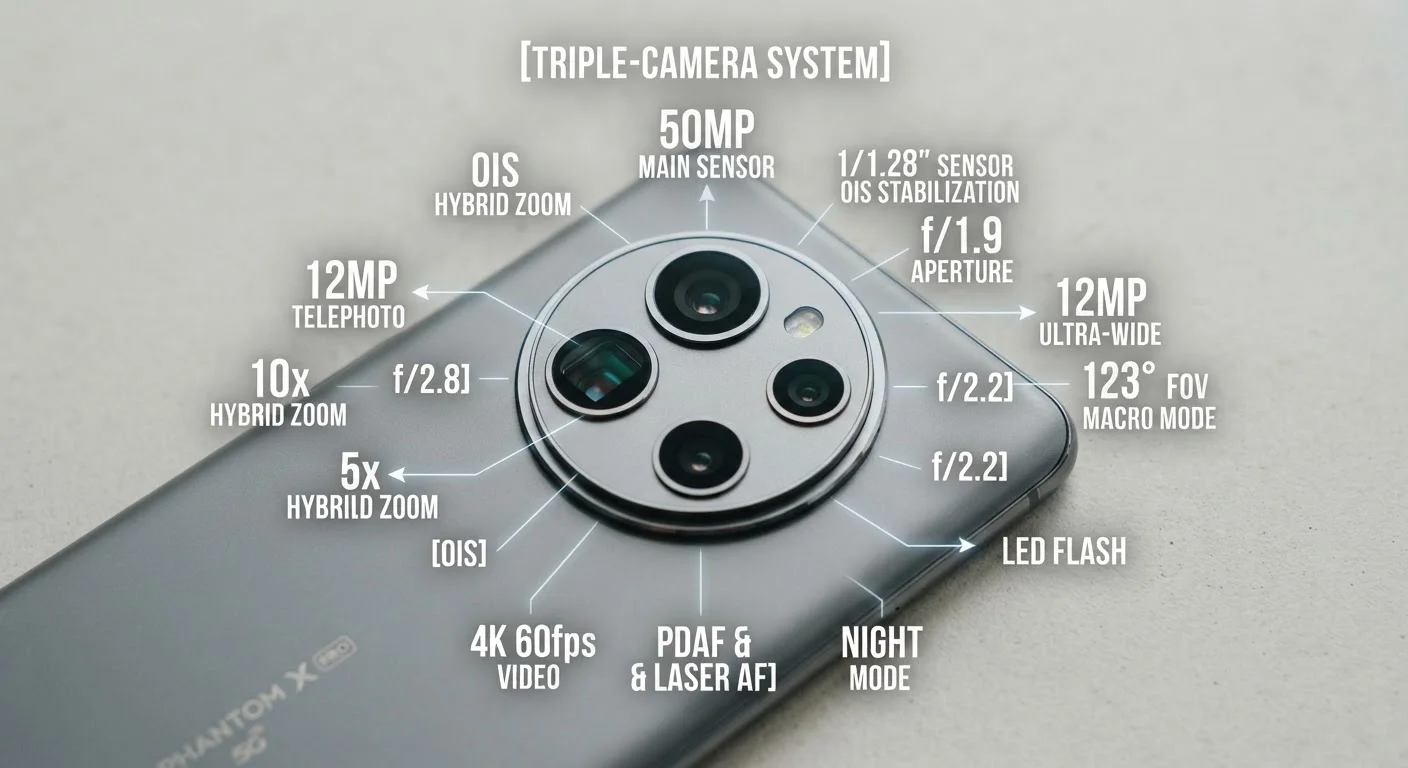
Phone manufacturers know that shoppers scan spec sheets for big numbers. That knowledge shapes how camera specifications get presented: emphasize whatever sounds impressive, downplay whatever doesn't flatter the device. The result is a spec sheet that can make a mediocre camera look cutting-edge and a genuinely great one look ordinary by comparison.
Understanding which numbers actually predict photo quality - and which are largely marketing noise - takes only a few core concepts. You don't need an engineering degree; you just need to know what each figure is actually measuring. For a broader look at how phone spec language works across the board, see the Mobile Spec Sheet Decoded.
Myth
More megapixels means sharper, better photos.
Fact
Megapixel count measures resolution - the number of pixels in an image - not overall quality. Sensor size, aperture, and software processing have a much larger effect on how a photo actually looks.
A 200 MP camera packed onto a small sensor produces 200 million tiny, light-starved pixels. A 12 MP camera with a larger sensor produces fewer but larger pixels, each capturing significantly more light. The result is often better color accuracy, less noise in low light, and stronger dynamic range - even though the megapixel number is lower. Megapixels matter mainly when you need to print very large photos or crop aggressively; for social media and standard screen viewing, the difference between 12 MP and 50 MP is essentially invisible.
Myth
More camera lenses always means a more versatile phone.
Fact
Lens count is meaningless without knowing the quality and focal length of each lens. Some additional lenses on budget phones are low-resolution depth or macro sensors with limited practical use.
A triple-camera system sounds impressive, but the third lens might be a 2 MP depth sensor that contributes almost nothing to photo quality - its only job is to help the software estimate depth for portrait blur, and even that task is often handled better by computational algorithms alone. What matters is the specification of each individual lens: its aperture, its sensor size, and its focal length (which determines how wide or zoomed it is). Two well-designed lenses will outperform four mediocre ones in virtually every shooting scenario.
Myth
A high zoom number (like 100x) means you can photograph distant subjects clearly.
Fact
Very high zoom figures typically represent digital zoom, which crops and enlarges the image rather than using optics. Image quality degrades significantly at high digital zoom levels.
Optical zoom - achieved through a physical telephoto lens - preserves image sharpness because it actually brings the subject closer through optics before the image is captured. Digital zoom is post-capture cropping, the same thing you can do yourself in any photo editor. A phone advertising "100x Space Zoom" may have only 3x or 10x optical zoom; everything beyond that is software. For real telephoto utility, look specifically at the optical zoom range, not the maximum advertised figure.
Myth
A wider aperture (lower f-number) is always better.
Fact
A wider aperture improves low-light performance and subject separation, but it also reduces depth of field. On phone cameras, aperture is fixed, so the tradeoff is set by the manufacturer for the most common shooting scenarios.
Unlike dedicated cameras with adjustable apertures, most smartphone lenses have a fixed aperture. Manufacturers choose a value that balances light intake against depth of field for typical use. A very wide aperture (like f/1.4) captures more light but can cause focus issues at close distances. In practice, apertures in the f/1.6-f/2.0 range are well-suited to everyday phone photography. When comparing phones, a lower f-number on the main lens is generally a positive indicator - particularly for indoor and evening shooting - but it's one factor among several.
Myth
Camera quality is mostly a hardware question.
Fact
Software and computational processing are arguably as important as the physical hardware, especially for features like night mode, HDR, and portrait effects.
Modern phone cameras rely heavily on image signal processors (ISP) and machine-learning algorithms to produce their final output. Night mode, for instance, works by capturing multiple exposures and combining them computationally - a process that has little to do with the lens itself. Portrait mode background blur is mostly algorithmic. Even color science - the reason one phone's photos look warmer or cooler than another's - is a software decision. This is why two phones with nearly identical hardware specs can produce noticeably different images: the software stack is doing much of the heavy lifting.
The Numbers That Actually Predict Image Quality
Once you set aside the noise, a handful of specifications do carry genuine predictive value for real-world photos.
Sensor Size
A larger image sensor captures more light per pixel, which directly improves dynamic range and low-light performance. Sensor size is usually listed in fractions of an inch (e.g., 1/1.28") or in millimeters. Larger fractions - meaning a smaller denominator - represent bigger sensors. This single spec often explains why two phones with the same megapixel count produce noticeably different photos.
Aperture (f-number)
Aperture is listed as an f-number like f/1.8 or f/2.4. A lower f-number means a wider aperture, which lets in more light. This matters most for indoor shots, evening scenes, and any situation where light is limited. A phone with a 12 MP camera at f/1.6 will typically outperform a 50 MP camera at f/2.8 in dim conditions.
Optical Zoom vs. Digital Zoom
Optical zoom uses physical lens movement or a dedicated telephoto lens to bring subjects closer without degrading the image. Digital zoom simply crops and enlarges the existing image, which reduces sharpness. When a listing says "up to 30x zoom," confirm how much of that range is optical - the rest is digital and largely cosmetic.
Computational Photography Capability
The processor running the camera software is often the hidden variable. Features like night mode, HDR processing, subject tracking, and portrait depth estimation are driven by algorithms, not lenses. This is one reason camera performance is tightly linked to the underlying chip - a point explored in more depth in our guide on what processor speed means for your phone.
1/1.28"
Sensor size that outperforms raw megapixel count
Sensor size measurements like these - used by several flagship phones - demonstrate why physical light-gathering area predicts low-light performance more reliably than pixel count.
f/1.6-f/2.0
Aperture range common in high-quality main lenses
Most well-regarded smartphone main cameras fall in this aperture range, balancing light intake and depth of field for everyday shooting conditions.
Making a Smarter Camera Decision
When comparing phones primarily on camera capability, prioritize sensor size, aperture, and confirmed optical zoom range over megapixel counts or lens quantity. Real-world sample images - available from independent tech reviewers - are more useful than any spec sheet figure, because they capture how the hardware and software work together under actual shooting conditions.
If you're still working through the broader landscape of phone specifications, our display specs guide walks through how screen numbers affect daily use in the same plain-language format.
This article is for general informational purposes only. Specifications and product features vary by model and may change over time. Always verify current specs directly with the manufacturer before making a purchase decision.
The content on this site is provided for informational purposes only and should not be considered a substitute for professional advice. While we strive to provide accurate and up-to-date information, we make no guarantees regarding its completeness or accuracy. Always consult a qualified professional for advice specific to your circumstances before making any decisions.