

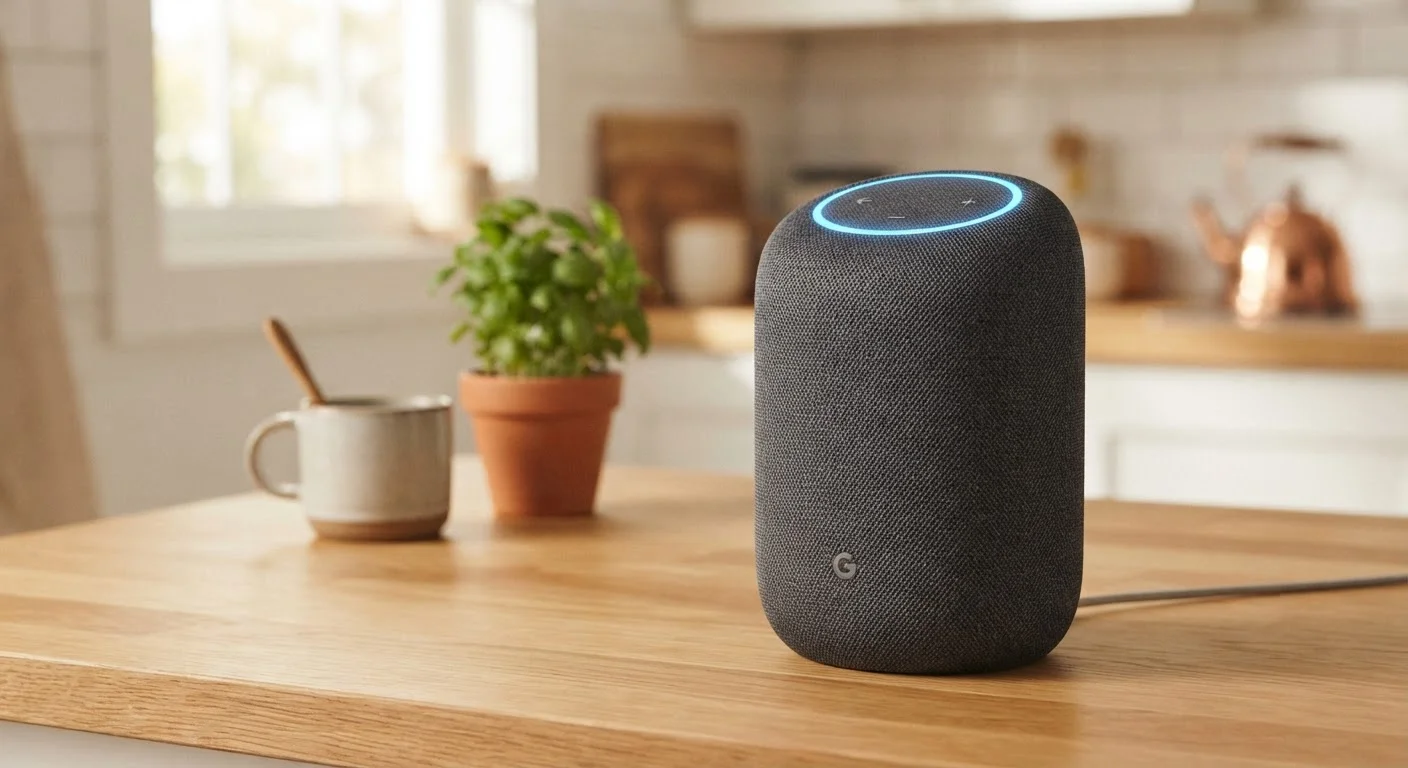
What a Smart Speaker Actually Does
At its core, a smart speaker does two things: it plays audio and responds to voice commands. The audio side works like any wireless speaker—you stream music, podcasts, or radio through a connected account. The voice side is where the 'smart' part comes in.
When you say the wake word, the device starts recording your voice and sends that recording to a cloud server, where software interprets it and sends back a response. The whole exchange typically takes under two seconds. This is how the assistant can answer questions, add items to a shopping list, or adjust your thermostat—it's running on powerful remote computers, not the small speaker sitting on your counter.
For a broader look at how these devices fit into the connected home picture, see our explainer on what 'smart home' actually means.
~35%
U.S. adults who own a smart speaker
Pew Research Center surveys have consistently found roughly a third of American adults report owning a smart speaker, making them one of the more widely adopted connected home devices.
Under 2 sec
Typical voice command response time
Most smart speakers complete the full cycle—wake word detection, cloud processing, and spoken response—in well under two seconds under normal network conditions.
3–5 ft
Effective voice pickup range for most models
Manufacturer specifications and independent testing generally place reliable wake-word detection at three to five feet under normal ambient noise conditions, with performance declining in noisy environments.
Sound Quality: What to Actually Expect
Sound quality in smart speakers is shaped by driver size, cabinet design, and audio processing software—the same factors that affect any speaker. Compact models prioritize convenience over acoustics; larger, more expensive units close the gap with dedicated audio equipment but rarely match it.
A few things worth knowing before you judge a smart speaker by its specs:
- Driver size matters most. Bigger drivers move more air, producing fuller bass and cleaner highs. Small puck-style speakers will always sound thin compared to full-size units.
- Room placement affects everything. A speaker wedged into a corner or cabinet will sound different than one placed in open space. Manufacturers generally design for open countertop placement.
- Streaming quality has a ceiling. If the music service you use streams at a low bit rate, even an excellent speaker can't compensate. Higher-quality streaming tiers generally sound noticeably better on capable hardware.
For everyday background music or casual listening, most mid-range smart speakers perform well. For serious listening sessions or larger rooms, consider whether a dedicated audio setup makes more sense.
Test Before You Commit to Placement
Before deciding where a smart speaker will live permanently, try it in a few different spots in the room for a few days. Sound quality, wake-word reliability, and overall usefulness can vary noticeably based on distance from walls, ceiling height, and ambient noise sources like refrigerators or HVAC vents.
What Voice Assistants Can't Do Well
The gap between what voice assistants appear capable of and what they reliably deliver is worth understanding before you depend on one.
Complex or chained requests. Asking an assistant to play jazz while dimming the lights and setting a dinner timer in one sentence often results in partial execution. Assistants handle discrete, simple commands far more reliably than bundled ones.
Nuanced information. For factual questions with clear answers—weather, conversions, basic trivia—assistants perform well. For nuanced topics, current events, or anything requiring judgment, responses can be incomplete, outdated, or confidently wrong.
Cross-ecosystem control. A smart speaker only controls devices within compatible ecosystems. Mixing platforms without careful planning leads to gaps in what voice commands can reach. Our article on making smart home devices work together explains how compatibility actually works.
Privacy-sensitive tasks. Anything you wouldn't say aloud in public deserves extra thought before asking a device that logs audio and sends it to a server. Understanding what data is collected is worth your time—our piece on smart home device privacy breaks that down plainly.
Setting Realistic Expectations
Smart speakers are genuinely useful tools when you understand what they're good at. They shine as quick-access shortcuts: hands-free timers while cooking, music control without touching your phone, reminders, and basic smart home commands. They stumble when treated as reliable research assistants or universal remote controls for every device in your home.
Think of a smart speaker the way you'd think of any specialized tool. A hammer is excellent for nails; it's not the right instrument for everything. A smart speaker handles routine, clearly defined tasks with real convenience. Outside that zone, you'll get better results reaching for your phone or another source.
If you're considering building out a connected home more broadly, it helps to understand the underlying ecosystem before adding devices. Our overview of what makes a home 'smart' is a good starting point for that planning.
“Voice interfaces are best understood as narrow tools—they excel at reducing friction for well-defined tasks, but they are not general-purpose intelligent agents, regardless of how naturally they speak.”
— Kate Crawford, AI researcher and author of 'Atlas of AI'
Frequently Asked Questions
Smart speakers are designed to listen only for a specific wake word—like 'Hey Alexa' or 'OK Google'—before activating. However, false triggers do occasionally occur, and short audio clips may be sent to servers for processing. For a detailed look at what data is actually collected, see our article on <a href="/tech-gadgets/smart-home-streaming/connected-home-devices-and-privacy-what-data-is-actually-being-collected">connected home device privacy</a>.
Generally, no. Most core functions—including voice commands, music streaming, and smart home control—require an active internet connection. Some devices can play locally stored audio over Bluetooth, but voice assistant features will be unavailable offline.
Not automatically. Compatibility depends on which ecosystems and protocols each device supports. A speaker tied to one platform may not communicate with devices built for another. Our guide on <a href="/tech-gadgets/smart-home-streaming/getting-smart-home-devices-to-work-together-platforms-protocols-and-patience">getting smart home devices to work together</a> covers this in detail.
They handle clear, simple commands well—playing a song, setting a timer, or checking the weather. Accuracy drops with complex, multi-part requests, heavy accents, or background noise. They also cannot reliably perform tasks requiring judgment, nuance, or access to real-time private information.
A smart display adds a touchscreen to the standard smart speaker setup, letting you watch video, view calendars, or see recipe steps visually. The voice assistant functionality is essentially the same; the screen adds an interactive visual layer.
For casual listening in a single room, mid-range and larger smart speakers can deliver solid audio. However, dedicated audio equipment generally outperforms them in sound quality, especially for critical listening or larger spaces. Many people use both.
The content on this site is provided for informational purposes only and should not be considered a substitute for professional advice. While we strive to provide accurate and up-to-date information, we make no guarantees regarding its completeness or accuracy. Always consult a qualified professional for advice specific to your circumstances before making any decisions.