

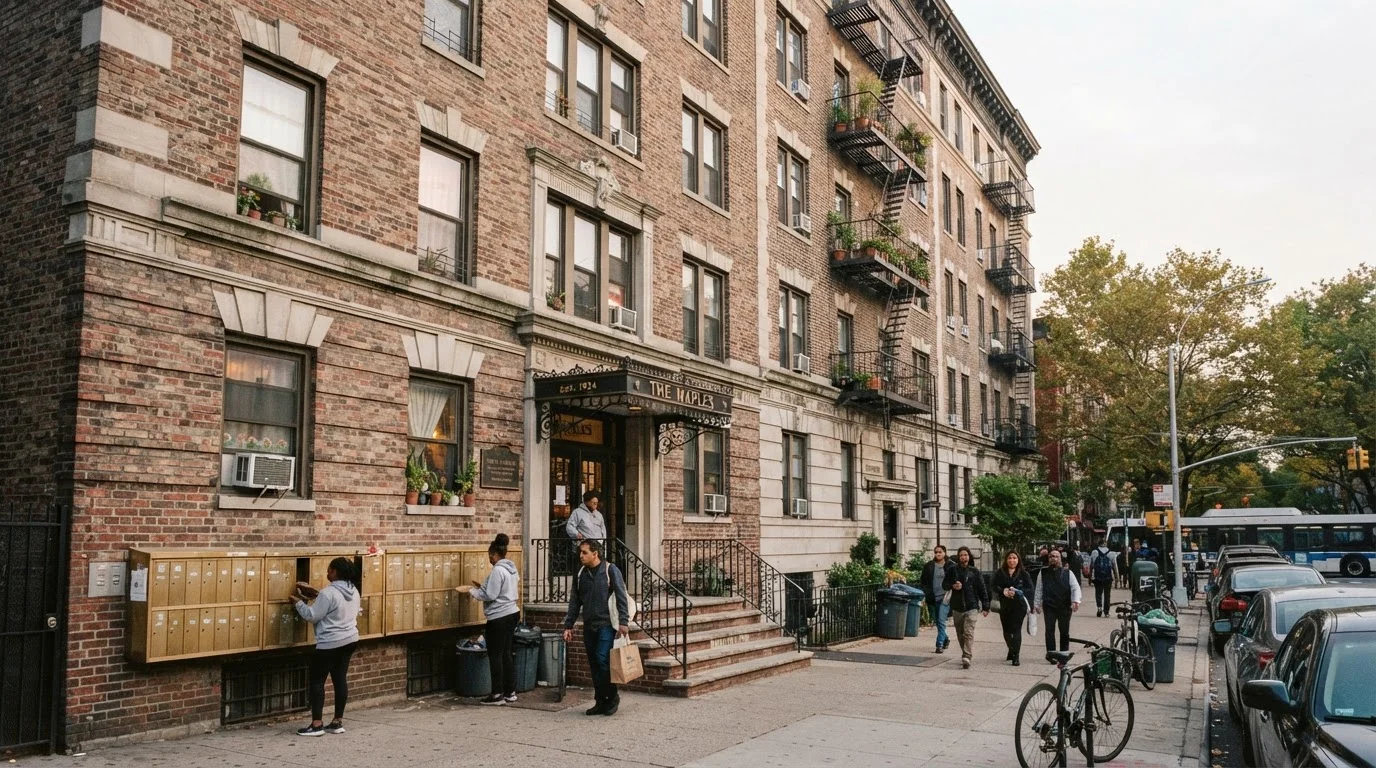
Rent Control vs. Rent Stabilization: The Core Distinction
The phrase "rent control" gets applied to a wide range of policies, which creates significant confusion for renters trying to understand their rights. In practice, most housing experts draw a line between two models.
Hard rent control sets a ceiling on the actual dollar amount a landlord may charge - sometimes freezing rent at a specific historical level. This model was common in mid-20th century American cities but is rare today in its strictest form.
Rent stabilization, the more prevalent modern approach, permits annual rent increases but caps them at a fixed percentage or ties them to an index such as the Consumer Price Index. New York City's rent stabilization system, for example, sets allowable increases each year through a local Rent Guidelines Board.
For practical purposes, if you live in a covered unit, the outcome is similar: your landlord cannot arbitrarily double your rent at lease renewal. But the mechanics differ meaningfully, and so do your rights. See how rent-controlled and market-rate apartments compare for a deeper breakdown of each system.
~1M
Rent-stabilized apartments in New York City
According to New York City's Housing Preservation and Development agency, approximately one million units are currently registered under rent stabilization.
~40
U.S. states with rent control preemption laws
Policy research organizations tracking housing legislation estimate that roughly 40 states have laws preventing municipalities from enacting rent control, leaving local protections unavailable to most American renters.
5% + CPI
California statewide annual rent increase cap
California's AB 1482 limits annual rent increases for covered units to 5% plus the local Consumer Price Index rate, with an overall ceiling of 10%, according to the California Department of Housing and Community Development.
Where Rent Control Actually Exists in the U.S.
Rent control is far less common than many renters assume. The majority of U.S. states have enacted preemption laws - statutes that prohibit cities and counties from establishing their own rent control ordinances. As of the most recent legislative landscape, states including Texas, Florida, Georgia, and Arizona fall into this category.
States that do permit local ordinances include:
- California - A 2019 statewide law (AB 1482) caps annual rent increases at 5% plus local inflation for many units, while cities like Los Angeles and San Francisco maintain stricter local controls.
- New York - New York City operates one of the country's most extensive rent stabilization systems, covering roughly one million apartments.
- New Jersey - Dozens of municipalities have adopted local ordinances, though terms vary widely by town.
- Oregon - Enacted a statewide rent stabilization cap in 2019, the first state to do so.
- Maryland and Washington D.C. - The District of Columbia maintains comprehensive rent stabilization; several Maryland jurisdictions have local laws.
Even within permissive states, coverage is not universal. A renter in Sacramento may be protected; one in a smaller California city may not be.
A renter in Los Angeles has lived in a 1970s apartment building for five years. Their landlord notifies them of a rent increase for the coming year.
A renter in Austin, Texas receives a lease renewal with a 20% rent increase and wonders if any law limits it.
A tenant in a rent-stabilized New York City apartment moves out, and the landlord relists the unit at a significantly higher rent.
A Portland, Oregon renter in a newly constructed apartment building notices their lease contains no mention of rent stabilization.
What's Typically Covered - and What's Not
Even where rent control ordinances exist, they rarely apply to all rental units. Common exemptions include:
- New construction - Most laws exempt buildings built after a specific year. California's AB 1482 exempts units built within the past 15 years, on a rolling basis.
- Single-family homes and condos - Many ordinances focus exclusively on multi-unit apartment buildings.
- Owner-occupied small buildings - A landlord renting out rooms in a duplex they live in often falls outside coverage.
- Subsidized housing - Units already governed by federal rent restrictions may be exempt from local ordinances.
Building age is often the single most important factor. If your building predates a certain cut-off year specified in the local ordinance, it is far more likely to be covered.
Verify Coverage Before Signing
Don't assume a unit is rent-controlled based on location alone. Ask the landlord directly whether the unit is registered under a local ordinance, and request documentation. Many cities require landlords to provide written notice of rent stabilization status - knowing this before you sign protects you from surprises at renewal.
Because lease type can also interact with rent control protections, it's worth understanding how month-to-month and fixed-term leases differ in a rent-controlled context.
Landlord Flexibility Within Rent Control
Rent control does not freeze a landlord's income in perpetuity. Several mechanisms allow rents to rise above standard annual limits:
Vacancy decontrol is one of the most significant. In many jurisdictions, when a tenant voluntarily vacates a stabilized unit, the landlord can reset the rent to market rate before the next tenant moves in. This creates an economic incentive for landlord behavior - legal or otherwise - that encourages tenant turnover, a dynamic researchers and tenant advocates have documented widely.
Capital improvement petitions allow landlords to apply for rent increases above the standard cap when they make qualifying major improvements to a building, such as roof replacement or elevator upgrades. The increase is typically spread across all units and added as a temporary surcharge.
Hardship petitions exist in some jurisdictions where a landlord can argue that the standard allowable increase fails to cover operating costs and a reasonable return.
If you're navigating a rent-controlled lease alongside other housing decisions, reviewing common leasing pitfalls renters encounter can help you avoid compounding errors.
“Rent control addresses the symptoms of a housing shortage rather than the underlying cause, but for the tenants it protects, that stability can be the difference between staying in a community and being displaced from it.”
— Jenny Schuetz, Housing policy researcher and fellow at the Brookings Institution
How to Find Out If Your Unit Is Protected
There is no national database of rent-controlled units. Determining your status requires a few targeted steps:
- Check your city or county housing department's website. Many jurisdictions maintain searchable registries of rent-stabilized units by address.
- Review your lease. Some jurisdictions require landlords to disclose rent stabilization status in the lease itself.
- Contact a local tenant rights organization. Nonprofit tenant advocacy groups in most major cities can confirm coverage and explain local rules at no cost.
- Ask your landlord directly - and get any answer in writing.
If you are a first-time renter or recently relocated to a new city, understanding rent control in context with other basics can make a significant difference. A ground-up introduction to renting covers the full landscape for those new to the rental market.
Renters who face affordability challenges regardless of rent control status may also find it useful to explore rental assistance programs available across the U.S..
This article is for general informational and educational purposes only. It does not constitute legal or financial advice. Rent control laws are highly jurisdiction-specific and subject to change. Consult a local tenant rights attorney or your city's housing authority for guidance on your specific situation.
Frequently Asked Questions
Rent control typically refers to laws that cap the actual rent price at a fixed level, often associated with older ordinances. Rent stabilization allows rents to increase annually but limits how much - usually by a percentage tied to inflation. Many cities use the terms interchangeably, so checking the specific local ordinance matters.
As of recent years, states that permit some form of local rent control include California, New York, New Jersey, Maryland, Oregon, and the District of Columbia. Most other states have preemption laws that prohibit cities from enacting rent control at all.
No. Most ordinances exempt newer construction, single-family homes, condominiums, and owner-occupied small buildings. Eligibility depends on the building's age, unit type, and the specific local law.
Yes, but only under specific conditions. Most laws permit annual increases within a set percentage, and landlords may petition for larger increases after qualifying capital improvements. Rents often reset to market rate when a tenant vacates - a process called vacancy decontrol.
Contact your city or county housing department, or check your municipality's official website. Some cities maintain public registries of rent-stabilized units. Your lease and local tenant rights organizations can also be useful starting points.
Rent control limits rent increases but does not prevent all evictions. Most ordinances specify 'just cause' eviction standards, meaning a landlord must have a legally recognized reason - such as nonpayment or lease violations - to remove a tenant in a controlled unit.
The content on this site is provided for informational purposes only and should not be considered a substitute for professional advice. While we strive to provide accurate and up-to-date information, we make no guarantees regarding its completeness or accuracy. Always consult a qualified professional for advice specific to your circumstances before making any decisions.