

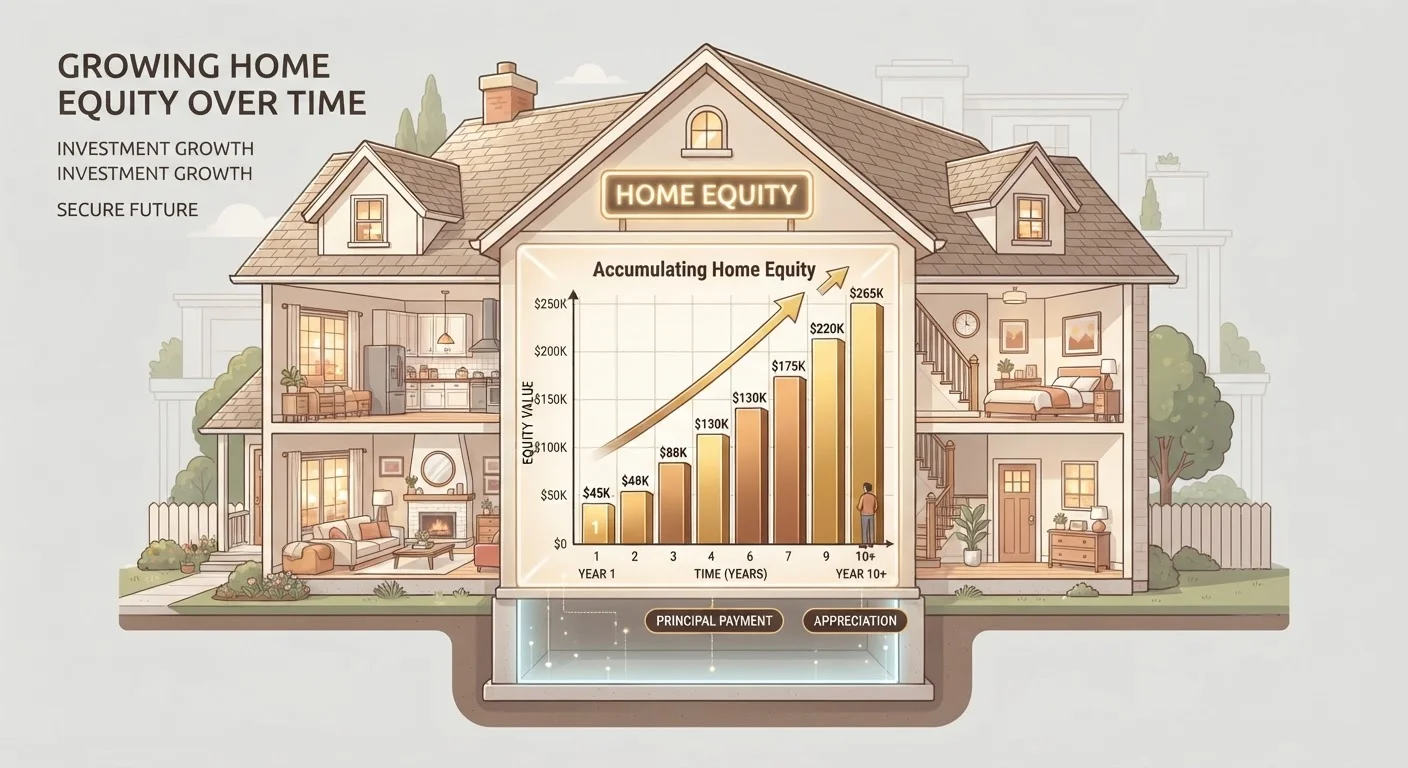
The Equity Formula: A Simple Concept With Real Consequences
At its core, home equity is straightforward: Equity = Current Market Value − Outstanding Mortgage Balance. But while the arithmetic is simple, the implications are significant. Equity represents your actual financial stake in a property - the wealth you've built by owning rather than renting, and the cushion that protects you if you ever need to sell.
For most American households, a home is the single largest asset on their personal balance sheet. Understanding how equity works - and how it can change - is a foundational part of managing that asset responsibly. For a broader view of what homeownership entails financially, see Homeownership Basics: A Complete Starting Point for First-Time Owners.
$299,000
Median homeowner equity in the U.S.
According to CoreLogic's 2023 Homeowner Equity Insights report, the median U.S. homeowner with a mortgage held nearly $299,000 in equity.
~38%
U.S. homeowners who own free and clear
The U.S. Census Bureau estimates that roughly 38% of owner-occupied homes are owned without any mortgage, representing maximum equity positions.
20%
Down payment threshold to avoid PMI
Lenders typically require private mortgage insurance (PMI) when a buyer puts down less than 20%, which also means starting with less equity.
How Equity Accumulates Over Time
Equity builds through three primary mechanisms, often working in combination:
- Mortgage principal payments: Every month, a portion of your mortgage payment reduces your loan balance. In the early years of a standard amortizing loan, most of each payment covers interest - but over time, the principal share grows. By the final years of a 30-year mortgage, the majority of each payment is reducing what you owe.
- Property value appreciation: If your home's market value rises, your equity rises with it - even if you haven't paid down a dollar of additional principal. This is why homeowners in appreciating markets can accumulate equity quickly, and why the reverse is equally true in declining markets.
- Your down payment: A larger down payment creates equity immediately at closing. A buyer who puts 20% down on a $300,000 home starts with $60,000 in equity on day one.
Home improvements can also increase market value, though the effect varies widely by project type and local market. Not every renovation returns its full cost in added value - it's worth researching typical return-on-investment figures before committing to a major project.
Small Extra Payments, Big Long-Term Impact
Making even one additional principal payment per year on a 30-year mortgage can shave years off your loan term and meaningfully increase your equity position. Before setting up extra payments, confirm with your lender that they are applied directly to principal rather than future interest. Always read your loan terms for any prepayment conditions.
What Equity Can - and Cannot - Do for You
Equity is not the same as cash in hand. It's illiquid until you either sell the property or borrow against it. That distinction matters. For a deeper look at how equity and overall property value relate, see Home Equity vs. Home Value: Understanding the Difference.
Homeowners commonly access equity through:
- Home Equity Loans: A fixed lump-sum loan secured by your home, repaid over a set term at a fixed interest rate.
- HELOCs (Home Equity Lines of Credit): A revolving credit line, typically at a variable rate, that can be drawn and repaid during a draw period.
- Cash-out refinancing: Replacing your existing mortgage with a larger one and pocketing the difference.
These tools can fund major expenses - home repairs, education costs, or consolidating higher-interest debt. For context on that last use case, see Debt Consolidation Explained. However, each approach uses your home as collateral. Defaulting on a home equity loan or HELOC carries the same foreclosure risk as defaulting on your primary mortgage. Borrowing against equity is a decision that warrants careful consideration and, ideally, input from a qualified financial professional.
Equity Access Isn't Free Money
Borrowing against your home equity means taking on new debt secured by your property. Interest costs, closing fees, and variable rate risk (on HELOCs) all affect the true cost of accessing equity. If you can't service the new debt, you risk losing the home itself - regardless of how much equity you had before borrowing.
Protecting the Equity You've Built
Equity can erode as well as grow. Market downturns, deferred maintenance that reduces property value, and over-leveraging through equity borrowing are all real risks. Homeowners who treat their equity as a piggy bank - borrowing against it repeatedly - may find themselves with little cushion when they need it most.
Practical steps to protect your equity include keeping up with routine maintenance (deferred upkeep reduces market value), maintaining adequate homeowners insurance, and having a reserve for unexpected repair costs. For guidance on that last point, Building an Emergency Fund Specifically for Home Repairs offers a practical framework.
It's also worth understanding the full cost of ownership - including taxes, insurance, and maintenance - as these obligations continue regardless of how much equity you hold. See Owning a Home: The Financial Realities Beyond the Mortgage Payment for a comprehensive breakdown.
This article is for general informational and educational purposes only and does not constitute financial, legal, or investment advice. Readers should consult a qualified financial professional before making decisions about their specific circumstances.
Frequently Asked Questions
Subtract your remaining mortgage balance from your home's current market value. For example, a $400,000 home with a $280,000 remaining balance has $120,000 in equity. You can get an estimate of current market value from a licensed appraiser or local real estate professional.
It varies based on your down payment, loan terms, and local market conditions. In the early years of a mortgage, most payments go toward interest rather than principal, so equity builds slowly at first. Appreciation in a rising market can accelerate the process considerably.
Yes. If your local real estate market declines, your home's market value drops even if you've made every payment on schedule. This can erode or eliminate equity - a situation known as being 'underwater' on your mortgage.
A home equity loan provides a lump sum at a fixed interest rate, repaid over a set term. A HELOC (Home Equity Line of Credit) works more like a credit card - a revolving credit line you draw from as needed, typically at a variable rate. Both use your home as collateral.
Yes. Making additional principal payments reduces your loan balance more quickly, which directly increases your equity. Even modest extra payments each month can meaningfully shorten your loan term and accelerate equity accumulation over time.
The content on this site is provided for informational purposes only and should not be considered a substitute for professional advice. While we strive to provide accurate and up-to-date information, we make no guarantees regarding its completeness or accuracy. Always consult a qualified professional for advice specific to your circumstances before making any decisions.