

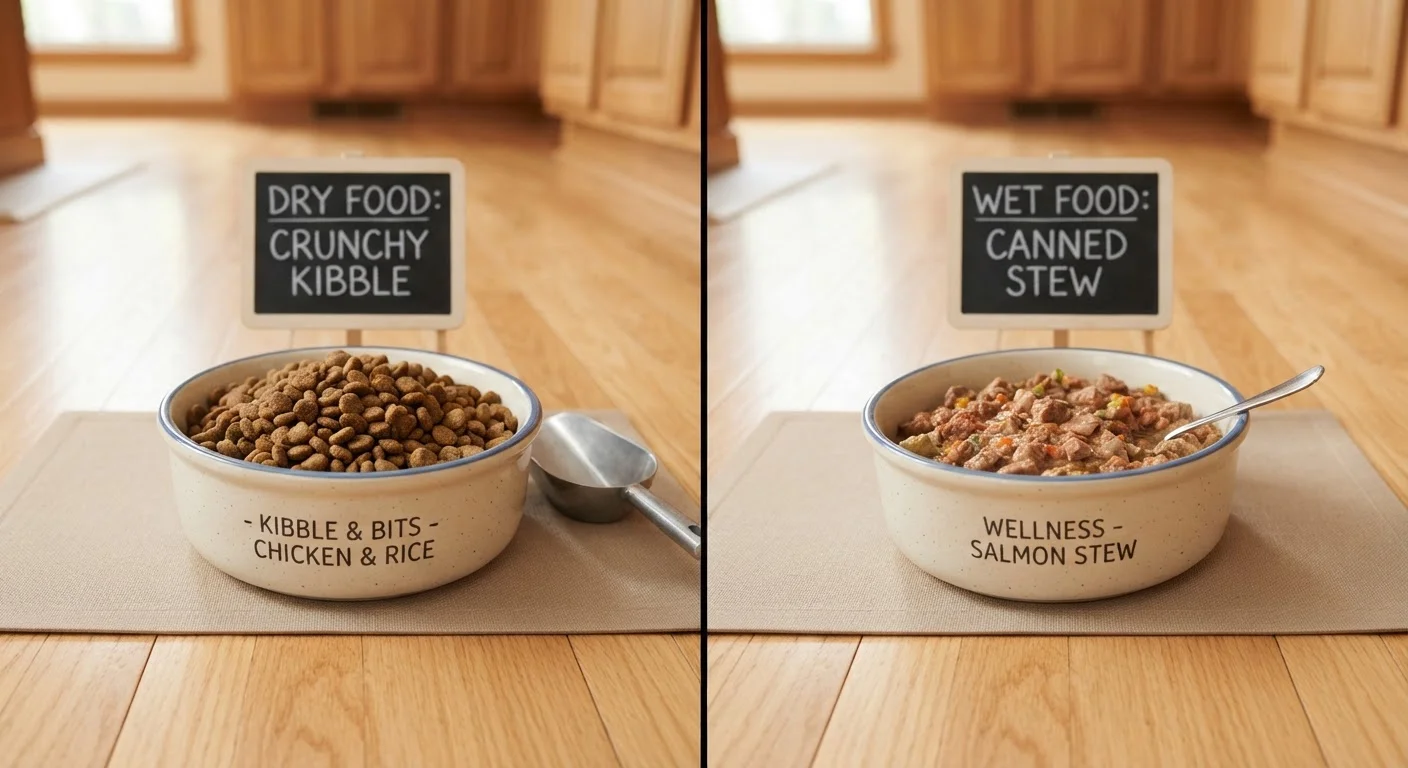
Option A
Dry Food (Kibble)
The convenient, shelf-stable everyday staple.
Best for: Pet owners seeking an affordable, low-mess feeding option that supports dental health through mechanical chewing.
Option B
Wet Food (Canned)
The moisture-rich, palatable alternative.
Best for: Pets with hydration needs, dental difficulties, picky appetites, or conditions that benefit from a high-moisture diet.
How Wet and Dry Pet Foods Differ at a Glance
The most fundamental difference between wet and dry pet food is moisture content. Dry kibble typically contains around 10% moisture, while canned wet food generally ranges from 70% to 80% moisture. That gap has meaningful downstream effects on nutrition, digestion, portion size, and overall health impact.
Both formats can be nutritionally complete - what matters most is whether the food carries an AAFCO nutritional adequacy statement, which confirms it meets established nutrient profiles for your pet's life stage. The format itself doesn't determine quality. For a deeper look at how marketing claims can muddy this picture, see common pet nutrition myths that circulate widely online.
| Criterion | Dry Food (Kibble) | Wet Food (Canned) |
|---|---|---|
| Moisture content | ~10% | 70-80% |
| Cost per calorie | Generally lower | Generally higher |
| Storage convenience | Shelf-stable, easy to store | Refrigerate after opening |
| Dental benefit | Some mechanical plaque reduction | Minimal mechanical benefit |
| Palatability for picky pets | Variable | Generally higher |
| Hydration support | Low - relies on water bowl | High - built-in fluid intake |
| Calorie density | High - smaller portions needed | Low - larger volumes needed |
| Ease of eating | Requires ability to chew | Suitable for dental difficulties |
Nutrition, Hydration, and Digestive Considerations
Because wet food is calorie-dilute (most of its weight is water), pets eating only wet food need larger volumes to meet their caloric needs, but they simultaneously consume far more fluid. This matters most for cats, who evolved as desert animals with a naturally low thirst drive. Veterinary and animal nutrition guidance consistently associates higher moisture intake with reduced risk of feline lower urinary tract disease and chronic kidney disease.
Dry food is calorie-dense, making portion control straightforward and overfeeding less likely with careful measuring. However, pets eating exclusively dry food depend entirely on their water bowl for hydration - owners should ensure fresh water is always available. For context on how species differences shape these needs, see our guide to pet health and wellness.
70-80%
Moisture in typical wet pet food
Compared to roughly 10% in dry kibble, this difference substantially affects daily fluid intake, particularly relevant for cats.
~60%
Of U.S. households that own a cat or dog
According to the American Pet Products Association, pet ownership is widespread, making informed feeding decisions a mainstream public health consideration.
3-4×
More fluid from wet food vs. dry food
Cats fed wet food can consume several times more daily fluid than those fed dry food exclusively, according to comparative nutrition research.
Digestibility varies by recipe and ingredient quality rather than format. Both wet and dry foods can be highly digestible when formulated well. Pets with sensitive stomachs may respond differently to each - a veterinarian or board-certified veterinary nutritionist can help identify what works best for an individual animal.
Dental Health, Palatability, and Practical Trade-Offs
Dry kibble is often credited with dental benefits, and there is some evidence that the abrasive action of chewing hard kibble can help slow tartar accumulation. However, veterinary dental specialists note that kibble alone is not adequate dental care - regular tooth brushing and professional cleanings remain the gold standard. Wet food does not provide this mechanical benefit, but it also doesn't cause tooth decay in the way that sugary human foods can.
Palatability is another meaningful variable. Wet food's stronger scent and softer texture tend to appeal to picky eaters and animals with reduced appetite - common in cats, senior pets, or those recovering from illness. Kibble is simpler to store (no refrigeration until opened) and typically less expensive per calorie, which matters for owners feeding larger dogs or multiple pets.
Mixing Wet and Dry Food: What to Watch
Combining wet and dry food is generally safe for healthy pets, but total daily calorie intake needs careful tracking to avoid overfeeding. Use the calorie information on both packaging labels and adjust portions accordingly. If your pet has a specific health condition - such as kidney disease, diabetes, or food allergies - consult your veterinarian before mixing formats, as dietary management can be an important part of treatment.
Many owners and some veterinarians advocate for mixing both formats - using kibble as the daily base while adding wet food for palatability, hydration, or variety. This approach can offer practical balance, though the right ratio depends on each pet's individual health profile. For a broader look at the trade-offs involved in pet selection, see dogs vs. cats and lifestyle fit.
This article is for general informational purposes only and is not veterinary or medical advice. Always consult a licensed veterinarian before making significant changes to your pet's diet, particularly if your pet has an existing health condition.
The content on this site is provided for informational purposes only and should not be considered a substitute for professional advice. While we strive to provide accurate and up-to-date information, we make no guarantees regarding its completeness or accuracy. Always consult a qualified professional for advice specific to your circumstances before making any decisions.