

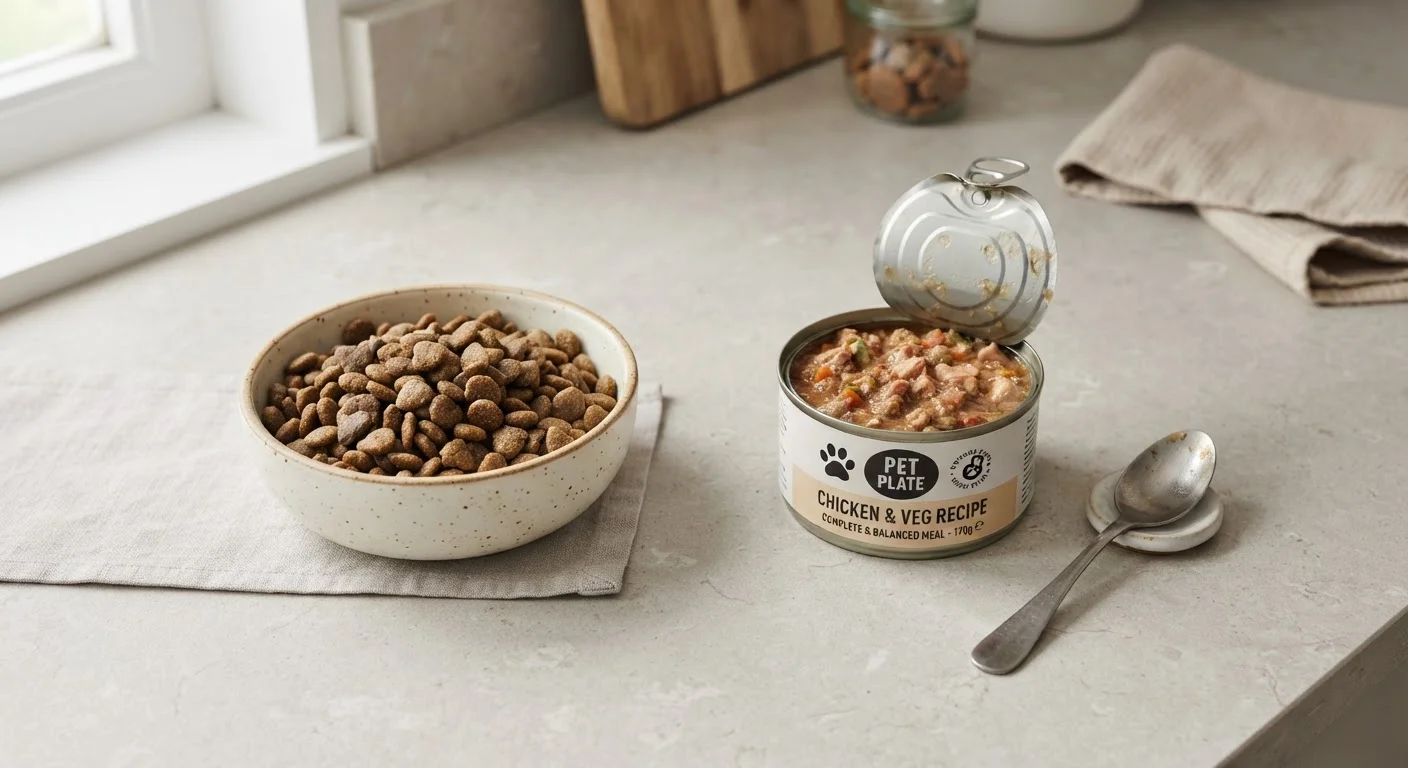
Option A
Dry Kibble
The convenient, cost-effective everyday staple.
Best for: Owners seeking affordable, long-shelf-life feeding with minimal preparation and potential dental benefits.
Option B
Wet Food
The moisture-rich, palatable alternative for picky or hydration-needy pets.
Best for: Pets with low water intake, dental issues, or reduced appetite who benefit from softer, more aromatic food.
What Actually Differs Between the Two Formats
At their core, dry kibble and wet food are simply two methods of delivering nutrients to your pet. Both can be formulated to meet the AAFCO nutritional standards that define a complete and balanced diet. The differences lie in manufacturing, moisture content, texture, and how each format interacts with your pet's overall health. Understanding those differences - rather than defaulting to marketing claims - is the most useful starting point for any owner.
Dry kibble is produced by extruding a blend of ingredients under high heat and pressure, then drying the result to a moisture content typically below 12%. Wet food is cooked and sealed in cans or pouches at much higher moisture levels, usually 70-80%. That moisture gap is the single biggest practical distinction between the two.
| Criterion | Dry Kibble | Wet Food |
|---|---|---|
| Moisture content | ~10% or less | 70-80% |
| Typical cost per serving | Lower | Higher |
| Shelf life after opening | 4-6 weeks (sealed) | 2-3 days (refrigerated) |
| Dental abrasion benefit | Modest, formula-dependent | Minimal |
| Palatability for picky eaters | Varies | Generally higher |
| Suitability for senior/dental-impaired pets | May be difficult to chew | Soft, easy to eat |
| Portion control ease | Straightforward | Requires careful measuring |
For a broader look at how diet myths can distort everyday feeding decisions, see our piece on common pet nutrition myths that still circulate online.
Nutrition, Hydration, and Health Considerations
Moisture content is particularly relevant for cats, who evolved as desert animals and have a naturally low thirst drive. Many cats on exclusively dry diets consume less water than is ideal, which veterinary research has associated with a higher risk of urinary tract issues and chronic kidney disease. Wet food can serve as a meaningful hydration supplement, effectively delivering fluid with every meal.
70-80%
Moisture content in wet pet food
Compared to roughly 10% in dry kibble, this difference makes wet food a meaningful hydration source, particularly for cats.
~60%
Of cats estimated to be chronically underhydrated
Veterinary nutritionists frequently cite low water intake as a contributing factor to feline urinary and kidney problems.
Dogs are generally more reliable water drinkers, but pets managing kidney disease, diabetes, or constipation may also benefit from the additional moisture wet food provides. On the flip side, wet food's higher caloric density per gram of food - once moisture is stripped out - means portion control matters; overfeeding is easy when servings look small.
Dry kibble, calorie-for-calorie, is often more nutrient-dense in a smaller physical volume, which can be useful for pets that need calorie management. Some formulas are also designed with specific textures intended to reduce plaque, though the American Veterinary Dental College notes that texture alone is not a complete dental hygiene solution.
See our Pet Health & Wellness hub for broader guidance on keeping your pet healthy year-round.
Cost, Storage, and Everyday Practicality
On a per-serving basis, dry kibble is almost always the more affordable option. A pound of kibble typically delivers more meals than a pound of wet food, and large bags reduce the cost-per-meal further. Once opened, a bag stored in a sealed container can stay fresh for four to six weeks, depending on the formula.
Wet food costs more per calorie, requires refrigeration after opening, and should generally be used within two to three days once opened. For multi-cat or multi-dog households, that spoilage window can create waste. However, individual serving cans or pouches sidestep this problem for single-pet owners.
Mixed Feeding Requires Calorie Accounting
When combining dry and wet food, it's important to adjust portions of each so total daily calories stay within your pet's recommended range. Treating wet food as a simple 'topper' without reducing kibble quantity is a common cause of gradual weight gain. Many wet food packaging labels include feeding guidelines for combination use, and your vet can help you calculate appropriate amounts based on your pet's weight and activity level.
A mixed feeding approach - dry kibble as the primary diet, supplemented with measured portions of wet food - is a common strategy that tries to capture the cost benefits of kibble alongside the hydration advantages of wet food. If you're considering this approach, your veterinarian can help you calibrate total caloric intake so the combination doesn't lead to unintended weight gain.
If you're still deciding what kind of pet suits your household altogether, our comparison of small pets vs. dogs and cats may be a useful starting point before settling on a feeding strategy.
This article provides general educational information about pet nutrition and is not a substitute for personalized veterinary advice. Always consult a licensed veterinarian before making significant changes to your pet's diet, especially if your pet has an existing health condition.
The content on this site is provided for informational purposes only and should not be considered a substitute for professional advice. While we strive to provide accurate and up-to-date information, we make no guarantees regarding its completeness or accuracy. Always consult a qualified professional for advice specific to your circumstances before making any decisions.